


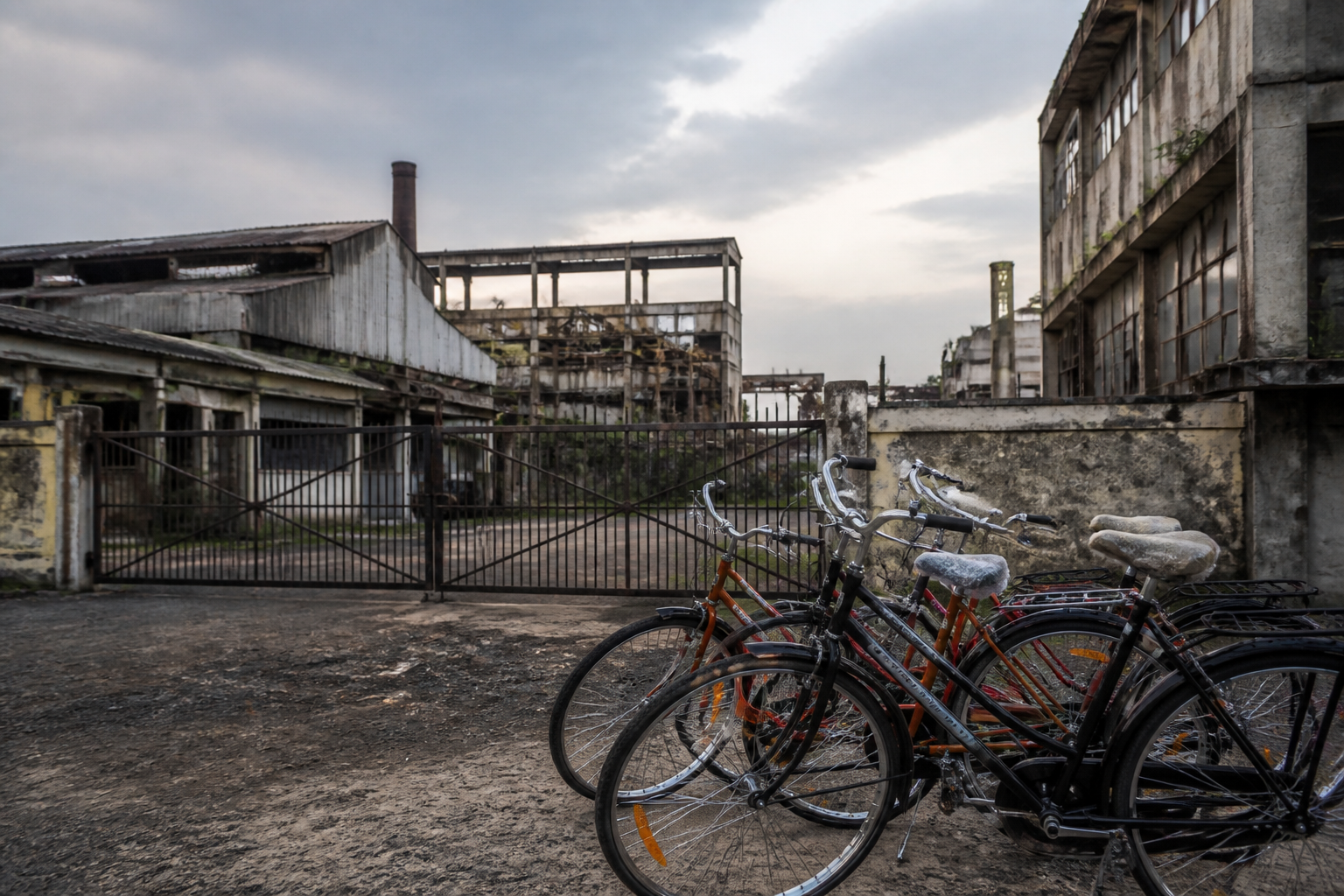
Asansol’s closed Sen-Raleigh bicycle factory could become a manufacturing base for West Bengal’s Sarathi free bicycle scheme, state Municipal Affairs and Urban Development Minister Agnimitra Paul said at a distribution event in the city on Saturday. She also said the government was working to reopen other shut factories in Asansol after resolving legal and land-related obstacles.
The remarks came at an event at Ballavpur Ramgopal Saraf Vidyapith school in the Asansol South Assembly constituency, where bicycles under the Sarathi scheme were handed to students. The state government has announced that bicycles will now be distributed when students move into Class VIII rather than Class IX, and that the bicycles for the programme will be manufactured in Bengal.
According to the report by Sangbad Pratidin, Chief Minister Shubhendu Adhikari has said that companies willing to manufacture bicycles for the scheme would be provided land free of cost. The report did not provide details of the land parcels, selection process, production targets, procurement contracts or the financial terms of the proposed arrangement.
Paul referred to the industrial history of Sen-Raleigh, which began operations in Asansol in 1952. The factory was associated with bicycle models including Balaka and Hammer, which the minister described as having been known in Bengal and internationally. The factory closed in 2001, leaving behind industrial land and infrastructure that the minister said could support a revival.
“Since bicycles are to be made in Bengal, why not Sen-Raleigh?” Paul said, according to the report. She also alleged that earlier bicycle procurement from outside the state had involved syndicates and commissions. Those allegations were not accompanied in the report by documentary evidence or responses from the earlier administration.
The minister said the government was attempting to reopen Sen-Raleigh as well as other closed factories in Asansol. She identified legal disputes and land problems as issues that needed to be addressed before new industrial activity could begin. No specific reopening date, investor, production capacity or employment estimate was announced.
The proposal links a welfare distribution programme with the redevelopment of a dormant industrial site. If implemented, local manufacturing could connect government procurement with industrial employment in Asansol. However, the immediate announcement remains an administrative indication rather than a confirmed factory revival plan. Further clarity would depend on a formal government order, land-status decisions, an identified manufacturer and details of the Sarathi bicycle procurement process.
