


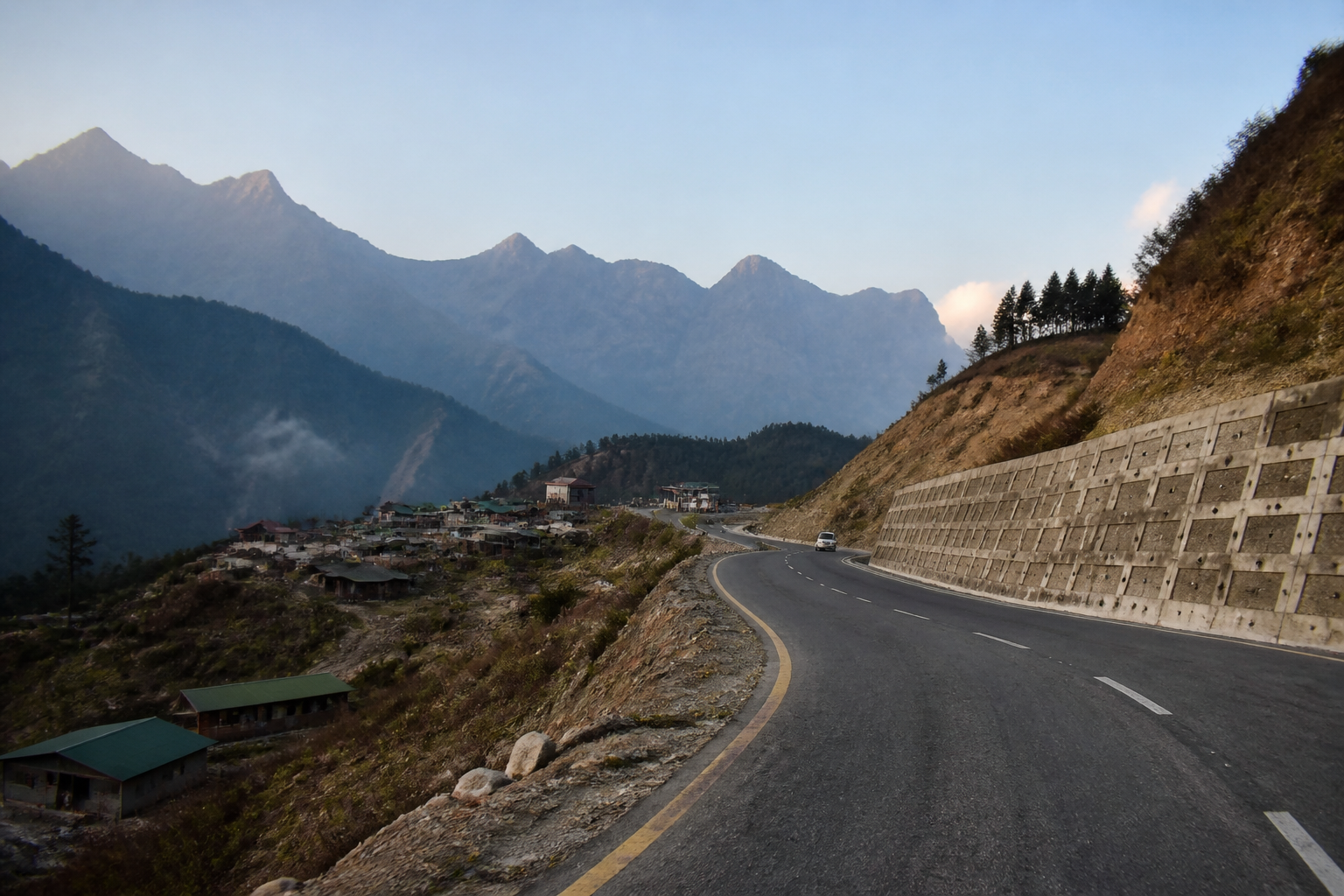
India has built about 4,000 kilometres of roads in Arunachal Pradesh since 2015 and is developing the Frontier Highway to improve connectivity and movement in the state’s border areas, Arunachal Pradesh Governor Lieutenant General (retired) Kaiwalya Trivikram Parnaik said in Pune on September 5.
Parnaik was speaking at the inauguration of the China Conference 2026, organised by the Pune International Centre and the Centre for China Analysis and Strategy. He said improved infrastructure in Arunachal Pradesh was part of India’s response to China’s claims over parts of the state and its wider expansionist policy.
“Earlier, roads and connectivity in Arunachal Pradesh were extremely limited. However, about 4,000 kilometres of roads have been built since 2015,” Parnaik said, according to Loksatta. He added that border villages had received improved connectivity and that the Frontier Road would make it easier for the Indian military to move in border areas.
Parnaik said China had expanded its infrastructure in Tibet, including roads and railways, to enable faster military movement and support the deployment of larger numbers of personnel near the border. He also alleged that China was using cyber, electronic, information and satellite capabilities to monitor India’s border regions continuously.
The governor said India needed to make its presence in Arunachal Pradesh more visible through infrastructure as well as activities such as mountaineering and tourism. He also described China’s influence in neighbouring countries, including Pakistan, Bangladesh, Sri Lanka, Nepal and Myanmar, as being supported by infrastructure and economic projects.
His comments came amid a broader discussion on India-China relations at the Pune conference. Pune International Centre vice-president Vijay Kelkar said the relationship should be studied through economic, strategic, technological, diplomatic and social perspectives rather than from a single viewpoint.
During a session after the inauguration, former ambassador Gautam Bambawale moderated a discussion with former Army chief General (retired) Manoj Pande and China analyst Jayadeva Ranade. Ranade said Chinese President Xi Jinping was likely to retain control of the country’s political system, while Pande called for stronger coordination among India’s three armed services and closer surveillance and intelligence gathering along the border.
The remarks placed road construction and border connectivity within a wider security framework. The Frontier Highway and related road works are expected to support access to remote settlements and improve logistical movement in Arunachal Pradesh, although the report did not provide details of the project’s total length, cost, completion schedule or implementing agencies.
Parnaik said India-China relations should be assessed across multiple areas, including infrastructure, defence, technology and diplomacy. The conference discussions focused on China’s regional policy and the infrastructure networks shaping India’s border environment.
