


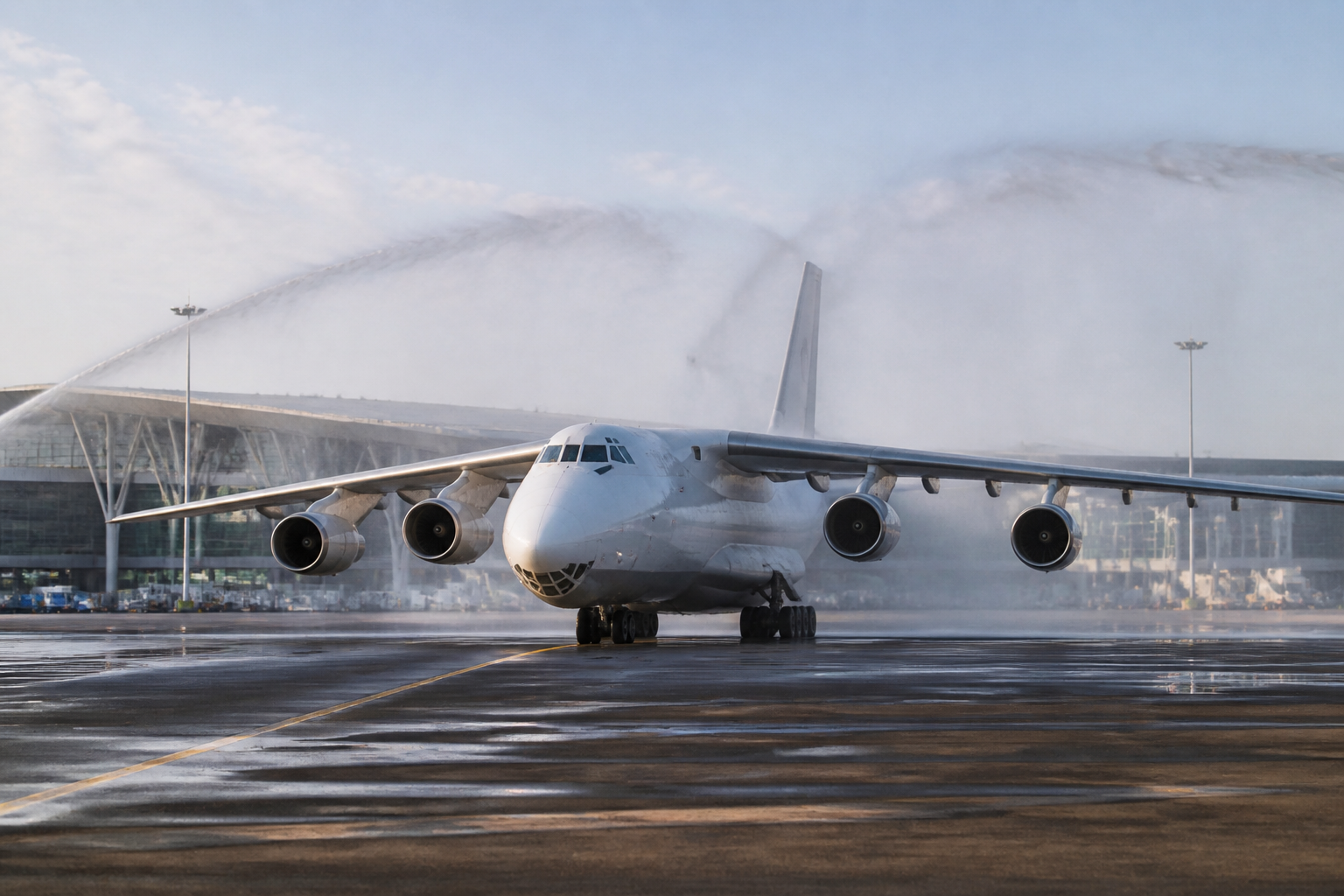
The arrival from Abu Dhabi highlights Navi Mumbai International Airport’s ability to handle oversized and specialised cargo aircraft.
NAVI MUMBAI INTERNATIONAL AIRPORT| — An Antonov AN-124 Ruslan cargo aircraft landed at Navi Mumbai International Airport on Wednesday morning carrying approximately 46 tonnes of goods from Abu Dhabi, marking a significant movement for the airport’s international cargo operations.
The aircraft arrived at around 10.30 am and was welcomed with a water-cannon salute, according to a report by Loksatta – Navi Mumbai. The landing brought one of the world’s largest cargo aircraft to the airport’s runway and demonstrated the facility’s ability to handle large and specialised freighter operations.
The Antonov AN-124 Ruslan is a wide-bodied Code F cargo aircraft used to transport heavy machinery, oversized equipment and other specialised consignments. Depending on its maximum structural configuration, the aircraft can carry up to 150 tonnes of cargo. In commercial operations, its typical cargo capacity is around 120 tonnes. The aircraft that arrived in Navi Mumbai carried about 46 tonnes from Abu Dhabi.
The arrival comes as Navi Mumbai International Airport expands its international air-cargo connections. Dedicated freighter services to Hong Kong and Dubai have already begun, strengthening the airport’s links with international cargo markets, the report said.
Three cargo services a week are scheduled for Hong Kong, while three weekly services are planned for Dubai. The services are intended to carry a range of consignments, including e-commerce goods, engineering materials, medicines, perishable products and other cargo.
The Antonov’s arrival is separate from the scheduled frequency details reported for the Hong Kong and Dubai services, but it adds to the airport’s recent cargo activity. The aircraft’s size and specialised operating requirements also distinguish the movement from routine cargo flights.
For Navi Mumbai, the development places the airport’s freight-handling infrastructure in focus alongside its passenger operations. The ability to receive aircraft designed for oversized and heavy cargo is relevant to shipments that cannot be transported through standard air-freighter capacity or conventional logistics networks.
The reported cargo movement also adds to the airport’s emerging role in handling international goods for sectors such as engineering, pharmaceuticals, e-commerce and time-sensitive supply chains. However, the supplied report does not provide details about the specific goods carried on the Antonov flight, the consignee, the aircraft operator or the value of the shipment.
Loksatta reported that the combination of the large cargo aircraft’s arrival and the expansion of dedicated freighter services indicates an increase in Navi Mumbai International Airport’s cargo-handling capacity. Further operational details, including the airport’s cargo volumes and future freighter schedules beyond the Hong Kong and Dubai services, were not provided in the report.
