


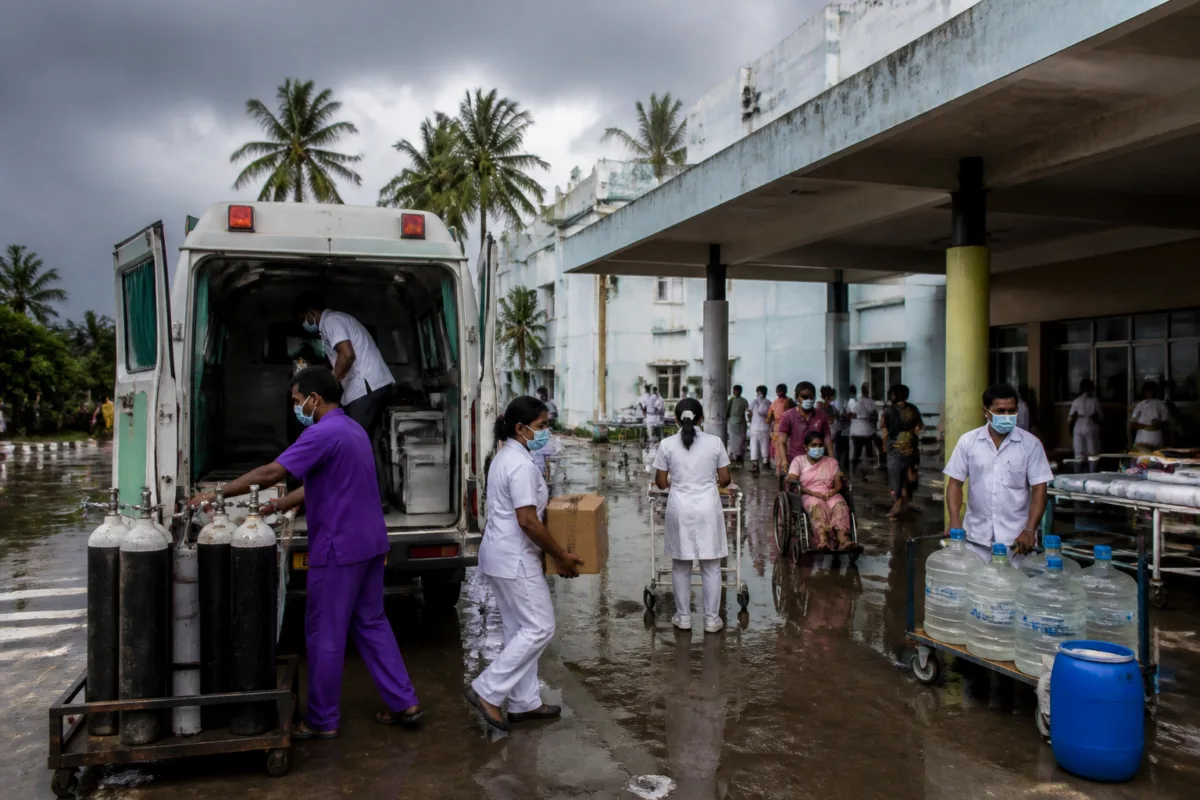
Andhra Pradesh has placed government hospitals and primary and village-level health centres on round-the-clock emergency readiness from October 27 to October 30 as the India Meteorological Department’s cyclone alert raises the risk of flooding, disrupted road access and interruptions to essential healthcare.
Health minister Satya Kumar Yadav directed officials to ensure uninterrupted emergency medical services across the state, with particular emphasis on pregnant women, newborns, children, senior citizens and patients with chronic illnesses. The directive follows an IMD red alert for Krishna and Bapatla districts on October 27 and for 13 districts on October 28.
Health and Family Welfare commissioner K.V.N. Chakradhar Babu has issued orders to district officials to strengthen preparedness before adverse weather conditions begin. Districts have been instructed to establish 24-hour emergency control rooms and identify flood-prone and low-lying areas around healthcare facilities.
Officials will check the availability of medical staff, medicines, equipment, electricity and water at hospitals and health centres. Emergency stocks are to include medicines, oral rehydration solution packets, intravenous fluids, maternity medicines, newborn-care supplies, oxygen, generators, fuel and drinking water. Ambulances, blood banks and maternity centres will be kept ready for patient transfers.
The preparedness plan gives specific priority to maternal and newborn care. State records show that 26,768 pregnant women have expected delivery dates between October 23 and November 6. Women living in flood-prone areas, those with high-risk pregnancies, severe anaemia or other complications, and those with previous caesarean deliveries are being prioritised for shifting to hospitals. Specialised transport arrangements are being prepared for areas where roads could become inaccessible.
Village-level health workers have been asked to identify vulnerable families, including households with pregnant women, new mothers, infants, children, elderly people, persons with disabilities and patients who require regular medication. District officials will coordinate with the revenue and police departments, as well as ambulance services including 108, 104 and 102.
The health department has also ordered drinking-water testing and sanitation measures at hospitals and relief camps. Medical teams will monitor diarrhoea, fever, infectious diseases, leptospirosis, mosquito-borne illnesses, snakebites and drowning incidents, with any unusual increase to be reported immediately.
District medical and health officers will be responsible for preparedness, coordination and monitoring, and must submit district-level readiness reports before the weather deteriorates. Medical Education director A. Vishnuvardhan said superintendents and doctors at teaching hospitals had also been placed on alert.

