


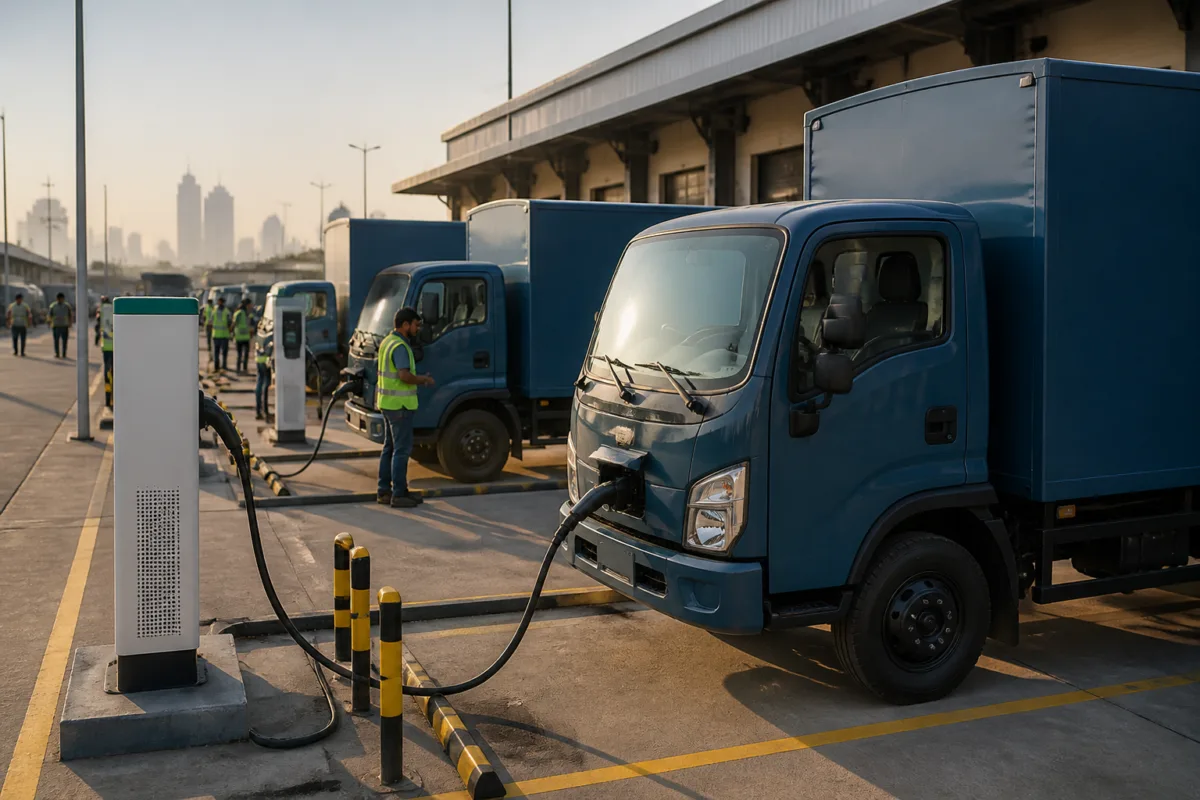
Amazon expects its India electric vehicle fleet to cross 20,000 over the next year, up from more than 15,000 currently, as the e-commerce company expands electric trucking, charging infrastructure and route optimisation across its delivery network.
Abhinav Singh, Amazon’s vice-president for operations across Asia-Pacific, the Middle East, Africa and Turkey, said the projection was an expectation rather than a formal target. He was speaking to Business Standard on the sidelines of Amazon’s announcement that it would deploy 3,000 electric trucks in partnership with Tata Motors over three years.
The trucks will be owned and operated by Amazon’s carrier partners, which are third-party logistics companies. Amazon will provide freight demand and work with vehicle manufacturers and financing companies to support deployment. The company is also collaborating with Tata Motors on truck configurations, battery sizes and driving ranges suited to e-commerce cargo.
Amazon said e-commerce shipments are often large in volume but relatively light in weight, making container space an important consideration. The company and Tata Motors are developing a larger 32-foot electric truck variant with a dedicated sleeping area for a second driver, separate from the driving cabin. Singh said the design was intended to support driver safety and adequate rest. Amazon is also working on double-axle configurations for operations involving heavier loads.
Electric vehicles currently cost 20-25 per cent more upfront than conventional diesel vehicles, according to Singh, but their daily operating costs are 10-15 per cent lower. He said the commercial case depends on total cost of ownership and on using vehicles for more kilometres rather than leaving them idle or sending them on empty return trips.
To improve utilisation, Amazon is connecting multiple deliveries and routes. This is particularly important for electric trucks because freight demand must be available in both directions for some routes to remain commercially viable. Routes with limited return cargo can make it harder to justify the deployment of electric vehicles.
Amazon has established 10 charging yards in India, including locations near major logistics centres in Delhi, Hyderabad, Bengaluru, Chennai and Jaipur. Each yard can charge 35 trucks simultaneously, while charging takes between 45 minutes and 1.5 hours depending on the vehicle and battery size.
The company plans to add charging infrastructure based on freight demand rather than a fixed target for the number of yards. Singh said Amazon would assess whether individual routes had enough freight demand and return loads to make electric truck operations financially workable.
Amazon said it had invested around Rs 2,800 crore in network expansion and operations earlier this year, following an investment of more than Rs 2,000 crore in the previous year. The cumulative investment of nearly Rs 5,000 crore covers fleet operations and network expansion, and is not exclusively allocated to electric vehicles or charging infrastructure.
Alongside electric vehicles, Amazon is using railways and biofuels to reduce transport emissions. Singh said rail transport produces about one-third of the carbon emissions per tonne compared with road transport. Amazon began working with Indian Railways in 2019 and now uses more than 160 trains or routes, although it has not disclosed the volume of freight moved by rail.

