


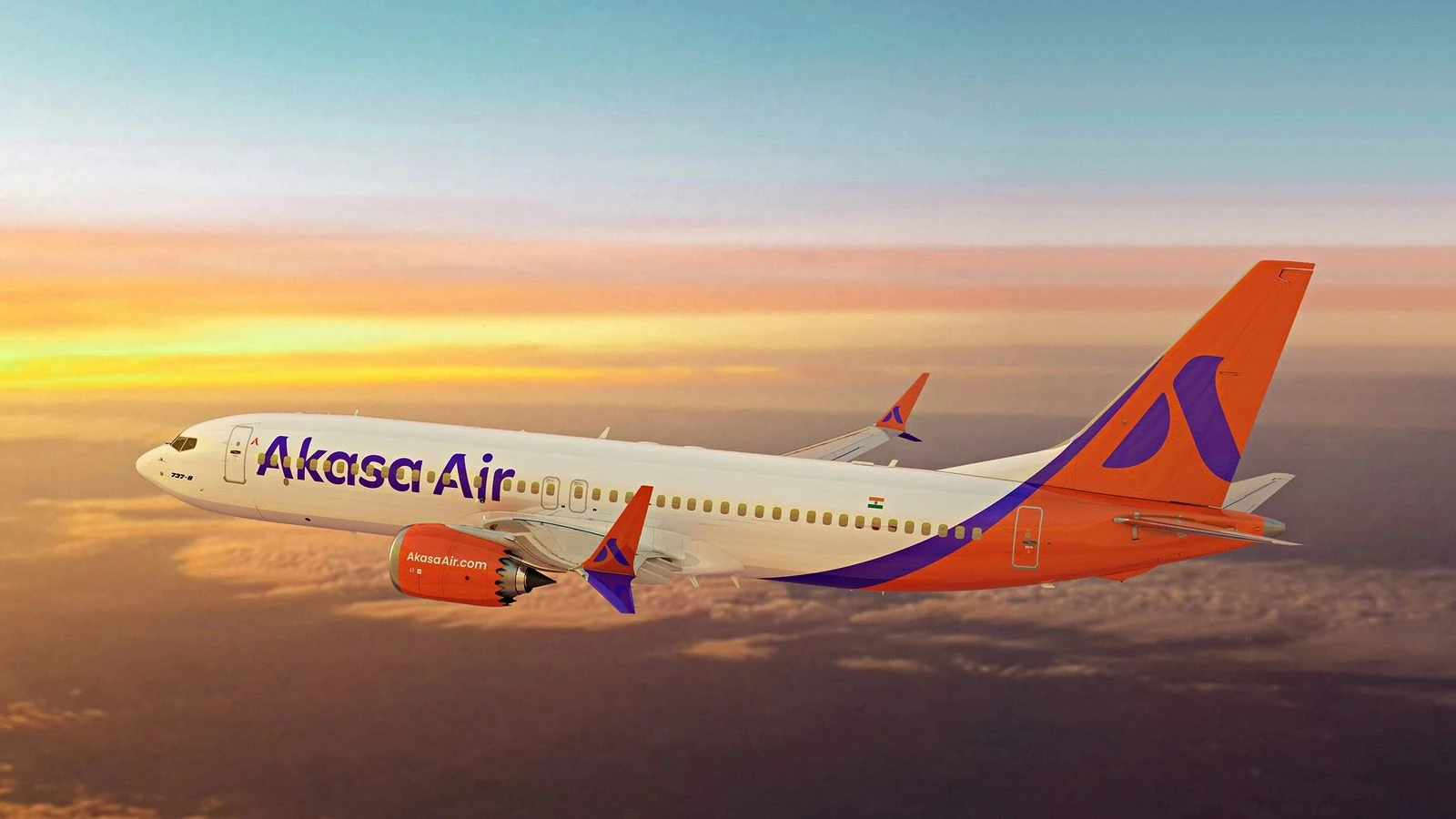
Mumbai’s aviation landscape is poised for transformation as Akasa Air confirms plans to begin operations from Navi Mumbai International Airport (NMIA) from its opening day—anticipated at the end of August. The move will introduce 15 daily domestic flights initially, scaling up to over 40 domestic and 8–10 international flights by next summer, according to airline officials.
Currently operating 32 daily flights from the existing Mumbai CSMIA airport, Akasa Air aims to manage over 80 daily departures across both airports by next summer. This ambitious expansion is supported by plans to base 10 aircraft at NMIA by the financial year 2027. Initial operations will include more than 100 weekly domestic departures at NMIA, ramping up to over 300 domestic and 50 international departures weekly in the winter schedule running from late October to end of March. The airline also intends to expand to 10 parking bases across its network by FY2027, with a strategic focus on international routes to key Middle Eastern and Southeast Asian destinations.
Industry experts suggest that Akasa’s aggressive expansion into NMIA underscores confidence in Mumbai’s aviation demand and the airport’s potential to decongest existing infrastructure. The dual-airport model—integrating both CSMIA and NMIA—will offer Mumbai commuters choice and flexibility, particularly during peak travel periods. INDIGO, another major carrier, had already announced operations at NMIA as the first mover, with plans for 36 domestic departures connecting 15 cities from day one. By November, Indigo is expected to operate 79 daily departures (158 total arrivals/departures) including 14 international routes.
Phase 1 of NMIA is slated to handle 20 million passengers and 0.5 million metric tonnes of cargo annually, with the capacity scaling up to 90 million passengers and 3.2 million tonnes of cargo in its final phase. While final civil aviation approvals are still pending, NMIA’s infrastructure model is designed for high-volume traffic and multimodal integration. Logistics analysts observe that dual-hub operations will help distribute air traffic more evenly across Mumbai’s metropolitan region, reducing congestion at CSMIA and allowing NMIA to develop as a major cargo and international gateway. Early operations by both Akasa and Indigo suggest NMIA is likely to emerge as the city’s long-term aviation anchor.
As ticketing opens soon, travellers will have the option to choose between Mumbai’s two airports. Meanwhile, authorities remain confident that the runway at NMIA—currently scheduled to be operational soon—will receive any necessary extensions to accommodate projected load. With economic growth projections and international travel demand rising, Akasa’s launch from day one positions the airline as a critical stakeholder in Mumbai’s evolving aviation ecosystem. Public-private coordination on seamless ground connectivity and metro linkage would enhance NMIA’s potential as a sustainable, equitable gateway for the region.
Also Read : MMRDA settles Metro Line 1 dispute by paying INR 560 crore to MMOPL
