


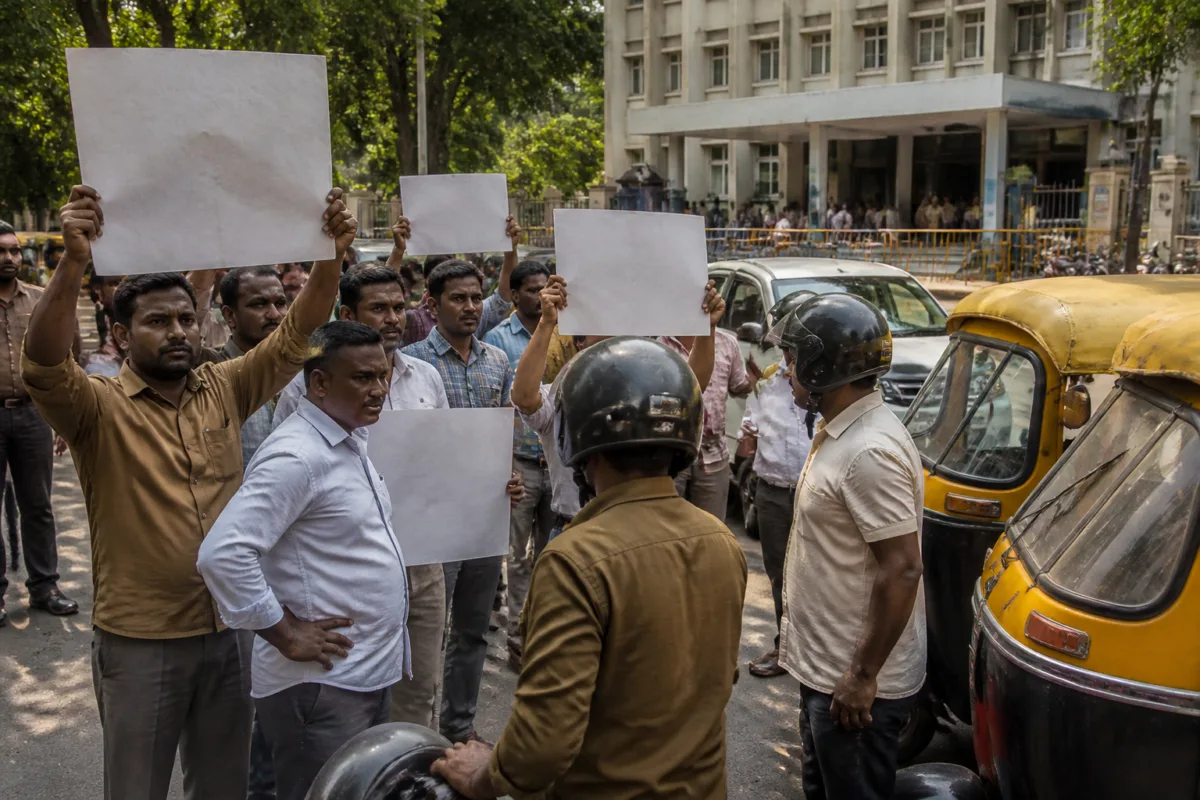
Auto-rickshaw and taxi drivers gathered outside the Ahmedabad Regional Transport Office on November 25 to protest against app-based cab and bike-taxi operators, alleging low fares, high commissions and the continued operation of unauthorised vehicles.
The demonstration was held under the banner of a “Save Employment” movement. Drivers and union representatives sought action against Ola, Uber and Rapido, and demanded enforcement against motorcycles with white number plates being used as taxis.
According to the report, the drivers alleged that app-based companies pay low fares while retaining a significant share as commission. They also questioned whether some operators have the required licences. The protesters said earlier detention of allegedly unauthorised bikes and taxis before Diwali had not resolved the issue.
The Gujarat State Auto-Rickshaw Federation’s general secretary raised concerns about the difference between insurance and regulatory requirements for commercial and non-commercial vehicles. He said commercial vehicles pay higher insurance premiums, while the rules governing white-number-plate vehicles used to carry passengers lack clarity, according to the report.
An Ahmedabad RTO senior official said representatives of auto-rickshaw and taxi associations from Ahmedabad and other parts of Gujarat had submitted complaints about low fares, high commissions and white-number-plate bike taxis. The official said the department would take lawful action within its remit and refer policy-related issues to the higher authorities.
Following the assurance of action within three days, the drivers called off the day’s protest. They warned that they would resume a more intense agitation if a concrete solution was not reached by the following Monday.
The dispute places enforcement of vehicle permits, insurance requirements and aggregator operations at the centre of Ahmedabad’s app-based urban mobility debate. The immediate outcome will depend on whether the RTO’s promised action addresses alleged unauthorised operations and whether policy-level concerns are taken up by the state authorities.

