


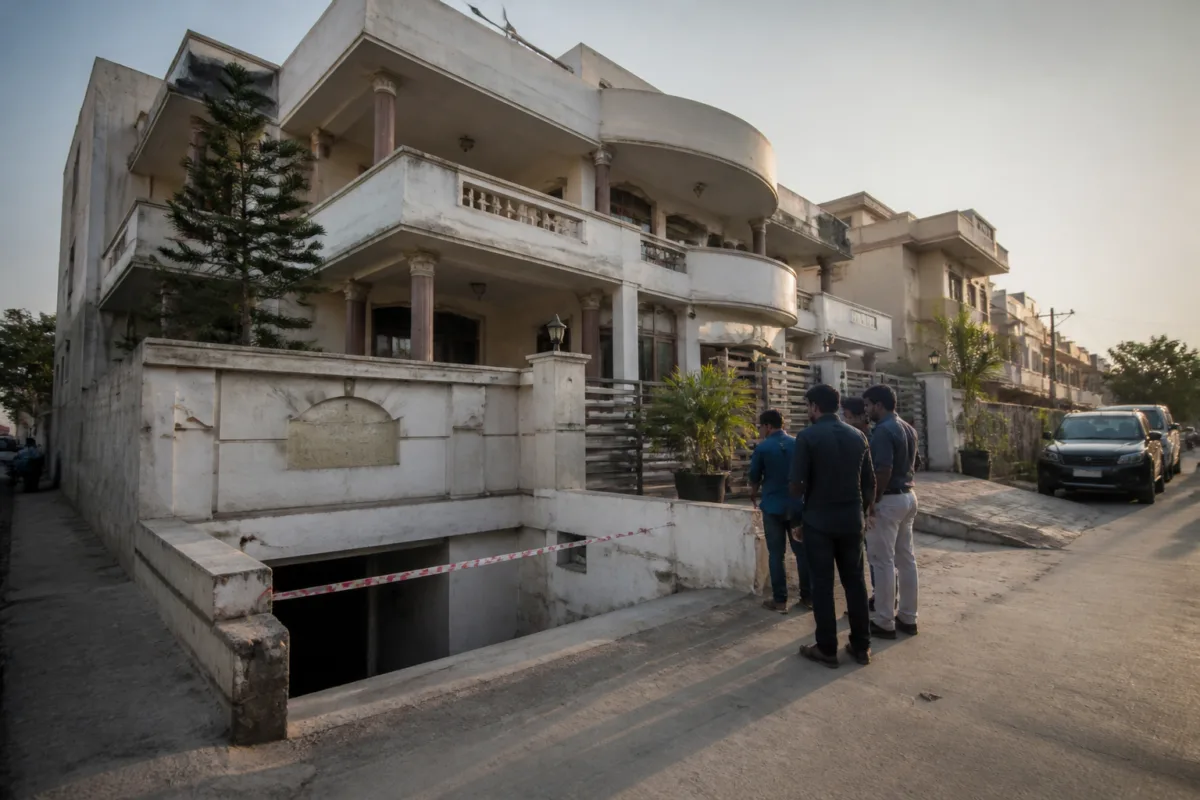
The Narcotics Control Bureau has secured custody of accused Mudassar Pathan in the Ahmedabad MD drugs factory case as investigators examine an alleged residential basement laboratory, suspected drug-funded property purchases and links to a wider supply network. A court has permitted his remand until 4 pm on November 17 after the agency sought three days of custody.
The case centres on a bungalow in Labbaik Park in Sarkhej, where the NCB allegedly found a concealed facility used to manufacture MD, or mephedrone, from the basement. The agency and special public prosecutor Mahesh Patel told the court that Pathan had allegedly been operating the laboratory since 2024.
According to the submissions reported in court, Pathan had received preliminary training in Rajasthan and later searched YouTube and Google for information related to manufacturing the drug at home. The NCB also alleged that raw materials and chemicals were brought from Madhya Pradesh and other states. The report does not establish whether the online material directly enabled the alleged production or identify the specific sources involved.
The agency is also examining whether the bungalow, whose market value was stated to be more than ₹1.5 crore, was purchased with money earned through the alleged drug trade. Prosecutor Mahesh Patel told the court that Pathan’s financial transactions and bank accounts needed to be investigated to determine the source of the funds. The property-funding allegation remains part of the investigation and has not been established as a final finding.
The reported seizure from the premises included 130 kilograms of chemicals and 26.67 grams of prepared MD drugs. The seized material is to be sent for forensic examination. The test results will be relevant to determining the nature of the substances and their connection to the alleged manufacturing activity.
The NCB further alleged that Pathan was himself dependent on MD drugs and supplied the substance to young people who visited his Ratlam Cafe. Investigators are examining his phone records and the supply chain to identify who provided financial assistance, where the chemicals came from and how many other people may have been involved.
The case places attention on the use of ordinary residential premises for alleged illicit production and storage. In urban neighbourhoods, such activity can create risks that are difficult for residents to detect before enforcement action, particularly when investigations involve chemical handling, concealed rooms and movement of materials across state borders. The supplied report, however, does not provide details about any chemical leak, fire, injuries or evacuation linked to the premises.
The immediate legal and investigative step is the continued questioning of Pathan during the court-approved remand period. The NCB is expected to pursue the financial trail, examine the seized material through forensic testing and investigate the alleged supply network.

