


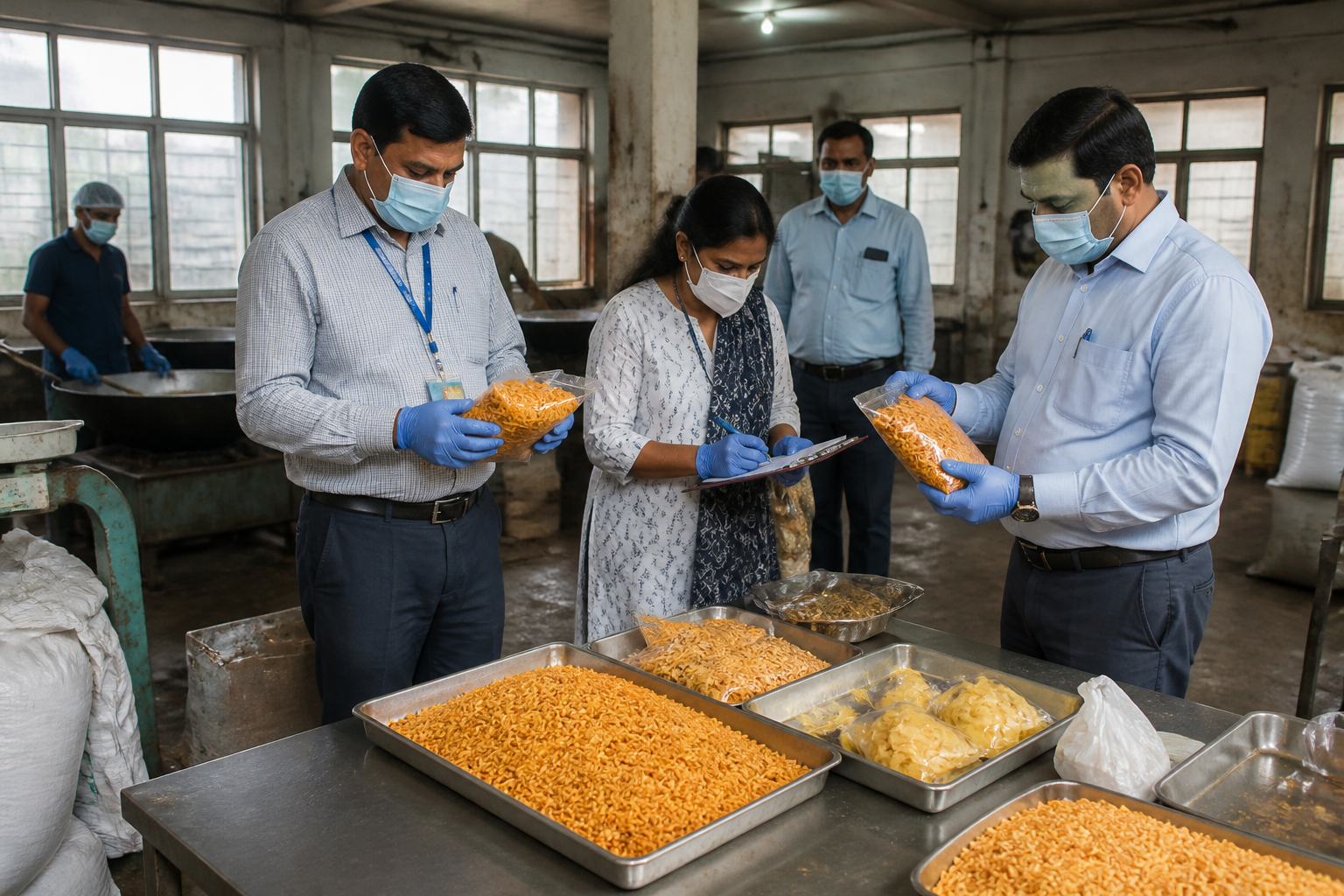
Ahmedabad’s municipal food department sealed a home-based food unit in Danilimda after reportedly finding unauthorised chemical dye, repeatedly heated cooking oil and unhygienic preparation conditions, while suspending a 1,010-kilogram stock of festive snacks and ingredients.
The action was taken at A.N. Gruh Udyog in the Goodluck Estate area of Danilimda during an inspection by the municipal food department, according to Gujarat Samachar – Ahmedabad. Officials reportedly found farsan being prepared in unhygienic conditions and said the unit was using a non-permitted colour described in the report as a harmful chemical dye.
The suspended stock included maida, masala peanuts, fine sev and farsi puri. The department also found that snacks were being fried repeatedly in the same cooking oil. The report said this had increased the level of total polar compounds, or TPC, in the oil.
The inspection also identified lapses in worker hygiene and product information. Workers were reportedly not wearing hair covers or aprons, while the packets did not carry proper labelling. The unit was sealed for violating food-safety requirements, and the affected stock was placed under suspension pending the department’s action.
The raid came a day after the reported seizure of fake tomato sauce in Danilimda, as the civic food department intensified inspections during the festive period. The latest action focuses on the production conditions behind commonly consumed snacks such as sev, gathiya, boondi and puri, which are widely sold through small manufacturers and home-based food businesses.
The report said inexpensive chemical colours are sometimes used to improve the appearance of such products. It also cited food-safety concerns associated with repeated heating of cooking oil, including increased TPC levels. The source report linked prolonged exposure to unauthorised colours with possible harm to organs such as the kidneys and liver, and repeatedly heated oil with increased cholesterol and heart-disease risks.
The case highlights the role of municipal food-safety enforcement in monitoring small food-production units, particularly during periods of increased festive demand. For consumers, the inspection has also brought attention to the importance of product labelling, preparation hygiene and the regulatory compliance of businesses supplying ready-to-eat snacks.
The municipal food department’s sealing action and suspension of the 1,010-kilogram stock are the immediate measures reported in the case. Further action on the seized or suspended material will depend on the department’s food-safety process.

