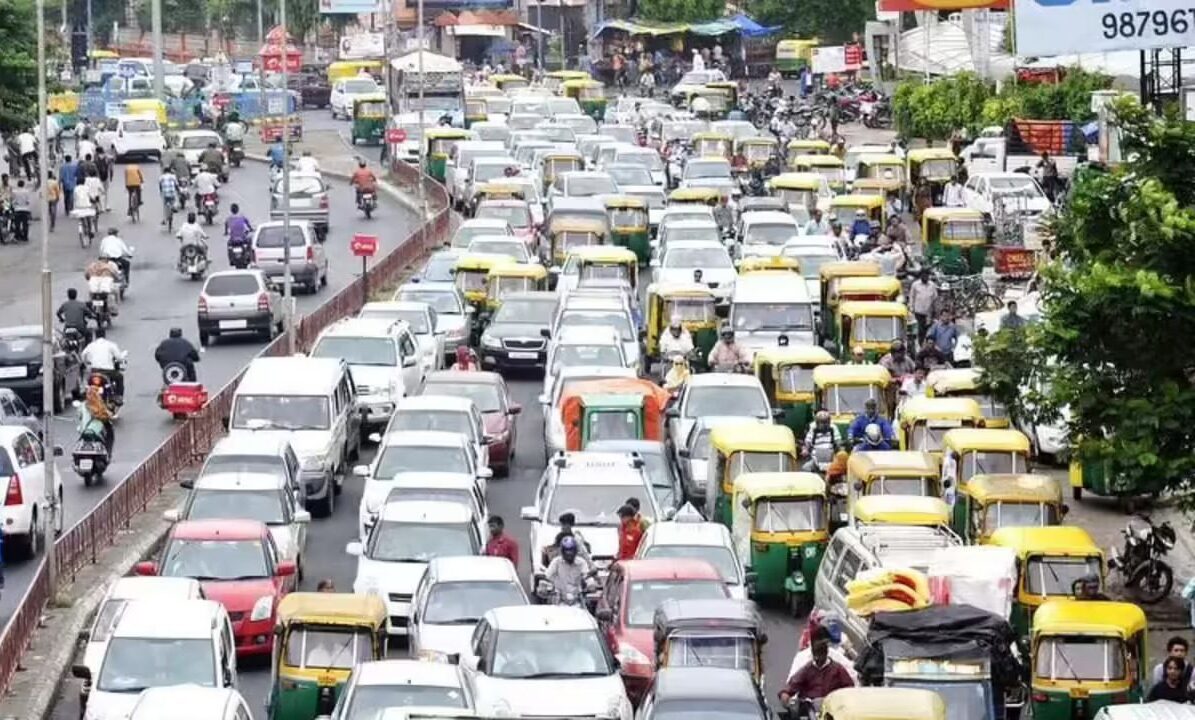
Ahmedabad is adding nearly 2.77 lakh new vehicles to its roads every year, but its infrastructure is not keeping up. The widening gap between rising private transport and stagnant road capacity is pushing the city toward chronic congestion. Data from regional transport offices shows that in the first three months of 2026 alone, over 85,000 vehicles have been registered. At this pace, the annual addition could soon cross three lakh. Cumulatively, more than 11.04 lakh vehicles—including two-wheelers, cars, auto-rickshaws, and heavy vehicles—have been added across the Subhash Bridge and Vastral zones in just four years.
Yet road development tells a different story. A senior official familiar with infrastructure planning confirmed that only a limited number of new or upgraded roads have been constructed during this period. Several projects have faced delays, and some newly built stretches have reportedly become inadequate within months of opening, overwhelmed by traffic volumes that planners failed to anticipate. For citizens, this translates into lost hours. Frequent bottlenecks on major arteries and internal roads have become routine. The lack of sufficient flyovers, underpasses, and organised parking facilities compounds the problem. Even as authorities showcase select stretches as model corridors, the broader network remains under strain.
Urban planners point to a deeper structural issue. Ahmedabad, like many Indian cities, has prioritised accommodating more vehicles rather than reducing the need for them. The absence of robust public transit alternatives—safe footpaths, dedicated cycling lanes, and high-frequency bus or metro connectivity—forces residents into private vehicles. Each new car or two-wheeler adds to a self-perpetuating cycle: more vehicles demand more roads, which induce even more vehicles. The economic cost is measurable. Congestion increases fuel burn, raises transport costs for goods and services, and reduces labour productivity. The environmental cost is steeper: more vehicles mean higher emissions, worse air quality, and greater climate vulnerability.
Experts warn that without a fundamental shift in approach, Ahmedabad’s roads could effectively become parking zones. The city continues to measure progress in lane kilometres rather than in reduced travel times or improved public space. Some newly built roads have already proven inadequate, a sign that current planning horizons are too short for a city growing this fast. What Ahmedabad needs is not just wider roads but fewer mandatory car trips. That requires investment in transit-oriented development, mixed-use neighbourhoods, and last-mile connectivity. Until then, every new vehicle registration is another brick in the wall of gridlock.
Ahmedabad Adds 2.77 Lakh Vehicles Each Year