


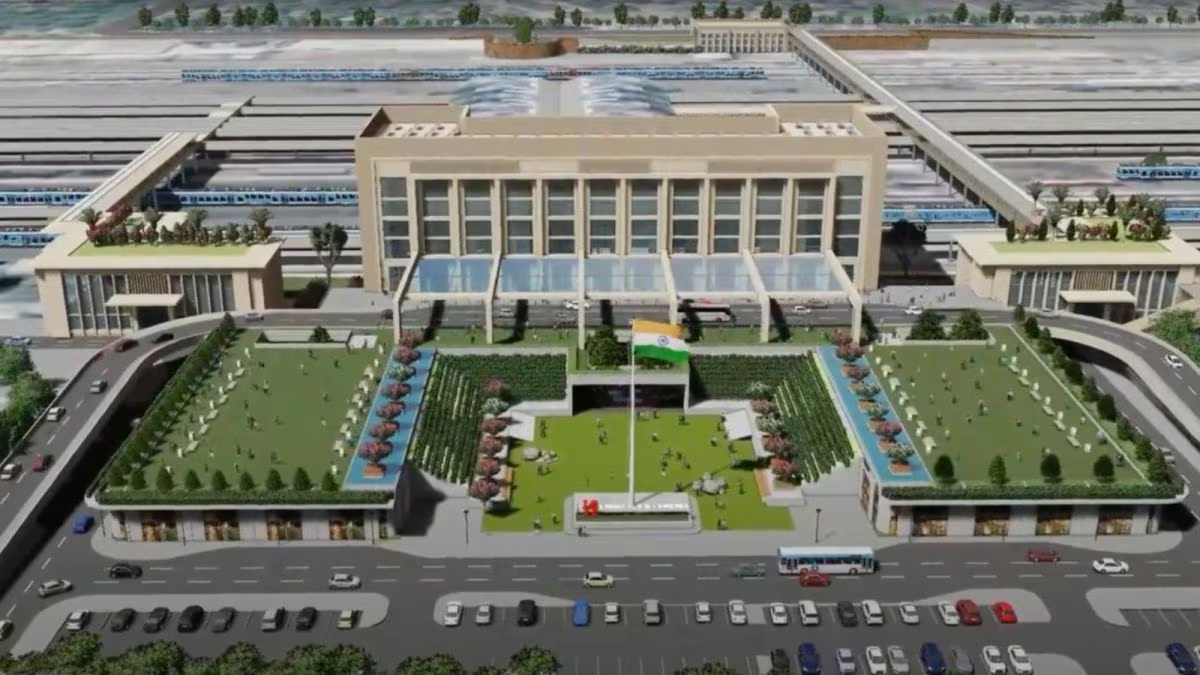
India’s railway infrastructure has reached a notable urban development milestone with the completion of upgrades at 172 stations under the Amrit Bharat Station Scheme, spotlighting the nexus between transport modernisation and inclusive city growth. The nationwide programme — part of broader efforts to reimagine railway hubs as accessible, integrated urban gateways — aims to enhance passenger experience while knitting rail networks more tightly into the civic and economic fabric of cities and towns.
The Amrit Bharat Station Scheme, conceptualised in 2022, reflects a shift in infrastructure strategy from basic functional upgrades to comprehensive transformation of railway stations into multimodal urban nodes. These refurbished stations feature improved accessibility, passenger amenities, and connectivity with local transport, advancing a vision where transit hubs serve as catalysts for equitable mobility and economic opportunity. Urban planners and transport experts emphasise that stations are more than transit points; they are social and economic engines. Modernised facilities — such as wider foot overbridges, lifts, escalators and digital passenger information systems — reduce barriers to access for all citizens, including elderly commuters and persons with disabilities. Enhancing the physical quality of railway environments can also help redistribute economic activity across city regions, easing pressure on central business districts. For passengers, the impact is tangible. Redesigned circulating areas and improved waiting halls not only boost comfort but also align with broader public health and safety standards. Better connectivity to buses, metro systems and pedestrian networks, integral to the scheme, fosters seamless travel across urban and peri-urban zones. According to officials, integration with city transport systems is critical to reducing travel friction and promoting sustainable mobility choices over private vehicles.
Industry analysts view the completion of 172 station redevelopments as a significant indicator of implementation momentum. Yet, they caution that ongoing delivery must maintain quality, particularly in less visible, smaller stations where logistical and engineering challenges are more acute. Timely execution across the full pipeline of identified stations — more than 1,300 in total — is essential to realise uniform uplift in passenger experience nationwide. Economists and urban development experts also highlight the potential economic multiplier effects of station upgrades. Stimulating local commerce through improved station precincts — including retail kiosks and services — can generate jobs and support micro-enterprises. When railway infrastructure aligns with land-use planning, stations can anchor neighbourhood revitalisation, spur real estate investment, and contribute to more balanced regional development. Importantly, the scheme integrates sustainability measures. Stations are being designed or retrofitted with energy-efficient systems, landscaping, and provisions for waste management, resonating with climate-resilient urban policies. Adding green infrastructure and low-energy technologies into transport hubs reduces environmental footprints and sets standards for future transit-oriented development.
Critically, the rollout underscores the interplay between national infrastructure ambitions and local urban needs. As India’s cities expand, aligning transport infrastructure with equitable access and environmental stewardship remains central to sustainable urbanisation. The Amrit Bharat upgrades, while not a panacea, represent a step towards more people-centred, resilient, and economically vibrant urban transport ecosystems. Looking forward, sustained stakeholder engagement — from municipal authorities to commuter groups — will be key in ensuring that upgraded stations function not just as transit points but as inclusive civic spaces that support mobility, livelihoods, and quality of urban life.
Also Read: Indian Railways weighs Delhi Srinagar Vande Bharat
India Railway Stations Redeveloped Under National Plan
