


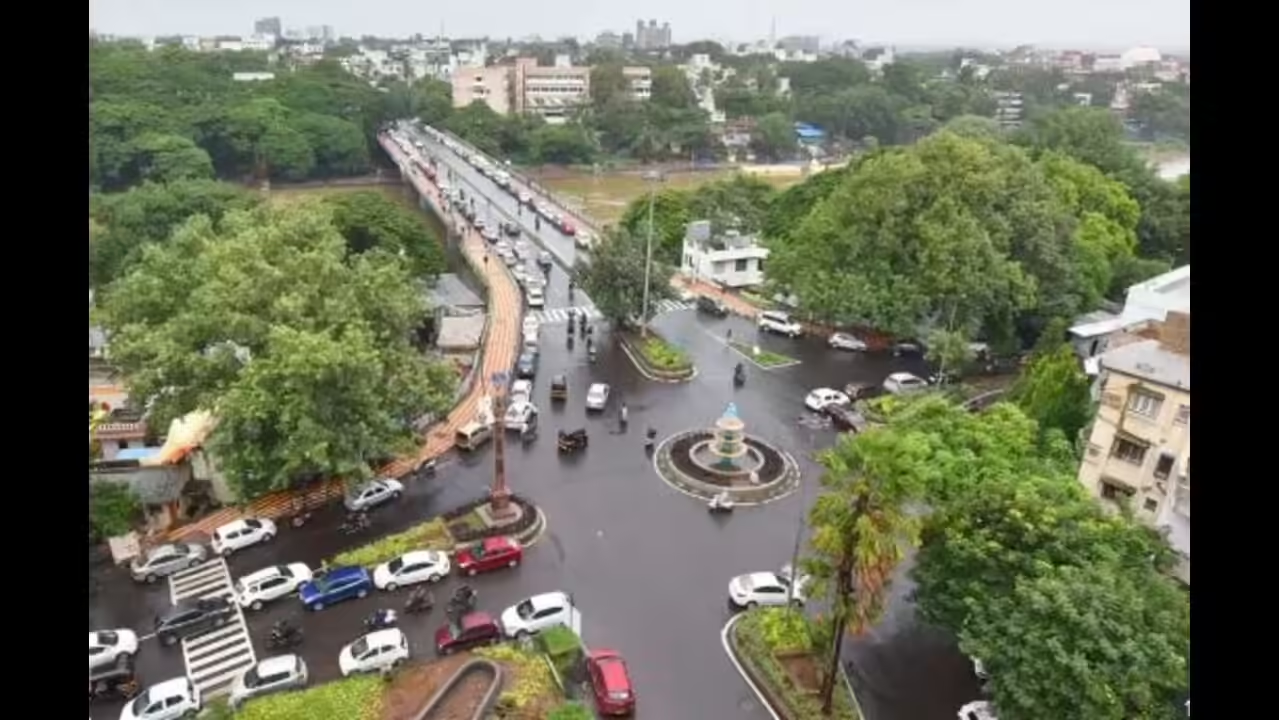
Pune has claimed the top position in India’s Ease of Living rankings for 2025-26, highlighting the city’s growing prominence as a well-serviced, accessible, and urbanised hub in western India. Navi Mumbai and Greater Mumbai follow closely, occupying second and third positions, while Thane also makes the top 10. The index evaluates cities across multiple dimensions including education, healthcare, housing, water and sanitation, waste management, mobility, safety, and recreational infrastructure.
Urban planners suggest these rankings provide insights into how effectively municipal services are aligning with rapid urbanisation pressures and citizen expectations.Maharashtra’s dominance with three cities in the top four and Thane at seventh signals the state’s long-term investments in urban planning and infrastructure. Experts note that cities such as Pune and Navi Mumbai have benefited from integrated development frameworks that prioritise mixed-use planning, transport accessibility, and decentralised civic services. Pune’s top rank reflects improvements in municipal efficiency, public amenities, and educational institutions, even as critics point to persistent traffic congestion, high property costs, and airport limitations. Navi Mumbai’s rise to second place illustrates the city’s strategic focus on planned growth. The satellite city’s well-laid road networks, systematic water supply schemes, and investment in green corridors are cited as contributing factors.
Analysts suggest that Navi Mumbai’s consistent inclusion in top Ease of Living ranks over successive surveys indicates the impact of long-term urban governance strategies, particularly in peripheral or newly developed metropolitan zones. Greater Mumbai’s third-place finish underscores both progress and ongoing challenges in India’s financial capital. While infrastructure upgrades, waste management initiatives, and recreational projects have improved urban quality of life, high population density and mobility constraints continue to strain civic systems. Similarly, other top-ranking cities such as Tirupati, Chandigarh, Raipur, Indore, Vijayawada, and Bhopal demonstrate that medium-sized urban centres with targeted infrastructure investments can outperform larger cities in service delivery metrics.Urban planners stress that rankings like the Ease of Living Index should be interpreted as indicative rather than definitive. A city may rank highly overall yet face acute challenges in specific domains, such as traffic management, air quality, or housing affordability. Sustainable urban growth requires not only quantitative improvements in infrastructure but also qualitative interventions that enhance inclusivity, climate resilience, and community well-being.
Looking ahead, Pune and other top-ranking cities must translate their Ease of Living performance into tangible, everyday benefits for residents. Key areas for focus include expanding public transport networks, integrating green and low-carbon mobility solutions, improving housing accessibility, and ensuring equitable service delivery across all urban zones. Strengthening these areas will be critical for sustaining livability and supporting the long-term economic and social resilience of Indian cities.
Also Read: Hyderabad Platform Launches Development-Stage Real Estate Investing
Pune Tops National Ease of Living Rankings
