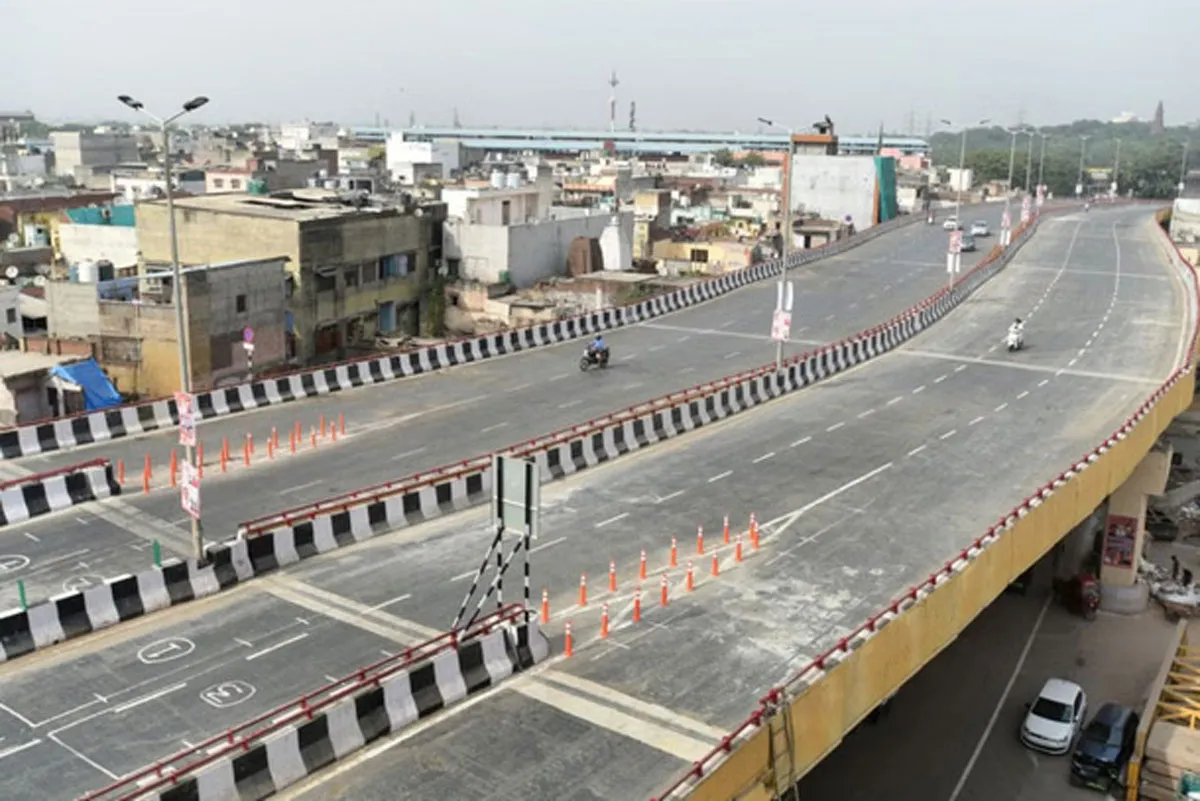
Delhi’s transport planners are moving ahead with a new flyover proposal aimed at easing chronic congestion along the Outer Ring Road, one of the capital’s most heavily used arterial corridors. The project, currently in the planning and approval phase, is intended to streamline traffic flow at a critical junction where daily bottlenecks affect commuters, freight movement, and public transport reliability. The proposed flyover forms part of a broader strategy to address rising vehicular pressure on the Outer Ring Road, which links residential clusters, commercial districts, and industrial zones across north, west, and south Delhi.
Transport officials familiar with the plan said the structure is designed to separate through-traffic from local movement, reducing signal delays and improving average travel speeds during peak hours. Congestion on the Outer Ring Road has long been a pain point for the city’s mobility network. Urban transport analysts note that traffic volumes on this corridor have grown steadily due to population expansion, increased car ownership, and the concentration of employment hubs along its alignment. As a result, delays here often cascade into adjoining neighbourhood roads, increasing fuel consumption and emissions.
The Delhi Outer Ring Road flyover is expected to deliver time savings for commuters while improving operational efficiency for buses and commercial vehicles. For logistics operators, smoother movement along this corridor could lower delivery times and operating costs, reinforcing Delhi’s role as a regional trade and services hub. Officials indicated that construction phasing will be planned to minimise disruption, with traffic diversions and night-time work under consideration. From a climate and sustainability perspective, experts caution that flyovers alone are not a silver bullet. While grade separation can reduce idling emissions at choke points, long-term gains depend on parallel investments in public transport, pedestrian infrastructure, and demand management. Urban planners involved in the project stress that the flyover must integrate with existing bus corridors and future transit plans to avoid encouraging additional private vehicle use.
The project also has implications for land use and real estate along the corridor. Improved accessibility typically raises the attractiveness of nearby commercial and residential developments, particularly in mid-income housing and mixed-use formats. However, planners emphasise the need for careful design to manage noise, air quality, and pedestrian safety in surrounding communities. Public consultation and inter-agency coordination will be critical as the project moves forward. Residents’ groups have previously flagged concerns around construction-related disruption and the visual impact of elevated structures.
Officials said these factors will be addressed through detailed engineering studies and environmental assessments. As Delhi continues to grapple with mobility challenges, the Delhi Outer Ring Road flyover reflects a pragmatic attempt to unclog a key artery while longer-term transport transitions take shape. The success of the project will ultimately depend on execution quality and how well it aligns with the city’s broader goals of inclusive, low-emission, and people-first urban movement.
Delhi Plans Flyover To Relieve Ring Road Congestion