Ahmedabad Mumbai Intercity Travel Gets Short Term Relief
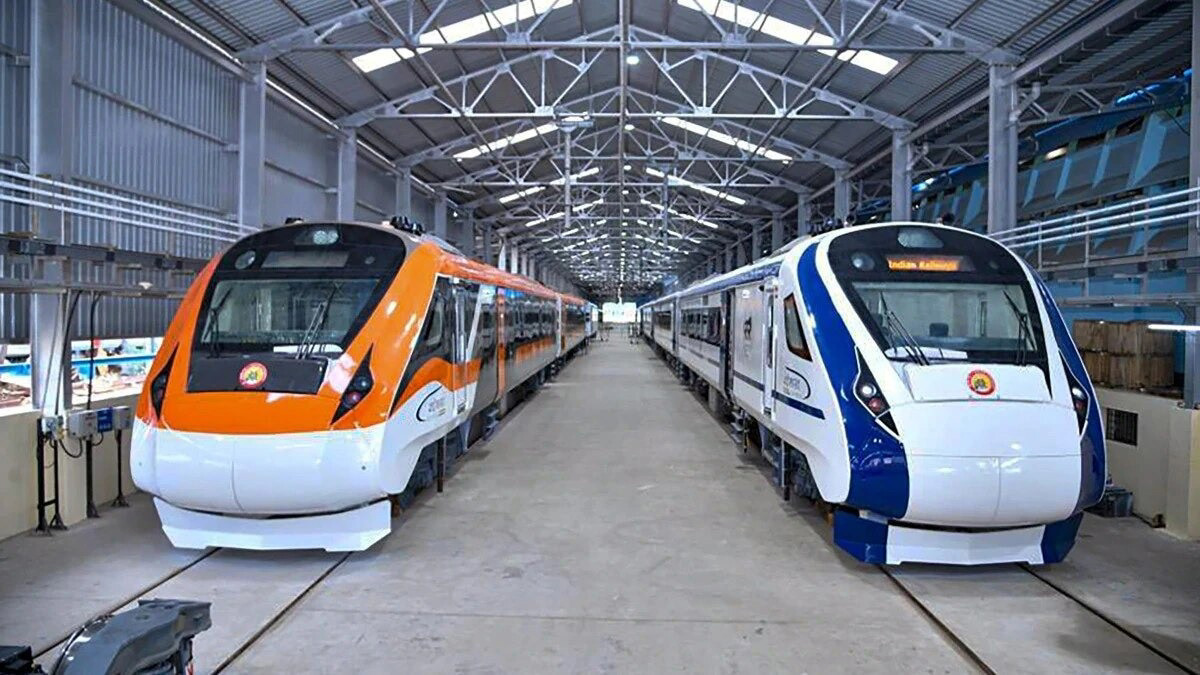
The Ahmedabad–Mumbai rail corridor, one of western India’s busiest intercity routes, is set to witness a temporary increase in passenger capacity as Indian Railways augments its flagship semi-high-speed service during the peak travel season. The move reflects rising mobility demand between two major economic centres and highlights the growing role of rail-led urban connectivity in managing regional growth more sustainably. Between late January and early March, the premium Vande Bharat service linking Ahmedabad and Mumbai Central will operate with an expanded rake of 20 coaches instead of its usual 16 on select days.
Railway officials indicate the decision is driven by a sustained surge in passenger bookings during the Republic Day period, school holidays and the pre-summer business travel cycle. The additional coaches are expected to significantly increase seat availability without altering the existing timetable. The Ahmedabad Mumbai Vande Bharat Express has emerged as a preferred option for professionals, students and short-stay travellers seeking predictable, time-efficient mobility between Gujarat’s commercial capital and India’s financial hub. With road congestion and aviation bottlenecks intensifying, particularly during peak hours, rail capacity enhancements are increasingly viewed by planners as a low-emission alternative that supports compact urbanisation and reduces dependence on private vehicles.
Urban transport analysts note that such short-term capacity adjustments often serve as indicators of longer-term structural demand. The Ahmedabad–Mumbai corridor underpins trade, finance, manufacturing and real estate markets across western India. Improving rail throughput on this route not only benefits daily travellers but also supports labour mobility and intercity economic integration, critical for resilient metropolitan regions. In parallel, Indian Railways has also temporarily shifted the terminal point of the Karnavati Express from Mumbai Central to Bandra Terminus during the same period. Officials say the adjustment is aimed at easing platform congestion and managing operational pressures within Mumbai’s saturated rail nodes. For commuters, this underscores the importance of checking boarding points in advance, particularly in a city where last-mile connectivity varies sharply by station.
From an urban governance perspective, these operational tweaks point to a broader challenge: aligning transport infrastructure with rapidly evolving travel patterns in megaregions. While rolling stock augmentation offers immediate relief, planners emphasise the need for sustained investments in station upgrades, multimodal integration and energy-efficient rail operations to meet climate and equity goals. As cities like Ahmedabad and Mumbai continue to expand outward while remaining economically interdependent, reliable intercity rail services will play an increasingly central role. Temporary measures such as the current coach expansion offer short-term capacity relief, but they also signal the urgency of planning for long-term, people-first mobility solutions across India’s most productive urban corridors.