


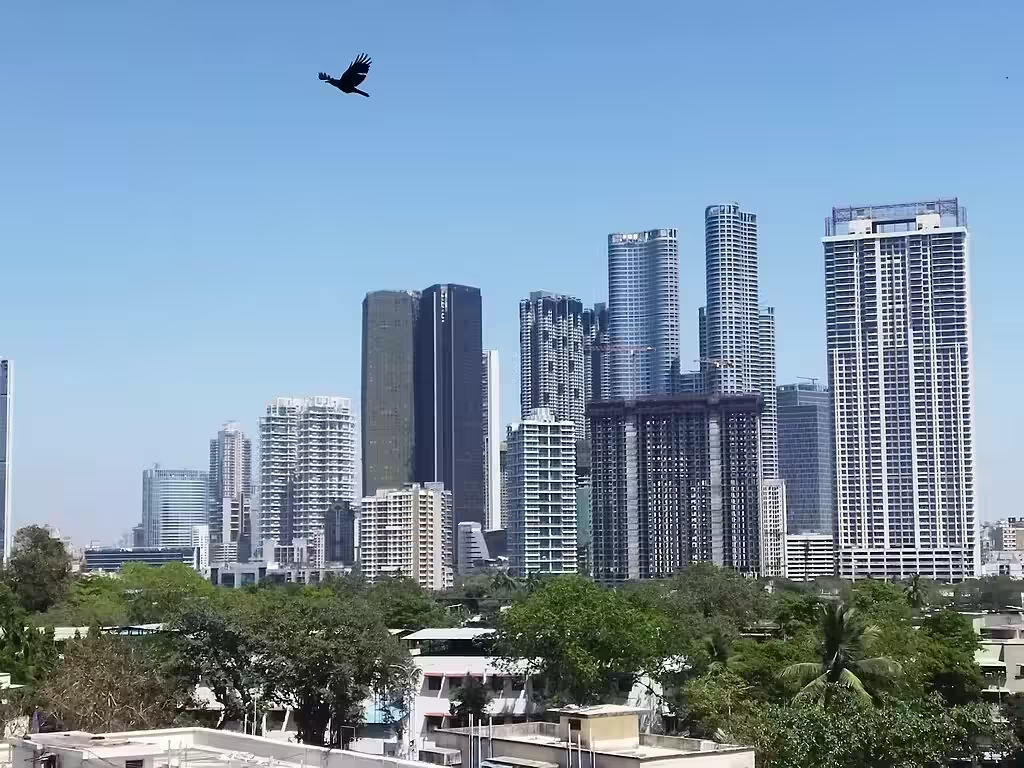
Navi Mumbai is steadily redefining its position within the Mumbai Metropolitan Region, transitioning from a planned satellite township into a self-sustaining urban housing market. With major transport links now operational and several large infrastructure projects approaching completion, the city is drawing growing interest from homebuyers seeking stability, affordability and long-term urban liveability.
Unlike earlier growth cycles driven largely by speculative investment, the current housing momentum in Navi Mumbai is rooted in everyday urban functionality. Well-laid roads, planned zoning, reliable civic services and generous open spaces have helped the city avoid many of the congestion challenges faced by older urban centres. Urban planners say this consistency in planning has created neighbourhoods that function as complete ecosystems rather than dormitory suburbs. Multiple residential nodes across Navi Mumbai are benefiting from this shift. Established areas such as Vashi, Nerul, Seawoods and the central business district have matured into mixed-use zones with strong social infrastructure, employment access and transit connectivity. These locations continue to command higher property values due to proximity to commercial districts, retail hubs and rail corridors. At the same time, newer and peripheral nodes are expanding housing choices for budget-conscious buyers. Areas such as Panvel, Ulwe, Taloja and Kharghar are seeing increased residential supply supported by Metro links, arterial road upgrades and planned airport connectivity. Industry experts note that these markets are absorbing demand from households priced out of Mumbai’s core suburbs, while still offering future appreciation potential.
Connectivity has emerged as a defining driver of Navi Mumbai’s growth. The operational Mumbai Trans Harbour Link has significantly reduced travel time between the city and South Mumbai, altering commuting patterns and strengthening investor confidence in eastern and southern nodes. The expanding Metro network is further improving intra-city mobility, reducing car dependence and supporting more compact, transit-oriented development. Beyond housing, commercial and logistics activity is also reshaping Navi Mumbai’s economic profile. Business parks, data centres and warehousing facilities are creating local employment clusters, helping the city evolve beyond a purely residential market. This diversification is seen as critical for sustaining housing demand without overburdening transport systems. From a sustainability perspective, Navi Mumbai’s planning legacy offers lessons for future urban expansion in the region. Wider roads, integrated drainage systems and distributed green spaces contribute to better climate resilience, particularly during monsoon seasons. However, urban specialists caution that maintaining these standards will require careful density management as development accelerates.
For homebuyers, the city presents a wide spectrum of options across price points and neighbourhood types. Analysts advise evaluating connectivity timelines, construction progress and civic infrastructure alongside price considerations. As Navi Mumbai continues to absorb population growth, its ability to balance affordability, infrastructure and environmental quality will determine whether it can sustain its emergence as a people-first urban alternative within the metropolitan region.
Also Read: Embassy Developments Expands Footprint Across Mumbai Region
Navi Mumbai Real Estate Shifts Beyond Satellite Role
