


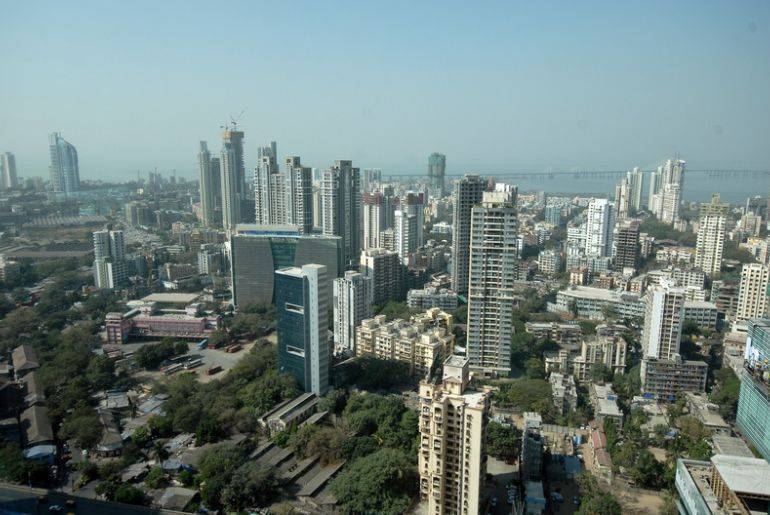
Mumbai’s residential real estate market is witnessing renewed capital intensity as Embassy Developments Ltd commits nearly Rs 7,000 crore towards expanding and accelerating its housing footprint across the Mumbai Metropolitan Region (MMR). The investment includes new luxury housing launches and faster execution of ongoing projects, signalling sustained confidence in demand at the upper end of India’s most land-constrained urban market.
The allocation will be deployed across six residential developments, including three fresh projects planned in established coastal and central micro-markets such as Juhu, Worli and Alibaug, alongside the expedited delivery of existing developments. Industry analysts say the scale and timing of the investment underline how developers are increasingly prioritising markets with proven absorption, high-income buyer profiles and strong long-term capital appreciation. Mumbai’s housing market has remained structurally resilient despite affordability pressures. While transaction volumes have moderated in some segments, premium and luxury housing has continued to attract end-users and investors seeking asset stability, limited supply and lifestyle-driven value. Developers with access to capital and execution capacity are therefore moving decisively to secure prime land parcels and accelerate construction cycles. Urban planners point out that this phase of investment coincides with a broader transformation of MMR’s housing geography. Improved metro connectivity, coastal road expansion and infrastructure upgrades have shortened travel times between traditional business districts and emerging residential nodes. This has expanded the viable catchment for higher-value homes while supporting densification in transit-linked corridors.
Embassy Developments’ expansion also reflects a wider shift within India’s real estate sector towards fewer, larger, and more capital-intensive projects. Institutional funding, listed platforms and real estate investment trusts have raised expectations around governance, delivery timelines and asset quality. As a result, scale-backed developers are increasingly consolidating their presence in gateway cities such as Mumbai, Bengaluru and Delhi NCR. From a city perspective, the concentration of large investments in premium housing raises parallel questions around inclusivity and sustainability. Urban economists note that while high-value projects contribute to municipal revenues, employment generation and construction-led growth, they must be balanced with investments in infrastructure capacity, climate resilience and mixed-income housing to ensure long-term urban stability. MMR’s coastal and island geography makes climate-adaptive construction, efficient land use and infrastructure coordination particularly critical. As residential density increases, integration with transport networks, water management systems and open spaces will play a decisive role in determining liveability outcomes.
Looking ahead, market observers expect Mumbai’s housing sector to remain selective rather than speculative. Capital is likely to continue flowing into projects that combine location advantage, delivery credibility and long-term asset durability. The latest Rs 7,000 crore commitment reinforces the view that despite cyclical fluctuations, Mumbai remains a cornerstone market for large-scale residential investment in India’s urban economy.
Also Read: Mumbai Ahmedabad Rail Builds Electric Backbone
