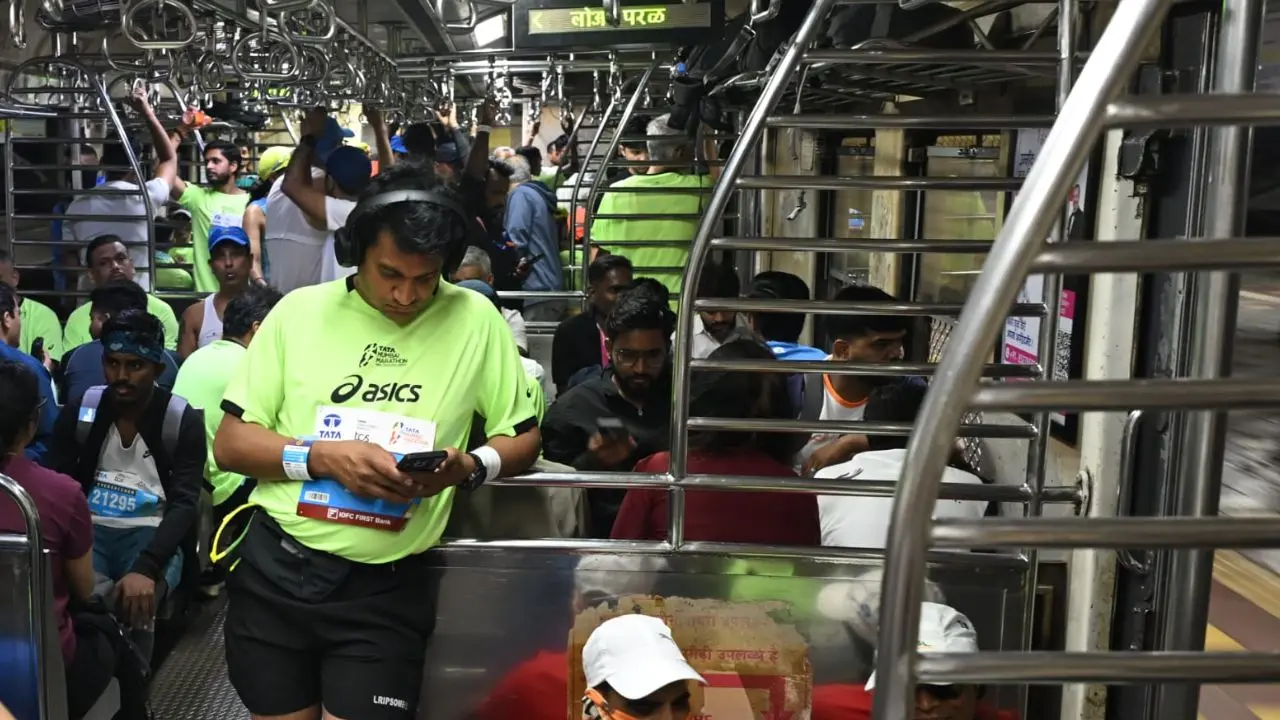
Western Railway marked its presence at the Tata Mumbai Marathon 2026 with a coordinated participation aimed at linking public fitness with everyday transport safety in India’s largest urban region. The event, held across central Mumbai’s arterial corridors, saw railway employees run alongside thousands of citizens, underscoring how mass transit agencies are increasingly positioning themselves as civic stakeholders beyond operations.
A large, multi-departmental contingent from Western Railway took part, representing frontline roles responsible for station management, ticketing, train operations, rolling stock maintenance and track safety. Their participation was not framed as ceremonial visibility but as an extension of the railway’s daily engagement with public movement, risk management and urban discipline. Urban planners note that such interventions matter in cities like Mumbai, where transport safety and behavioural awareness directly influence productivity, mobility equity and quality of life. Officials associated with the railway administration said the marathon provided a platform to communicate safety awareness to a diverse cross-section of the city, from daily commuters to recreational runners. Messaging focused on responsible track behaviour, public caution near rail corridors and respect for shared urban infrastructure. In a dense metropolitan region where suburban railways remain the backbone of mobility, preventable accidents continue to impose social and economic costs on families and city systems.
The Western Railway presence also coincided with a nationally significant cultural milestone linked to collective identity and civic responsibility. Observers pointed out that such symbolic alignment helps reinforce the idea that infrastructure institutions are not isolated service providers but contributors to social cohesion and public health outcomes. In the context of climate-conscious urban planning, encouraging walking, running and fitness-based public events aligns with broader goals of reducing car dependence and fostering people-first streets. Transport economists highlight that public sector participation in citywide events can subtly shift how residents perceive safety campaigns. When frontline staff participate visibly, rather than through signage alone, messaging tends to gain credibility and recall. This becomes particularly relevant for Mumbai, where rail corridors intersect with informal settlements, commercial districts and pedestrian shortcuts created by urban pressure.
From an urban development perspective, the event reflects a growing trend among Indian transport authorities to integrate health, safety and sustainability narratives into their public engagement strategies. Rail systems, traditionally assessed on punctuality and capacity, are now being evaluated for their role in shaping safer, more inclusive urban behaviour. As Mumbai continues to expand and upgrade its transport infrastructure, experts suggest that sustained engagement beyond one-day events will be key. Regular outreach, community-level safety education and integration with local planning initiatives could determine whether such efforts translate into long-term reductions in accidents and improvements in commuter trust. The marathon appearance signals intent; its impact will depend on how consistently that intent is carried forward.
Western Railway Highlights Safety At Mumbai Marathon