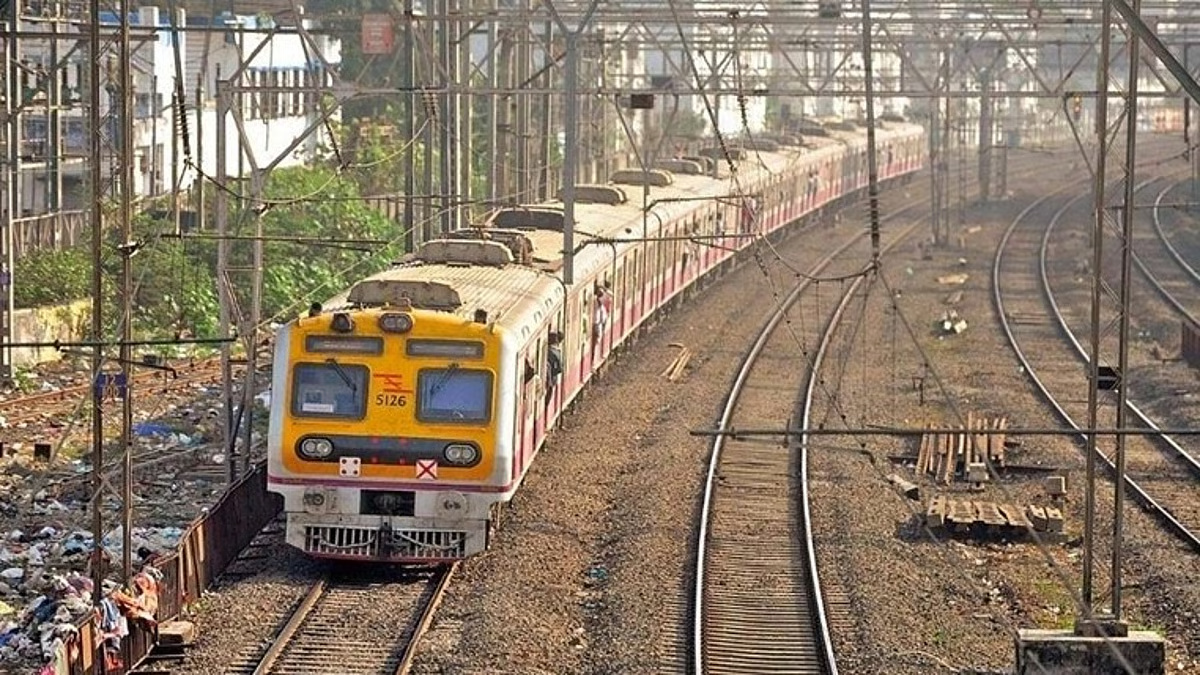
The Maharashtra government has approved a revised financial framework for a major suburban rail upgrade in Mumbai, increasing the overall outlay to ₹8,087 crore. The decision reshapes how one of the city’s most critical transport programmes will be funded and delivered, at a time when commuter rail remains the backbone of daily mobility for millions across the metropolitan region.
The revised approval applies to the Mumbai Urban Transport Project Phase 2, a long-running capacity expansion initiative jointly anchored by the state and national rail authorities. Initially cleared more than a decade ago at a significantly lower cost, the programme has faced rising construction expenses, land constraints, and evolving design requirements linked to safety, signalling, and passenger flow improvements. Under the updated structure, funding responsibilities between state agencies, rail institutions, and urban development bodies have been rebalanced. A senior official familiar with the decision said the new framework is intended to unlock stalled components while reducing direct fiscal pressure on annual state budgets. The plan is conditional on accelerating commercial development of railway-owned land in Bandra East, a high-value urban precinct adjacent to major transit corridors.
A key feature of the restructuring is the formal adjustment of commuter-derived funds already mobilised through a suburban rail surcharge. Over the years, this levy has generated more than ₹1,600 crore, which has been deployed for works such as track augmentation, station upgrades, and system improvements. These collections will now be accounted for as part of the state’s contribution, bringing greater transparency to project financing. The Mumbai Metropolitan Region Development Authority will also step in with additional support, contributing funds to bridge gaps in the state’s share. Urban finance experts note that this approach reflects a broader shift towards pooled metropolitan funding, where transport, land development, and planning agencies collaborate to deliver region-scale infrastructure.
The revised plan also establishes a clear link between land value capture and future rail investment. Revenue generated from the Bandra East commercial development will be channelled into the urban transport fund, with any surplus earmarked for subsequent phases of Mumbai’s rail modernisation programme. This includes upcoming expansion stages aimed at easing congestion on some of the busiest suburban corridors in the world. Urban planners argue that such mechanisms are essential for building climate-resilient cities, where low-carbon public transport systems can scale without relying entirely on debt or fare hikes. However, they caution that commercial land development must be carefully managed to avoid displacing communities or overloading local infrastructure.
For commuters, the significance of the Mumbai Urban Transport Project Phase 2 lies in its long-term promise: higher carrying capacity, safer operations, and more reliable journeys. As Mumbai’s population and employment base continue to spread across the metropolitan region, sustained investment in suburban rail will remain central to equitable access and economic productivity. The revised funding structure now shifts attention to execution. The pace at which land development proceeds, agreements are formalised, and works are completed will determine whether the project delivers timely relief to the city’s strained rail network.
Mumbai Transport Project Gets Revised Funding Boost