


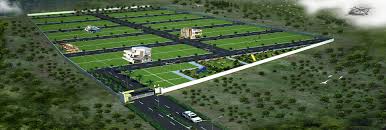
Barsana, a pilgrimage town in Uttar Pradesh’s Braj region, is witnessing a renewed wave of infrastructure-led attention that is beginning to alter its real estate dynamics. State-led planning initiatives focused on heritage conservation, tourism infrastructure and regional connectivity are positioning the town as part of a broader transformation of religious and cultural corridors, with long-term implications for land values, settlement patterns and local economies.
Over the past year, government agencies have outlined an integrated development approach for the wider Braj belt, covering key pilgrimage centres such as Mathura, Vrindavan, Govardhan and Barsana. Officials familiar with the planning process say the framework combines transport upgrades, civic infrastructure, heritage-sensitive public spaces and township development, aimed at supporting year-round tourism rather than seasonal footfall. For smaller towns like Barsana, inclusion in such regional master plans often marks a shift from informal growth to structured urbanisation. Urban economists note that infrastructure spending in pilgrimage regions has historically translated into more stable real estate demand compared to speculative peri-urban markets. Improved road access, upgraded public utilities and organised visitor facilities reduce development risk while expanding the pool of potential residents beyond pilgrims to include retirees, second-home buyers and service-sector workers. In this context, Barsana’s relatively low base prices and regulated land supply are drawing attention from long-term investors rather than short-cycle speculators. The experience of other religious centres offers useful precedent. Cities that have undergone coordinated heritage and transport investment have seen land markets mature as demand diversified. Crucially, planners emphasise that the pace of appreciation tends to be linked not to symbolic projects alone, but to the quality of everyday infrastructure such as drainage, power supply and last-mile connectivity. In Barsana’s case, officials say future phases of development will prioritise these fundamentals alongside tourism assets.
From a sustainability perspective, the challenge will be managing growth without eroding the cultural and ecological fabric of the region. Heritage zones typically face development caps, height restrictions and buffer requirements around sacred sites. While this limits supply, it also places greater responsibility on planners and developers to adopt low-density, climate-responsive layouts that respect local water systems and landscape character. Urban designers argue that such constraints, if enforced consistently, can support more resilient settlement patterns over time. Local residents stand to gain if infrastructure investment translates into employment, better services and improved mobility. However, experts caution that land monetisation must be balanced with affordability and access, particularly for communities that depend on pilgrimage-linked livelihoods. Transparent land-use regulation and phased development will be critical to preventing uneven growth.
As the Braj region’s master planning moves from announcement to execution, Barsana’s real estate trajectory will depend on delivery rather than intent. The next few years will reveal whether infrastructure commitments can anchor inclusive, sustainable development or merely trigger price escalation. For now, the town sits at an early inflection point, shaped by policy decisions that extend well beyond its temple precincts.
Also Read: Mumbai Cabinet clears large scale police housing push
