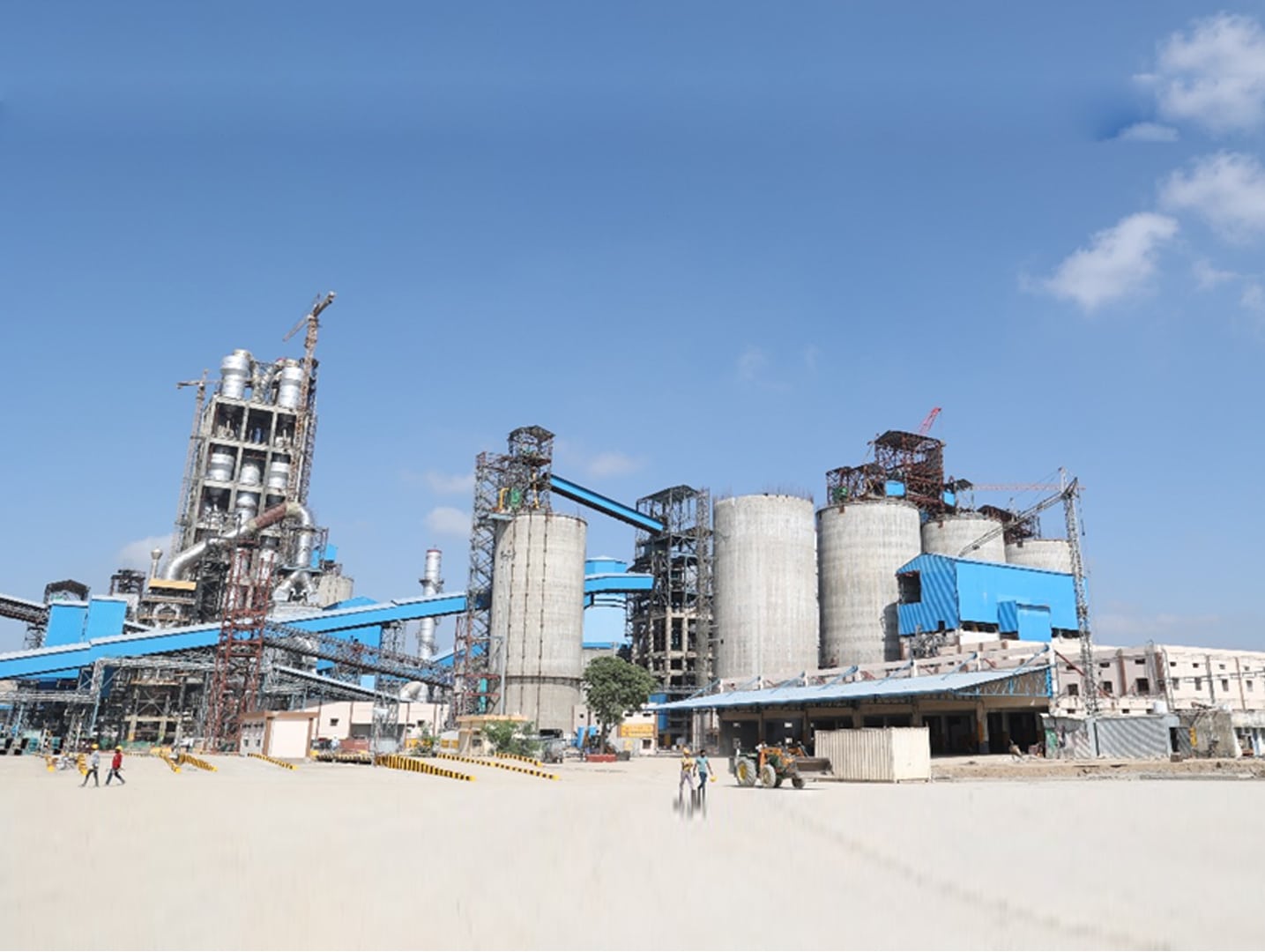
A major cement manufacturing expansion has come online in Rajasthan, reinforcing North India’s construction supply chain at a time of sustained infrastructure and housing demand. A new clinker and cement production unit has been commissioned at an existing manufacturing hub in Jaitaran, significantly increasing output at one of Asia’s largest single-location cement facilities.
The commissioning adds 3.65 million tonnes per annum of clinker capacity and 3.0 million tonnes per annum of cement production at the site. Industry observers note that the expansion strengthens supply resilience across key northern markets, where public infrastructure spending, housing development, and industrial construction continue to place pressure on building material availability. With the new unit operational, the company’s total domestic cement capacity has reached nearly 66 million tonnes per annum. Analysts say the scale of the Jaitaran complex positions it as a strategic anchor for western and northern India, reducing logistics dependence on multi-location sourcing and improving response times to market demand.
Urban planners and construction experts point out that single-location manufacturing at this scale brings both efficiency gains and environmental accountability. Integrated clinkerisation and grinding allow tighter process control, reduced material handling losses, and more predictable output quality—factors that directly influence construction timelines and cost stability for large urban projects. The newly added unit incorporates high-efficiency milling, advanced kiln systems, and emission-control technologies designed to lower energy intensity per tonne of output. Waste heat recovery infrastructure with a capacity of over 20 MW has been integrated into operations, enabling partial self-generation of power and reducing reliance on external electricity sources. Alternative fuel usage further limits exposure to fossil fuel volatility, a growing concern for energy-intensive industries.
Sustainability specialists highlight that such investments are increasingly shaping competitiveness in the cement sector, as regulators, lenders, and city authorities place greater emphasis on lifecycle emissions and resource efficiency. Cement remains a critical input for affordable housing, transport corridors, and climate-resilient urban infrastructure, making cleaner production pathways essential for long-term urban growth. The Jaitaran expansion also carries regional economic implications. Large-scale manufacturing projects generate sustained employment, support mining-linked livelihoods, and strengthen ancillary supply networks ranging from logistics to equipment maintenance. For Rajasthan, which has emerged as a major cement-producing state, the development reinforces its role in India’s construction materials economy.
Looking ahead, experts suggest that capacity additions alone will not define industry leadership. The next phase of competitiveness will hinge on emissions reduction, digital process control, and alignment with evolving green construction standards. As cities push for durable, low-carbon infrastructure, manufacturing hubs capable of delivering scale with accountability are likely to play an increasingly central role.
Shree Cement Expands Jaitaran Capacity Strengthening North India Supply