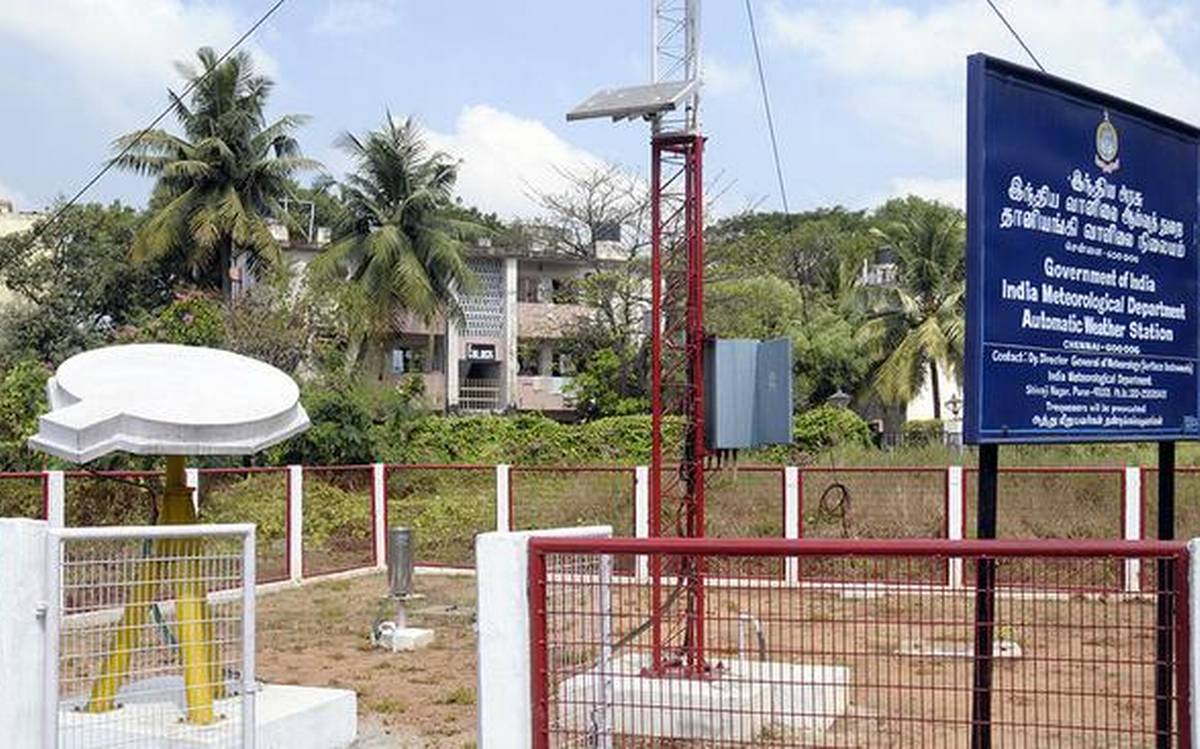
India’s urban climate monitoring framework is set for a significant upgrade as the national weather agency prepares to expand its automated observation network across four major metropolitan regions. The move, announced at a national-level institutional event in the capital, signals a shift towards hyperlocal weather intelligence at a time when Indian cities are facing rising climate volatility, infrastructure stress, and growing exposure to extreme weather events.
Under the expansion plan, the India Meteorological Department will deploy 200 new Automatic Weather Stations, with equal distribution across Delhi, Mumbai, Chennai, and Pune within the year. Each city will receive 50 installations, substantially increasing the density of real-time weather data points in some of the country’s most populated and economically critical urban regions. Urban planners and climate researchers say the expansion reflects a recognition that city-scale weather patterns can vary dramatically within short distances. High-density construction, shrinking open spaces, coastal influences, and heat-retaining surfaces have made traditional forecasting less effective for neighbourhood-level decision-making. Automatic Weather Stations continuously record temperature, rainfall, humidity, wind speed, and pressure, allowing authorities to generate more precise, localised forecasts.
Senior officials overseeing meteorological services noted that investments in observation infrastructure over recent decades have already yielded measurable results. Forecast accuracy has improved significantly, while errors in longer-range outlooks have narrowed sharply. For disaster-prone regions, especially coastal and flood-vulnerable cities, improved prediction capability has translated into earlier warnings and more coordinated emergency responses. The relevance for urban governance extends well beyond disaster management. In cities such as Mumbai and Chennai, granular weather data is increasingly being used to inform stormwater planning, construction scheduling, aviation operations, and public transport resilience. In landlocked but fast-growing urban centres like Pune, better rainfall and heat data can support water resource management and heat mitigation strategies tied to real estate and industrial development.
Climate specialists point out that denser weather station networks are also essential for aligning India’s urban growth with climate-resilient planning principles. Real-time datasets help local governments assess flood risks, recalibrate drainage designs, and enforce construction norms in vulnerable zones. For developers and infrastructure agencies, reliable micro-climate data reduces uncertainty and supports long-term asset durability. Beyond domestic priorities, India’s meteorological capabilities have also assumed a regional dimension. The country now provides weather advisories, disaster alerts, and satellite-backed data support to neighbouring South Asian nations, reinforcing its role as a climate services hub in a region increasingly affected by cyclones, heatwaves, and erratic monsoons.
As Indian cities continue to expand vertically and horizontally, experts argue that climate data infrastructure must scale in parallel. The addition of Automatic Weather Stations marks a step toward evidence-driven urban management, where resilience planning is based on real conditions rather than broad averages. The effectiveness of the rollout, however, will ultimately depend on how seamlessly this data is integrated into city planning, infrastructure operations, and public communication systems.
IMD Expands Automatic Weather Stations Network