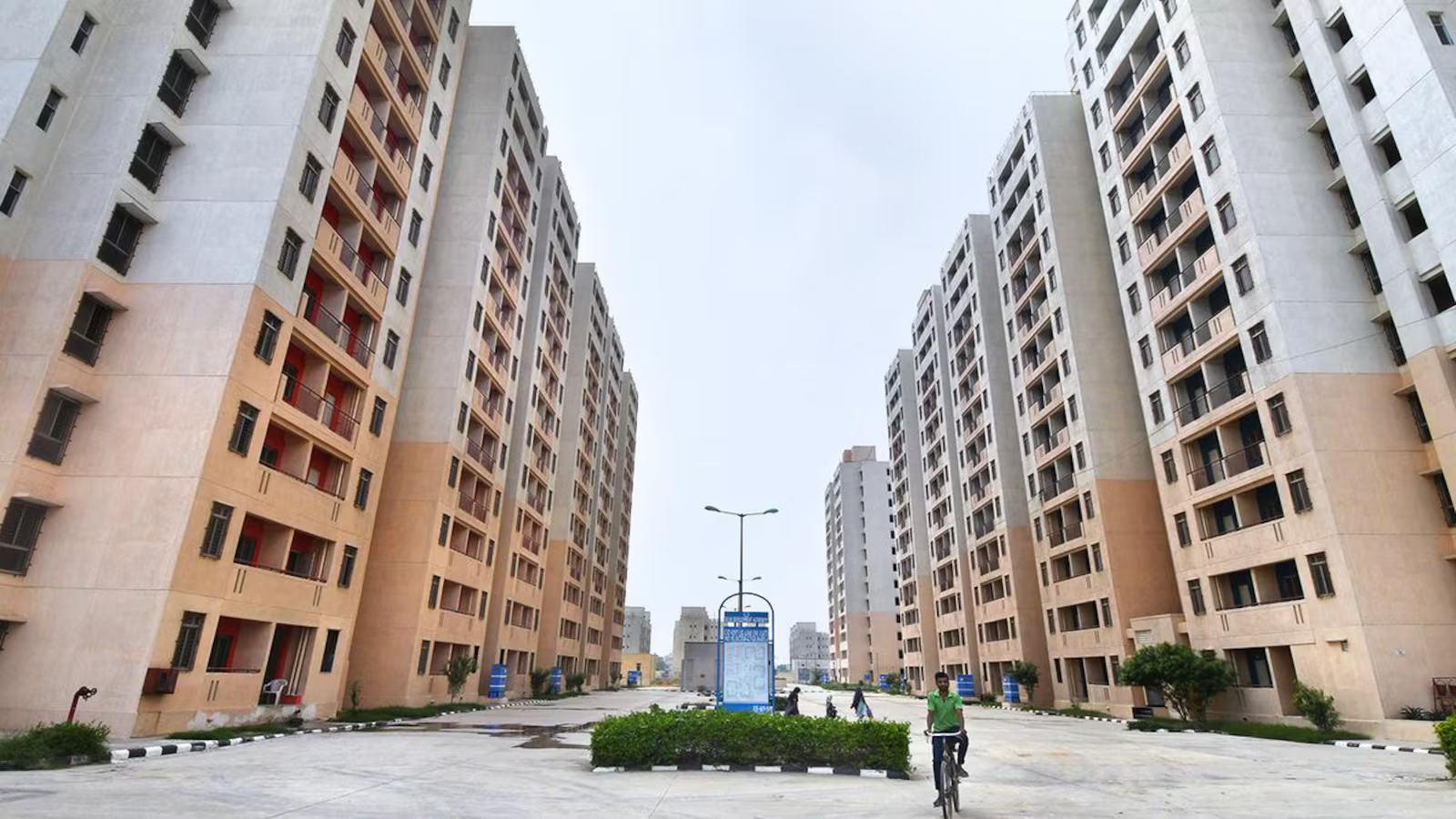
A new public housing initiative in Delhi has recorded an unexpectedly strong market response, signalling renewed confidence in state-led residential development and the growing appeal of peripheral urban centres. Within the first day of bookings, a majority of homes offered under the DDA Karmayogi Awaas Yojana were taken up, underscoring sustained demand for affordable, ready-to-occupy housing among salaried households linked to public service.
The scheme, launched earlier this week, is targeted at serving and retired employees from central and state government departments, public sector enterprises, and allied institutions. Officials familiar with the process indicated that nearly two-thirds of the available inventory was booked within 24 hours, translating into several hundred units being allocated through the digital platform. The initial uptake is expected to generate substantial upfront revenue, reflecting both pricing confidence and improved buyer trust in public housing delivery. Urban planners see this response as a significant indicator for Delhi’s long-term spatial strategy. Narela, where the housing stock is located, has long been positioned as a future sub-city, but demand historically lagged behind planning ambition. Recent years, however, have seen a shift driven by incremental infrastructure upgrades, institutional investments, and stronger transport linkages that are gradually integrating the area into the wider metropolitan economy.
Connectivity has emerged as a critical factor behind the renewed interest. The locality benefits from arterial road access through major highways and urban corridors, while upcoming mass transit projects are expected to reduce travel times to employment hubs in central and western Delhi. Experts note that such transit-oriented development is essential for reducing private vehicle dependence and aligning housing growth with climate-resilient mobility planning. Demand patterns within the scheme also offer insights into evolving household needs. Smaller homes were absorbed fastest, pointing to a rising preference for compact, efficient living spaces that balance affordability with proximity to infrastructure. Larger units, meanwhile, contributed a disproportionate share of booking value, suggesting stable purchasing power among mid-income government employees seeking long-term security rather than speculative gains.
The project’s fully online booking process marks another step in the digitisation of public real estate transactions. By reducing intermediaries and improving transparency, authorities aim to make access to formal housing more equitable while lowering administrative friction for applicants. Urban policy specialists argue that such systems are essential for restoring credibility to public housing agencies and ensuring fair allocation. Looking ahead, the scheme remains open for bookings over an extended period, providing a test case for whether early momentum can be sustained. Its performance will likely influence future housing strategies in Delhi, particularly as policymakers seek scalable models that combine affordability, infrastructure readiness, and environmentally responsible urban expansion. If matched with timely delivery and social amenities, developments like this could help rebalance growth away from congested cores toward more inclusive and resilient urban districts.
Delhi DDA Housing Scheme Sees Rapid First Day Uptake