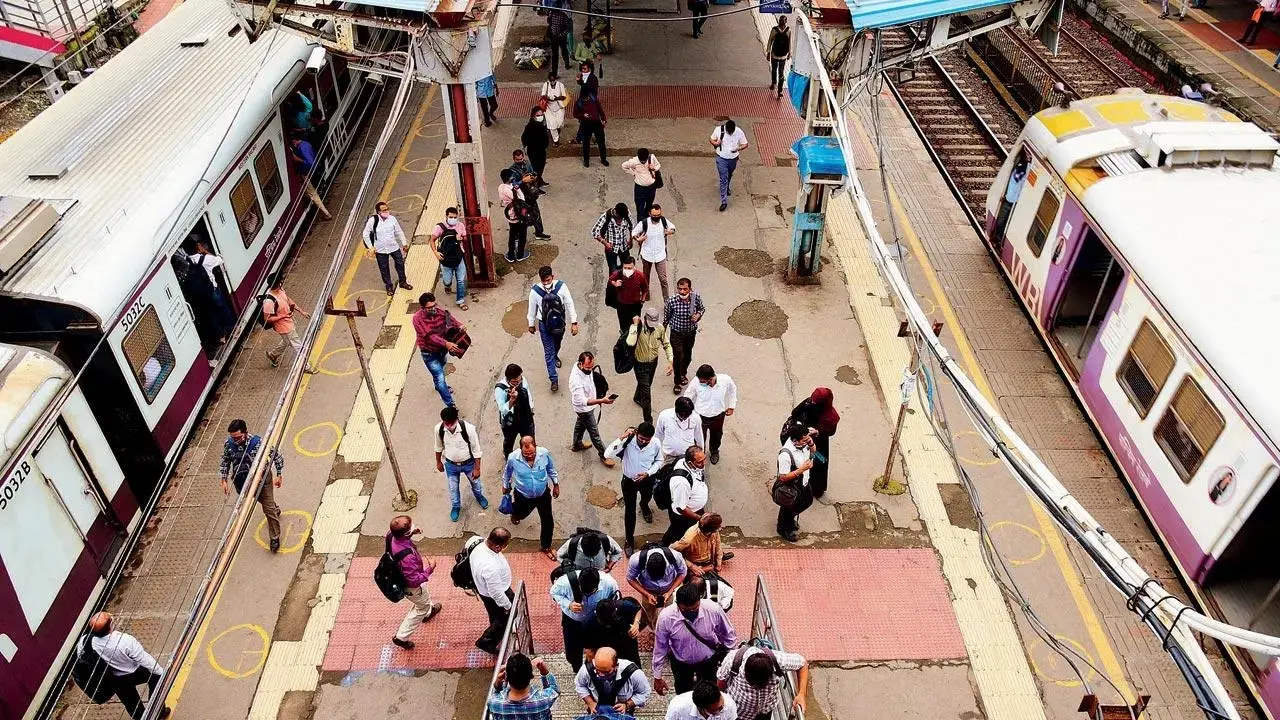
Mumbai’s suburban and long-distance rail network will undergo a series of planned night-time disruptions over the coming weeks as critical construction advances on the Dedicated Freight Corridor near Panvel. Central Railway has announced multiple traffic and power blocks on the Panvel–Kalamboli section to facilitate the installation of a large steel girder, a key structural component for freight rail separation in the Mumbai Metropolitan Region.
The temporary restrictions, scheduled during late-night hours across January and February, are intended to minimise commuter impact while enabling high-risk engineering work on one of the region’s most congested rail junctions. The corridor forms a vital interface between Mumbai’s passenger-heavy suburban lines and the national freight network, making construction sequencing and safety management particularly complex. Railway officials indicate that the activity involves launching a 110-metre open web girder weighing approximately 1,500 tonnes—an operation requiring complete suspension of traction power and train movement during defined windows. Such interventions are considered unavoidable in dense urban rail systems, where legacy passenger infrastructure must be upgraded without halting daily mobility.
As a result, several mail and express services will face diversions, short-term regulation at intermediate stations, or rescheduling during affected nights. Key long-distance trains connecting Mumbai with southern, western and central India will experience delays ranging from a few minutes to over an hour on select dates. A limited number of services will be rerouted via alternative junctions to maintain network continuity. Transport planners note that while these disruptions may cause temporary inconvenience, the long-term objective is to decongest Mumbai’s rail system by separating freight and passenger traffic. Once operational, the Dedicated Freight Corridor is expected to remove a significant volume of goods trains from suburban lines, improving punctuality, safety and energy efficiency for daily commuters.
From an urban sustainability perspective, the project is also designed to support a modal shift from road-based freight to rail, reducing emissions, fuel consumption and highway congestion. Industry experts highlight that freight corridors are essential to building climate-resilient cities, particularly in regions where logistics traffic competes directly with public transport for limited right-of-way. The Panvel–Kalamboli node is especially significant as it links Mumbai’s port ecosystem, upcoming logistics parks and the broader western freight corridor. Successful execution here will influence freight movement patterns across Maharashtra and neighbouring states, with implications for regional supply chains and economic productivity.
Central Railway has advised passengers travelling on affected dates to check updated train schedules and allow additional buffer time. Officials add that any further adjustments will depend on operational conditions and progress on site. As Mumbai continues to retrofit its rail network for future demand, such carefully timed interventions underscore the balancing act between maintaining daily mobility and delivering long-term infrastructure upgrades. The coming weeks will test coordination across agencies—but completion of this phase is expected to unlock lasting gains in rail reliability and capacity.
Mumbai Rail Network Adjusts For Freight Corridor Works