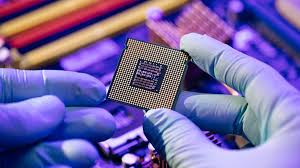
India Chip Pvt Ltd Signals Growth In Local Semiconductor Ecosystem
In a strategic milestone for India’s semiconductor ambitions, global electronics manufacturer Foxconn and Indian technology conglomerate HCL Group have formally named their joint semiconductor venture India Chip Private Limited, marking a concrete step toward strengthening domestic chip assembly and testing capacities. The development signals a growing alignment between global capital and India’s industrial policy push to build resilient, locally anchored semiconductor supply chains.
The regulatory filing confirming the name also reveals Foxconn’s initial equity infusion of USD 3.72 million (about ₹312 crore) for a 40 per cent stake, with total planned investment potentially reaching around ₹424 crore. The venture is slated to establish an Outsourced Semiconductor Assembly and Test (OSAT) facility in Uttar Pradesh’s Yamuna Expressway Industrial Development Authority (YEIDA) region, a strategic location for both export logistics and domestic chip supply diversification. Under the India Semiconductor Mission — a broader government initiative to cultivate chip manufacturing capabilities — this project supplements other ongoing investments across the country. The JEWAR‑area facility, sized at roughly 48 acres, will initially focus on display driver integrated circuits (DDICs) used in mobile phones, laptops, automotive infotainment systems and industrial displays. Industry planners view such foundational production as a key missing link in India’s electronic value chain, which traditionally depends heavily on imports for semiconductors and chip components.
Urban economic analysts note that chips have become a critical urban infrastructure input in everything from consumer electronics to smart city systems and electric vehicles. Strengthening domestic production capacity thus not only serves industrial policy but also underpins more resilient supply chains for rapidly growing urban markets. Cities with advanced manufacturing clusters stand to benefit from nearer‑home sourcing of components, shortening logistics networks and reducing vulnerability to global disruption.In the context of India’s broader semiconductor ecosystem, the Foxconn‑HCL joint venture complements investments by other major players, including wafer fabrication and ATMP (assembly, testing, marking and packaging) facilities being developed in Gujarat, Assam and other states. Collectively, these facilities are part of a diversified landscape that spans chip design, fabrication, testing and packaging — a layered architecture essential for deepening domestic capability.
The OSAT segment — assembly and testing — acts as a gateway for further downstream semiconductor activities and is often seen as a pragmatic entry point for countries building local capacity. By focusing on this segment, India aims to attract incremental investments while gradually building technical expertise and workforce skills in semiconductor production.Yet challenges persist. Experts emphasise that scaling the semiconductor sector will require more than capital deployment: it demands robust engineering talent pipelines, coordinated state and central incentives, and regulatory frameworks that facilitate technology transfer and intellectual property collaborations. For cities and regions promising jobs and industrial growth, early execution of the India Chip project will be a bellwether for broader ecosystem confidence.
As India navigates the delicate balance between economic self‑reliance and integration with global electronics supply chains, India Chip Pvt Ltd represents both an immediate operational asset and a symbolic commitment to deeper domestic capability — one that could shape the next decade of industrial expansion and urban technology adoption.