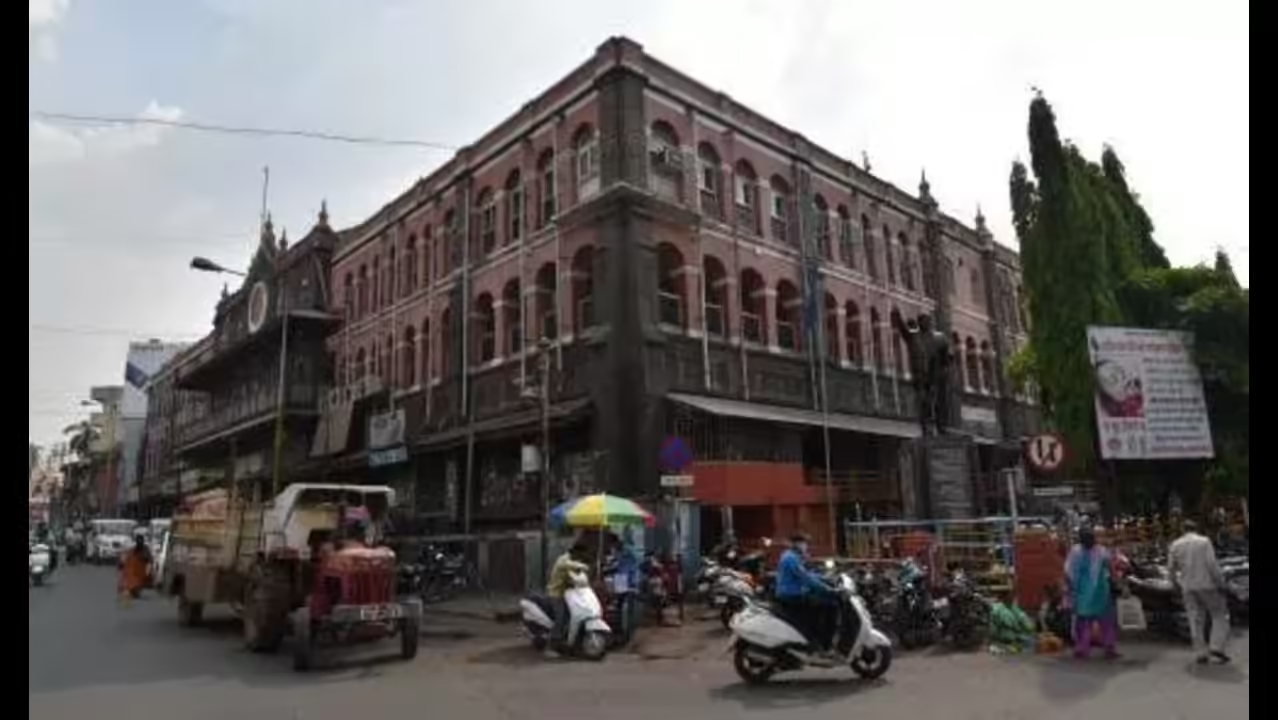
Kolhapur Public Transport Deficit Threatens City Growth
Kolhapur’s civic infrastructure and public transport systems have drawn sharp scrutiny from the city’s legal community, who warn that longstanding gaps could undermine the historic western Maharashtra hub’s economic and social development. In remarks that resonate with broader urban governance debates ahead of municipal elections, advocates have called on the Kolhapur Municipal Corporation (KMC) to urgently improve transit services, road quality and basic civic amenities to prevent the city from falling behind regional peers.
At a gathering of legal professionals and civic stakeholders, lawyers highlighted the absence of a robust public transport network — including reliable intra‑city bus operations and adequate parking infrastructure — as contributors to rising traffic congestion and declining commuter convenience. Without efficient mobility options, they argued, Kolhapur’s growth trajectory risks being hampered as its workforce and businesses face mounting daily delays and logistical friction. Kolhapur’s transport ecosystem currently depends heavily on state‑run bus services and limited municipal routes, while local roads carry a mix of private vehicles, commercial traffic and pedestrian flows. The absence of a consolidated municipal transport strategy — embracing route optimisation, fleet expansion and multimodal integration with the city’s rail and intercity bus terminals — has left many residents with few alternatives to private transport. Urban planners note that such reliance on personal vehicles can exacerbate congestion and contribute to carbon emissions, counter to evolving goals for sustainable city mobility.
Lawyers also flagged persistent civic infrastructure deficits, including deteriorating road surfaces, inadequate parking near commercial centres and limited amenities in public spaces. These challenges have been echoed in citizen‑led campaign efforts and legal actions related to road quality and urban upkeep, underscoring a broader perception of administrative inertia in addressing core service delivery. “Functional transport and basic infrastructure are not luxury amenities — they are prerequisites for equitable access to opportunity, and their absence has a direct economic cost,” said a senior bar association member, underscoring how mobility constraints can disproportionately affect hourly wage workers, students and small business operators. Kolhapur’s role as a regional cultural and commercial node — anchored by heritage sites and a growing SME and retail base — amplifies the stakes of these infrastructure gaps.
The bar’s comments come as the city prepares for upcoming municipal elections, with civic service provision and developmental performance emerging as key campaign themes. In related political discussions, candidates and party groups have foregrounded improved service delivery — including roads, water supply and waste management — as core elements of their platforms. The spotlight on public transport adds another layer to this agenda, with implications for how municipal budgets and planning priorities are shaped in the next governance cycle. Experts say addressing Kolhapur’s urban mobility challenges will require a mix of short‑term operational fixes and long‑term strategic planning. Rapid deployment of expanded bus routes, dedicated parking zones and traffic management protocols can provide immediate relief, while investments in integrated transport planning — linking bus networks with rail stations and last‑mile feeder services — can underpin future growth. Public‑private partnerships and state support for fleet modernisation, including low‑emission buses, could further align mobility upgrades with sustainability goals.
Ultimately, the legal community’s call to action serves as a reminder that urban infrastructure is a live barometer of local governance effectiveness, and that mobility systems are integral to economic agility and quality of life in India’s mid‑sized cities.