


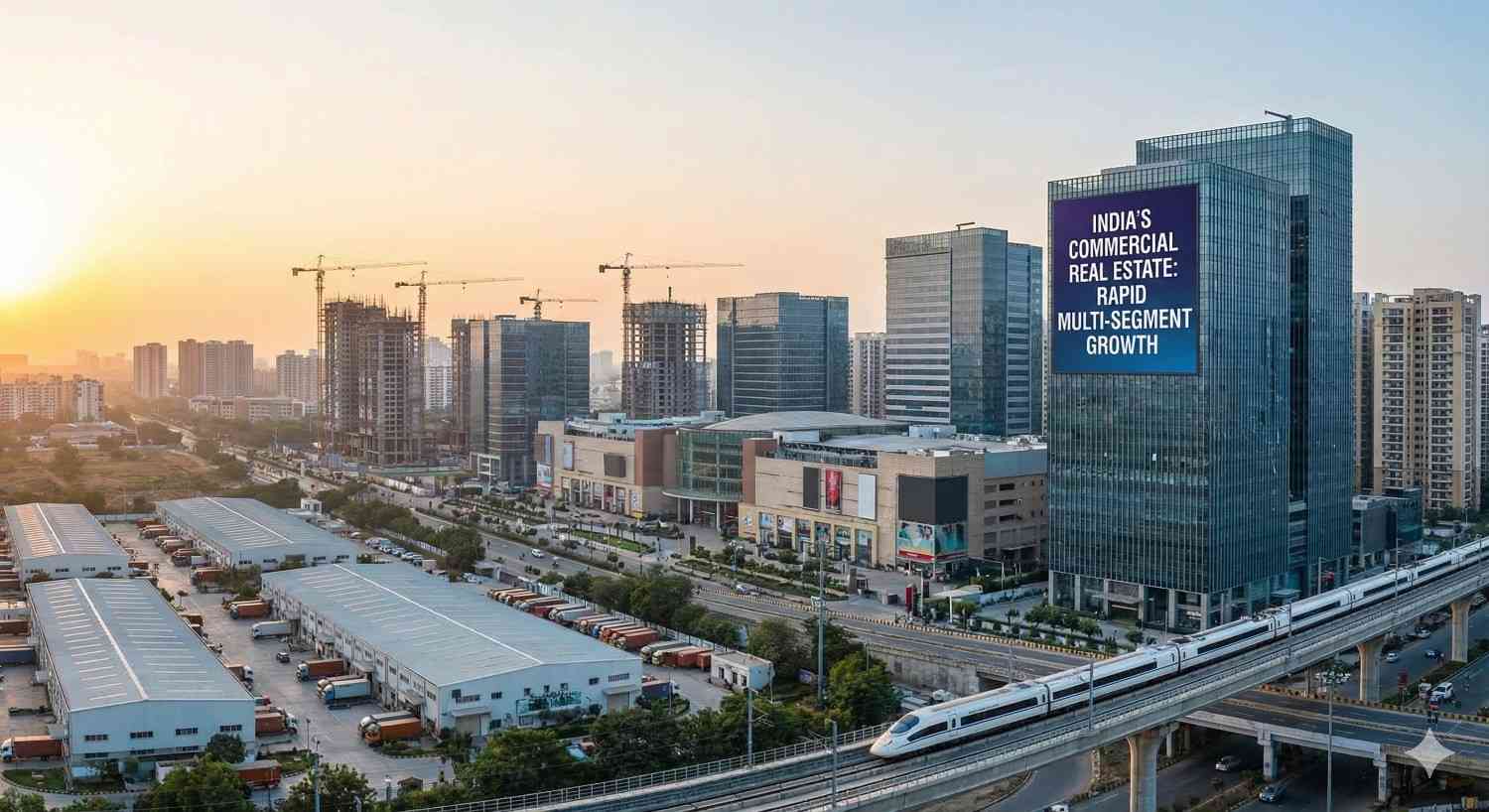
India’s commercial real estate (CRE) sector is entering a decade of unprecedented growth, driven by urbanisation, technology adoption, and rising corporate demand. Market analysts estimate the industry, valued at USD 74.8 billion in 2024, could surge to over USD 643 billion by 2035, registering a compound annual growth rate of 21.6%. This trajectory positions CRE as one of the most resilient and strategically important components of India’s built environment, impacting both metropolitan and emerging cities.
Office spaces remain the backbone of the market, with cities like Bengaluru, Mumbai, Hyderabad, Chennai, Delhi-NCR, and Pune leading absorption. Analysts observe a shift towards sustainable, technology-enabled campuses that accommodate hybrid work models, enhance employee wellness, and integrate energy-efficient systems. Flexible office formats and managed workspaces are gaining traction, reflecting corporate strategies that prioritise scalability, cost efficiency, and operational resilience. Retail properties are undergoing gradual transformation, with consumer preferences steering development towards experience-driven formats combining shopping, dining, and leisure. Tier-II and tier-III cities are emerging as new retail hubs, supported by rising disposable incomes and changing consumption patterns. Experts highlight that the integration of digital and physical retail experiences is reshaping commercial layouts, emphasizing long-term adaptability in urban centres. Logistics and warehousing represent a high-growth segment of CRE, benefiting from the rapid expansion of e-commerce, third-party logistics providers, and organised retail chains. Developers are prioritising large-scale, compliant distribution hubs near highways, ports, and consumption nodes, integrating automation, cold storage, and efficient supply chain infrastructure. Regulatory reforms facilitating interstate goods movement are further enhancing the attractiveness of these assets. Institutional investment trends reinforce the sector’s robustness. Long-term capital inflows, joint ventures, and platform deals are increasingly common as investors seek diversified portfolios and predictable returns. Real estate investment vehicles provide developers with flexible funding while ensuring transparency and market stability, a dynamic analysts say will encourage sustainable urban development alongside financial growth.
Sustainability and smart infrastructure are becoming defining themes. Green building certifications, energy-efficient designs, water conservation measures, and smart building technologies are integrated to reduce operational costs, improve asset valuation, and meet tenant expectations. Urban planners note that these practices not only support climate-resilient cities but also contribute to equitable, people-centred development by enhancing workplace quality and accessibility. Regional diversification is also shaping CRE. While metropolitan areas continue to dominate, emerging cities are attracting attention due to improved connectivity, lower occupancy costs, and government-led infrastructure initiatives. This shift mitigates risk for developers and investors while distributing economic activity across multiple urban nodes. Despite strong fundamentals, the sector faces challenges including high land acquisition costs, regulatory complexities, and evolving workplace preferences. Analysts suggest that developers focusing on quality, adaptability, and long-term demand trends are best positioned to sustain growth.
As India’s economy continues to expand and digital transformation accelerates, commercial real estate is expected to remain a critical driver of urban development, investment, and infrastructure innovation over the next decade.
Also Read: Embassy REIT Increases Chennai Leasing Portfolio
Indian CRE Market Expands Across Offices Retail Logistics
