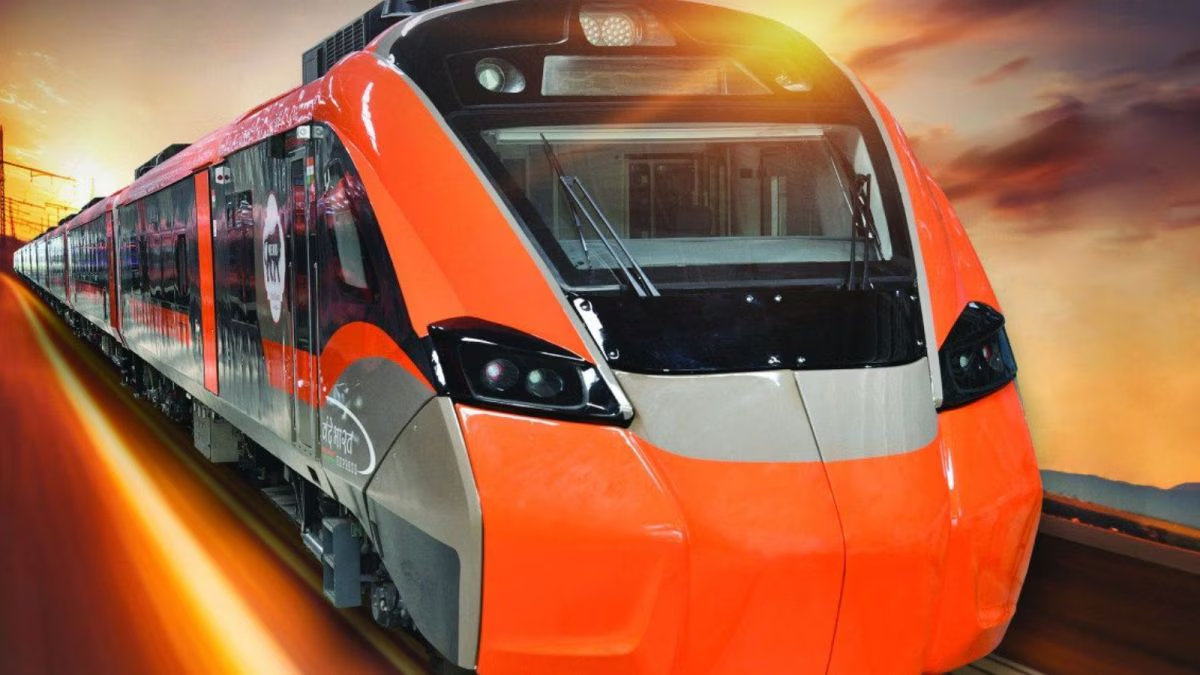
A new overnight rail service linking eastern and northeastern India is set to enter operation later this month, marking a significant shift in long-distance mobility across Assam and West Bengal. The upcoming sleeper train connecting Kolkata with Kamakhya is expected to improve access between metropolitan South Bengal and underserved districts of North Bengal and lower Assam, with implications for healthcare access, labour mobility and regional economic integration.
Railway officials confirmed that the sleeper service, part of the next-generation Vande Bharat platform, will begin operations in mid-January following final readiness checks. Unlike earlier chair-car variants, the sleeper configuration is designed for overnight journeys across long distances, targeting passengers who currently rely on slower mail trains or costlier air travel. Urban planners say the route addresses a structural gap in eastern India’s transport network. Districts across North Bengal and western Assam often face extended travel times to reach tertiary hospitals, education centres and employment hubs. The new Kolkata–Kamakhya connection shortens overnight travel while offering predictable schedules, an important factor for patients, students and small traders.
The service will operate with a 16-coach formation accommodating over 800 passengers across First AC, Second AC and Third AC classes. Railway officials indicated that fares have been positioned between premium express services and conventional long-distance trains, aiming to balance affordability with improved onboard standards. Tickets from Kolkata to Kamakhya, New Jalpaiguri and Malda Town vary by class, allowing travellers to choose based on budget and comfort needs. Beyond passenger convenience, the sleeper train is expected to influence regional economies. Logistics experts note that improved overnight connectivity helps support business travel, tourism circuits and service-sector employment across smaller towns that have historically remained peripheral to growth corridors. For cities such as Siliguri, Malda and Alipurduar, better rail access strengthens their role as regional service centres rather than transit points.
The train introduces upgraded design and safety features, including modern suspension systems, quieter interiors and automatic doors, aimed at reducing fatigue on long journeys. Accessibility provisions for persons with reduced mobility and enhanced hygiene systems reflect a broader shift towards inclusive transport design. Safety mechanisms such as automatic train protection systems and emergency communication units are part of the standard configuration, according to railway officials. From a sustainability perspective, transport economists highlight that high-capacity overnight rail offers a lower-carbon alternative to short-haul aviation while easing pressure on congested road corridors. As eastern India urbanises rapidly, investments in energy-efficient mass transport are increasingly viewed as essential to climate-resilient growth.
The launch coincides with broader efforts to modernise long-distance rail services across India, particularly in regions where geography and distance have historically limited access to opportunity. Analysts caution, however, that sustained impact will depend on service reliability, fare stability and integration with local transport networks. If implemented effectively, the sleeper service could redefine how eastern India travels overnight linking cities and small towns not just faster, but with greater dignity, safety and economic purpose.
Kolkata Assam sleeper train boosts regional access