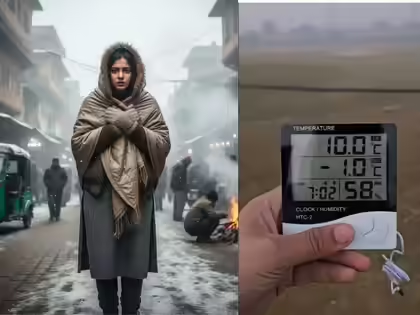
An unusually intense cold wave has pushed Gurugram and Delhi into temperatures colder than several Himalayan hill towns, upending long-held assumptions about winter patterns in north India. Gurugram recorded near-freezing conditions rarely seen in the city’s modern history, while Delhi followed closely behind. The development has wide implications for urban resilience, public health, transport safety and the way cities prepare for climate extremes beyond heatwaves.
Weather data from multiple stations across the National Capital Region indicates that parts of the plains experienced sharper overnight cooling than elevated hill locations such as Shimla and Mussoorie. Meteorologists attribute this inversion to a combination of atmospheric and surface-level factors. Cloud cover over higher altitudes acted as insulation, limiting heat loss, while clear skies over the plains allowed rapid radiative cooling. Cold north-westerly winds further accelerated the temperature drop across Haryana, Delhi and western Uttar Pradesh.
For Gurugram, the cold wave is exceptional not only in intensity but also in frequency. Sub-zero or near-zero temperatures have occurred only a handful of times over several decades, underscoring how rare the current conditions are for a rapidly urbanising city dominated by concrete, glass and heat-retaining surfaces. Delhi, though more accustomed to winter extremes, also saw temperatures fall well below seasonal norms across multiple localities. The impact has been felt unevenly across the urban economy. Construction sites reported slower early-morning activity, while logistics and delivery services adjusted schedules to manage fog-related visibility risks. Frost formation on roads and vehicles raised accident risks, particularly on elevated corridors and expressways linking satellite cities to the capital. Public transport systems operated with caution protocols, affecting commute times during peak hours.
Urban planners point out that winter extremes receive far less policy attention than summer heat or monsoon flooding, despite their effects on vulnerable groups. Outdoor workers, informal commuters and residents of poorly insulated housing face higher exposure to cold stress. Health professionals have warned of increased respiratory complications, especially when cold air combines with elevated pollution levels common during stagnant winter conditions. The current cold wave has also been intensified by an unusually dry winter across northwest India. With limited rainfall and snowfall so far, surface moisture levels remain low, reducing the moderating effect that cloud systems typically provide. Climate scientists say this pattern reflects broader variability linked to shifting western disturbance behaviour and changing land-atmosphere interactions.
Forecast models suggest that temperatures may remain suppressed for several more days before gradually rising as wind patterns shift and cloud cover increases. While short-term relief is expected, experts caution that such anomalies are becoming more frequent rather than exceptional. For cities like Gurugram and Delhi, the episode highlights the need to rethink climate preparedness beyond conventional risk categories. Urban design, housing standards and public shelter planning will need to account for both hotter summers and colder winters. As climate variability intensifies, resilience will depend not just on infrastructure expansion, but on how well cities protect people through increasingly unpredictable weather cycles.
Gurugram cold wave outpaces hill stations