Mumbai’s primary international airport is preparing for a significant operational upgrade that could ease congestion, improve punctuality and cut emissions all without building a single new runway. Aviation authorities are moving to deploy advanced precision landing technology aimed at increasing flight capacity at one of the world’s busiest single-runway airports.
The initiative centres on introducing an Intelligent Approach system that uses real-time data to manage aircraft arrivals more accurately. Officials involved in the planning say the system is expected to be operational before the end of 2028 and will mark a shift from reactive air traffic control to predictive, data-led decision-making at Mumbai airport. Currently, the airport manages roughly 44 to 46 aircraft movements per hour while handling more than 55 million passengers annually. With limited scope for physical expansion and rising demand for air travel, inefficiencies in arrival sequencing have become a key pressure point for both airlines and controllers. Small variations in aircraft spacing often cascade into delays, holding patterns and increased fuel burn.
The proposed solution relies on Time-Based Separation, a method already in use at several major global hubs. Unlike conventional distance-based spacing, the system calculates optimal landing intervals by factoring in aircraft type, wake turbulence, wind conditions and real-time performance data. This allows aircraft to fly more predictable approaches, reducing unnecessary gaps while maintaining safety margins. An aviation official familiar with the programme said the upgrade would “replace estimation with precision”, enabling controllers to plan arrivals further in advance and smooth peak-hour congestion. Industry experts believe this could incrementally increase runway throughput while also reducing controller workload during high-traffic periods.
Beyond operational efficiency, the technology carries environmental implications aligned with Mumbai’s broader sustainability challenges. Shorter approach paths and fewer airborne delays translate into lower fuel consumption and reduced carbon emissions a critical consideration for a city grappling with air quality and climate resilience. For airlines, the gains could also mean lower operating costs and more reliable schedules. Importantly, the system is being designed to integrate with existing surveillance, automation and digital controller–pilot communication platforms. It will also operate within a shared approach control framework alongside the upcoming Navi Mumbai International Airport, enabling coordinated use of the region’s already crowded airspace.
Urban infrastructure analysts see the move as part of a wider shift towards optimising existing assets rather than expanding carbon-intensive infrastructure. As Indian cities confront land scarcity, climate constraints and equity concerns, technology-led solutions that improve efficiency without physical sprawl are increasingly viewed as the sustainable path forward. If implemented as planned, the precision landing upgrade could quietly reshape how Mumbai’s aviation ecosystem functions proving that smarter systems, not bigger footprints, may hold the key to the city’s future connectivity.
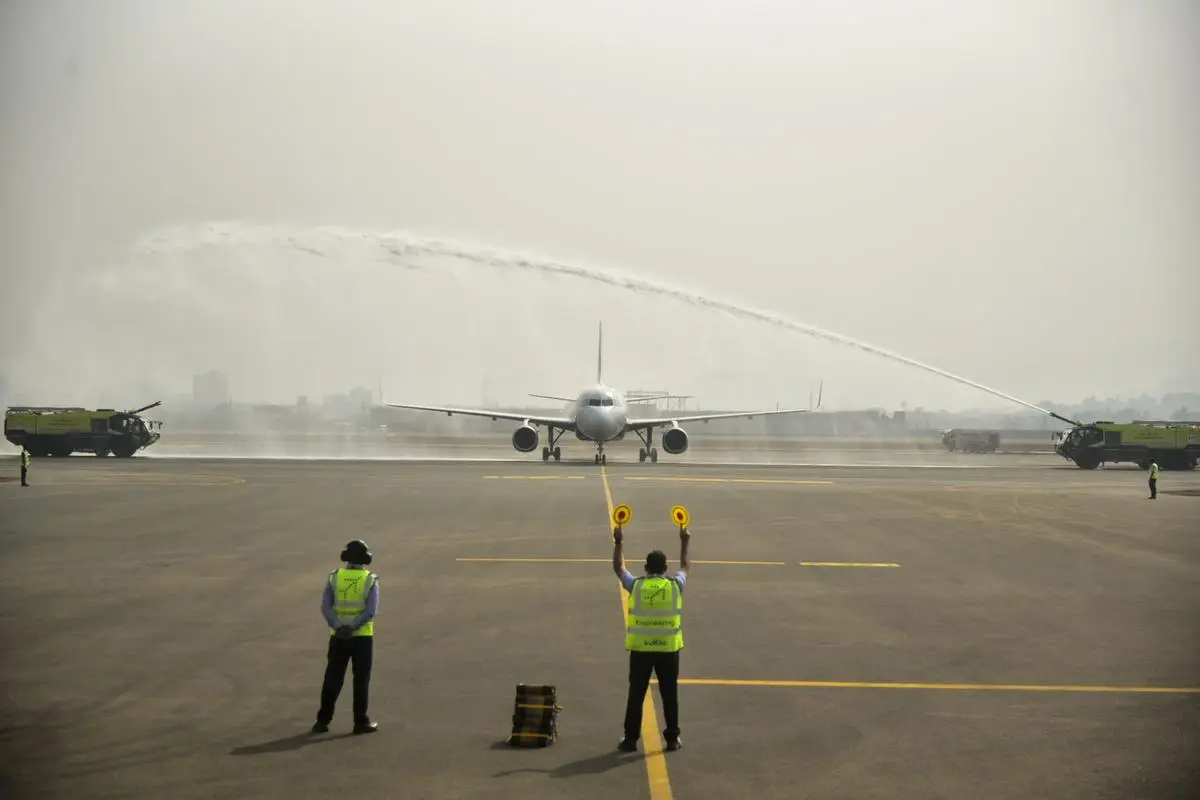
Mumbai Airport To Expand Flight Capacity Precision Landing Technology Without New Runways