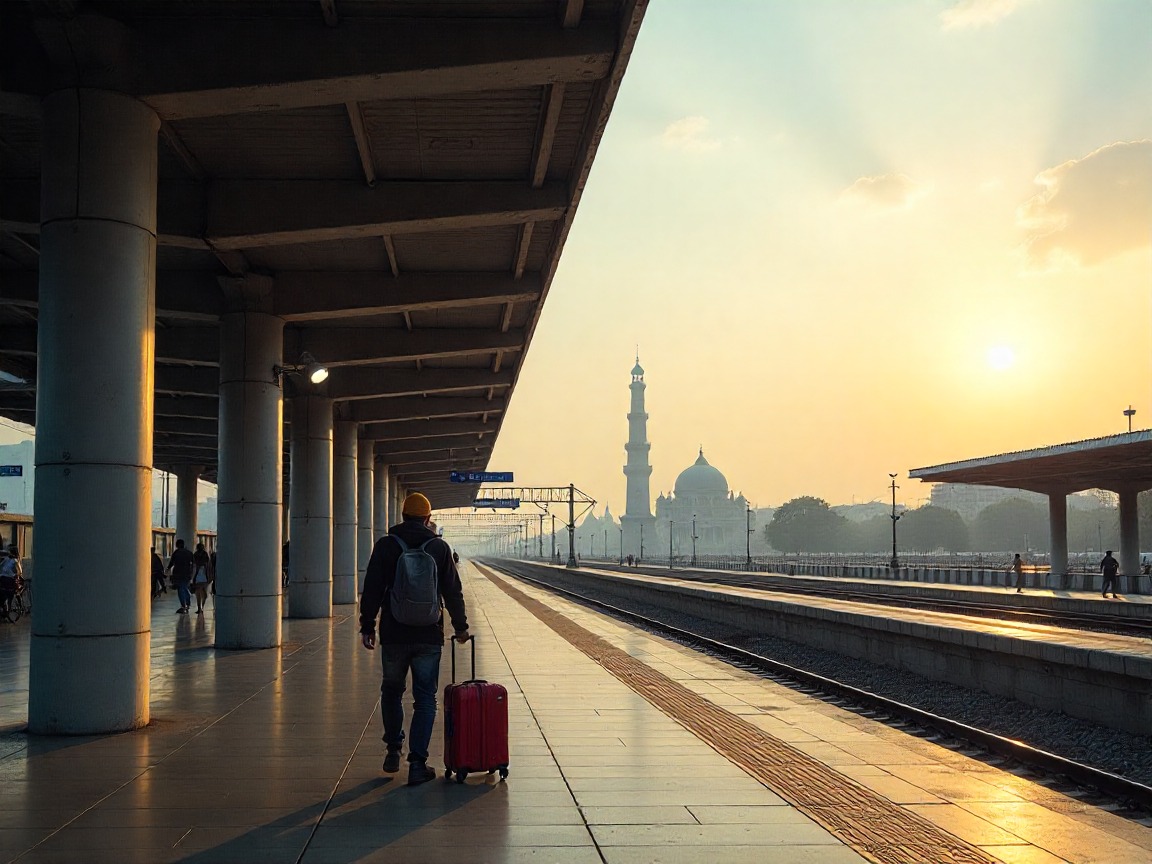
Ahmedabad is poised to build the country’s first 16-storey railway station, marking a major shift in how Indian cities design and experience transit infrastructure. Planned as a multimodal hub connecting high-speed rail, metro services, conventional trains and surface transport, the redevelopment aims to ease mobility pressures while supporting the city’s wider transition towards low-carbon, people-centric urban development. The project is expected to be completed by July 2027.
The forthcoming hub will anchor the Mumbai–Ahmedabad High-Speed Rail corridor, India’s first bullet train line being developed in partnership with Japanese agencies. According to officials involved in the project, the station will rise above platforms 10, 11 and 12 on the Western Railway network, allowing the existing rail operations to continue even as construction proceeds in phases. Direct pedestrian links are being designed to connect the structure with the adjacent Kalupur Metro Station, enabling smoother transfers for thousands of daily commuters.
Urban planners note that the design reflects a growing shift in Indian transport architecture from low-rise, sprawling layouts to compact, vertical forms that integrate multiple modes under one roof. A consultant associated with the project said the 16-level station would include separate floors for high-speed rail operations, metro interchange, waiting areas, retail zones and passenger amenities. The stacked configuration is expected to reduce land consumption and encourage denser, transit-oriented development around the site.
Industry experts say Ahmedabad’s choice to build vertically aligns with global best practices seen in Japan, South Korea and parts of Europe, where vertical transit nodes reduce walking distances, improve accessibility and support large passenger volumes. By bringing different transport services into a climate-responsive building envelope, the design also has the potential to improve energy efficiency and minimise local pollution, which remains a key consideration for modern Indian cities.Local officials argue that the upgraded station could become a catalyst for the surrounding precinct, drawing investment into commercial and residential redevelopment. Better last-mile access, integrated bus stops and pedestrian-friendly public spaces are being planned to ensure the station serves all user groups, including senior citizens, women travellers and persons with disabilities. The focus, they say, is not just on speed but on building an inclusive mobility ecosystem that supports Ahmedabad’s long-term sustainability ambitions.
Once operational, the new hub is expected to significantly shorten travel times along the high-speed rail corridor, offering quicker, safer and lower-emission intercity journeys.
For daily commuters, the seamless integration of metro and rail lines could reduce transfer times and encourage a shift from private vehicles to public transport.
As construction progresses, planners emphasise the importance of maintaining accessibility around the site and ensuring transparent communication with residents. If these aspects are managed well, Ahmedabad’s upcoming station could become a benchmark for future transport infrastructure across India — one that combines efficiency, vertical design and equitable mobility in a rapidly urbanising environment.
Ahmedabad To Build India’s First 16-Storey Multimodal Railway Station By 2027