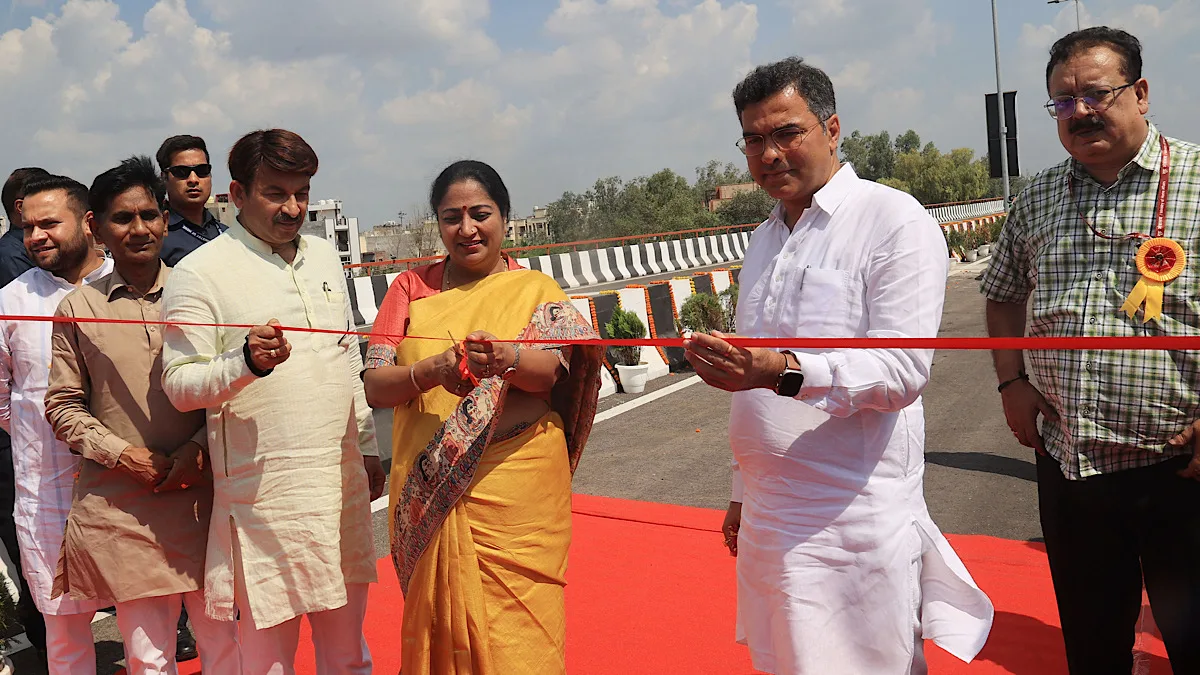
Delhi Unveils Nand Nagri Six Lane Flyover Easing Traffic Congestion
Delhi took a major leap in transport infrastructure and green mobility on Sunday with the inauguration of a six-lane flyover at Nand Nagri and the induction of 300 new electric buses into the public fleet. Officials said the two projects will ease congestion in East Delhi, improve last-mile connectivity, and significantly cut emissions.
The flyover, constructed by the Public Works Department at a cost of about ₹180 crore, connects Nand Nagri to Gagan Cinema. Spanning 1,550 metres in length and 22 metres in width, the corridor is expected to carry over one lakh vehicles daily. Transport planners estimate the project will save an average of 14 minutes per vehicle, translating into lower fuel consumption and substantial reductions in vehicular emissions.
Officials underlined that the project faced a 16-month delay due to clearance hurdles involving tree removal, but systematic coordination between agencies finally ensured its completion. They added that the flyover will smoothen vehicular flow between Delhi and Uttar Pradesh, creating a much-needed signal-free stretch in one of the most congested parts of Trans-Yamuna.Beyond easing traffic, authorities highlighted the environmental dividends of the project. “From the very first year, this corridor is expected to save fuel and reduce carbon emissions,” an official said. “This is a vital part of reimagining Delhi’s infrastructure through a climate-sensitive lens.”
On the same day, 300 new Delhi EV Inter-connector (DEVI) buses were flagged off from East Vinod Nagar Depot. Officials noted that these buses are part of the first phase of route rationalisation designed by experts from a premier technical institute. The new structure introduces 21 routes covering 625 bus stops in the Trans-Yamuna region, with plans to scale the model citywide.Authorities emphasised that the rationalisation ensures passenger demand drives route planning, reducing inconvenience for commuters while avoiding financial losses for the Delhi Transport Corporation. This marks the first comprehensive route restructuring in the city’s history.
The government reiterated its commitment to convert the entire public bus fleet to electric within 18 months. Officials stated that this transition is integral to the “Green Delhi Clean Delhi” mission, aimed at promoting sustainable, accessible, and affordable mobility while addressing Delhi’s worsening air quality.Transport experts view the combination of infrastructure expansion and electric bus induction as a signal of a broader shift. The dual launch addresses two pressing needs simultaneously: decongesting traffic choke points and building a cleaner, more efficient urban transport ecosystem.For residents of the Trans-Yamuna belt, historically underserved by public infrastructure, the projects offer tangible relief and a glimpse of an equitable mobility future. With these moves, Delhi is positioning itself not just to ease daily commutes but also to confront its long-standing battle against pollution.