


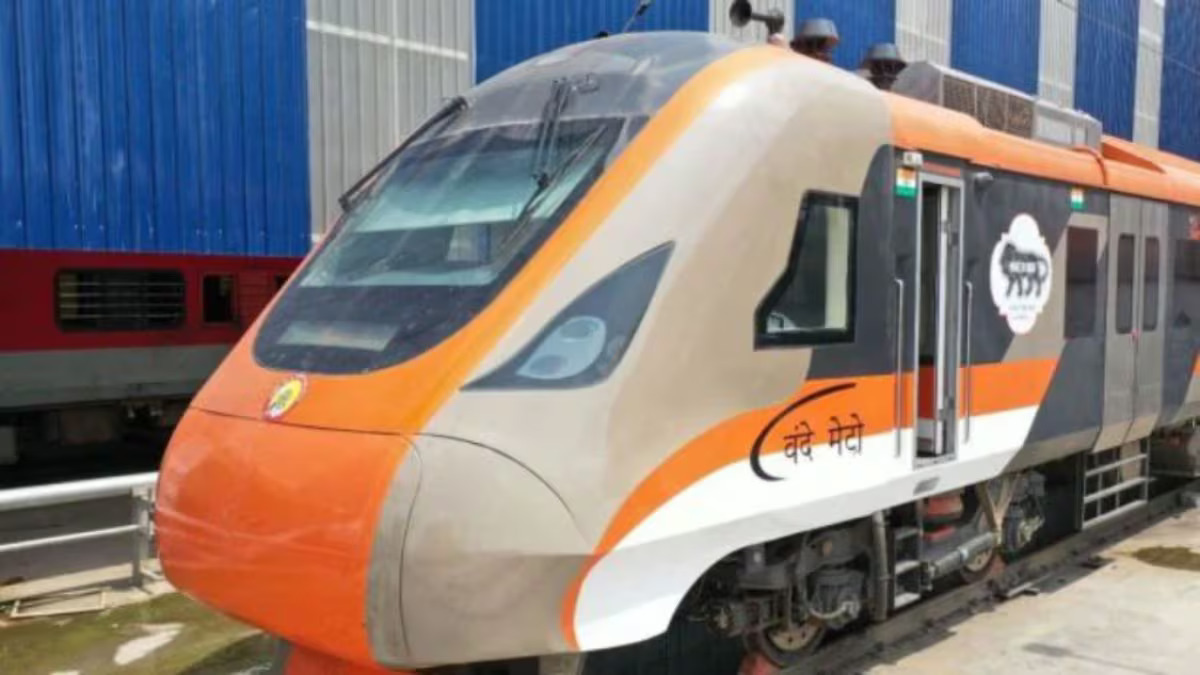
Hyderabad is set to strengthen rail connectivity with northern India as the Indian Railways prepares to launch a brand-new Vande Metro service connecting the city to Bihar, Assam, and Kerala. The initiative is expected to provide significant relief to thousands of migrant workers who often face difficulties securing seats on conventional superfast trains. The first service will operate between Secunderabad and Muzaffarpur, passing through major stations including Patna and Gaya, and is designed to offer balanced accommodation with both general and sleeper coaches.
According to railway officials, the Vande Metro train has been conceptualised as a low-fare, high-capacity travel option for migrant and general passengers, enabling last-minute travel without compromising comfort. Unlike standard long-distance trains, the service will maintain an equal ratio of general and sleeper class coaches, addressing a critical gap in accessible mobility for economically vulnerable commuters. The inaugural Amrit Bharat Express on the Secunderabad–Muzaffarpur route will stop at key locations such as Kazipet, Bellampalli, Sirpur Kagaznagar, Balharshah, Nagpur, Raipur, Bilaspur, Jharsuguda, Rourkela, Hatia, Ranchi, Bokaro, Gaya, and Patna. This route selection aims to maximise connectivity for passengers travelling across central and northern India while ensuring efficient utilisation of train capacity.
Railway experts highlighted that the current limited connectivity between Hyderabad and Muzaffarpur, previously served by only a weekly express, has created significant demand for affordable, reliable travel options. The introduction of Vande Metro trains addresses this demand directly, offering a practical solution for migrant workers who constitute a large proportion of the daily passenger base. Officials also confirmed that the Vande Metro initiative will expand in phases, with additional services planned between Hyderabad and Santragachi, Cherlapalli and Guwahati, as well as Secunderabad and Thiruvananthapuram. These expansions are expected to reinforce the Indian Railways’ strategy of providing equitable, eco-friendly, and high-frequency travel options while reducing the reliance on road transport, which contributes to congestion and carbon emissions.
Experts emphasised that the Vande Metro concept aligns with sustainable urban mobility goals. By offering efficient, low-cost alternatives for long-distance travel, the initiative reduces the need for private vehicle usage, thereby supporting lower carbon emissions and more inclusive access to intercity transportation. Railway officials indicated that passenger demand and operational performance will guide future route expansions and service frequency adjustments. The launch of Hyderabad’s Vande Metro marks a pivotal step towards equitable, sustainable rail connectivity across India, particularly benefiting migrant populations and general commuters. By integrating affordability, comfort, and accessibility, the initiative is poised to redefine long-distance train travel for a diverse spectrum of passengers while advancing broader environmental and urban mobility objectives.
Also Read: Thane Metro 4 Completes First Test Run Promising Relief From Traffic Congestion
