


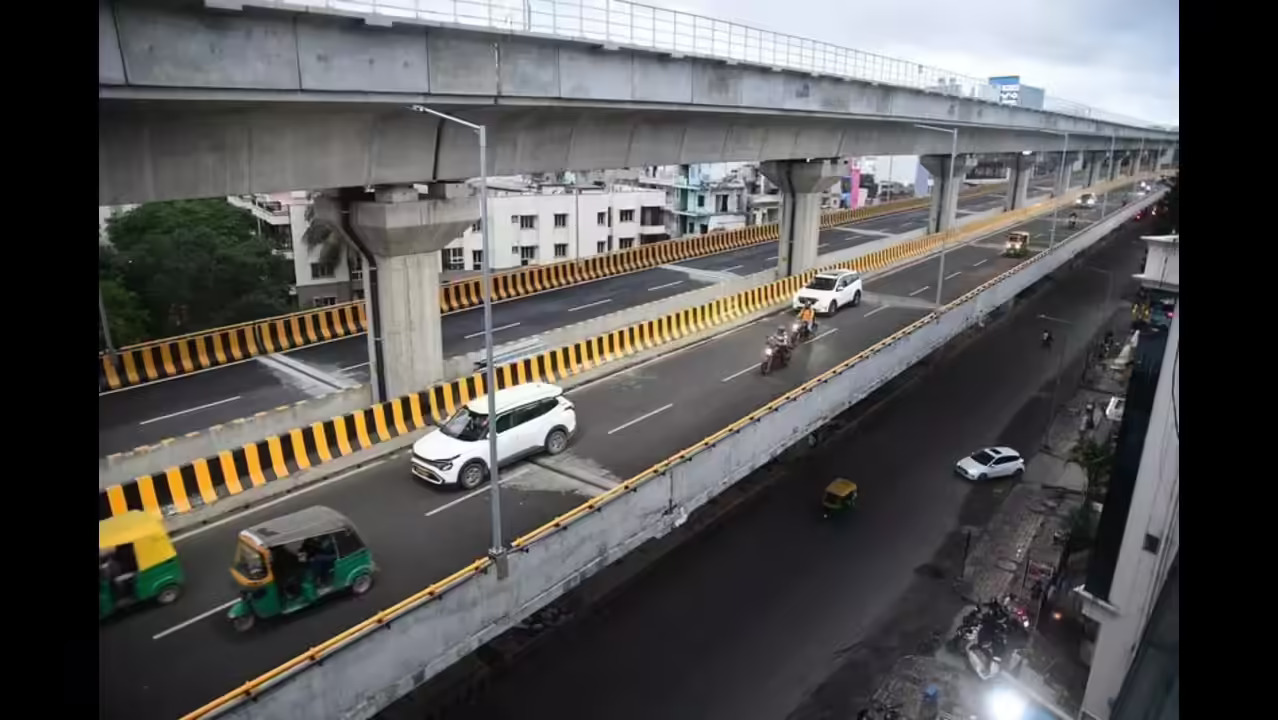
Bengaluru has taken a decisive step towards reshaping its transport future with the state cabinet clearing a ₹9,700-crore double-decker project under Namma Metro’s Phase 3. The plan, which combines elevated metro lines and flyovers, will be the city’s longest such infrastructure intervention, designed to ease traffic congestion while expanding sustainable mobility options.
The centrepiece of the project is a 28.48-kilometre stretch along the western Outer Ring Road, connecting JP Nagar 4th Phase to Kempapura. This section alone will become Bengaluru’s longest flyover, stacked with a metro line above it. A second corridor, spanning 8.63 kilometres from Hosahalli to Kadabagere along Magadi Road, will also feature a flyover with a metro line constructed above. Together, the two corridors will create a 37.12-kilometre double-deck viaduct that symbolises a leap in integrated transport planning. Officials confirmed that while the original plan envisioned a 44.65-kilometre double-decker, the revised alignment now stands at 37.12 kilometres. The adjustment has been made to repurpose existing flyovers along the ORR’s western section, minimising demolition and reducing both costs and environmental disruption. However, the Delmia Junction flyover is expected to be dismantled to make way for the new alignment.
The financial model for the project distributes responsibility across multiple stakeholders. While the Union government will fund only the metro line, the ₹9,700-crore outlay for the double-decker flyover will be met through 50 per cent contribution from the state government, 10 per cent from urban local bodies, and the remaining 40 per cent through institutional loans. The state has already earmarked ₹4,000 crore for Namma Metro in its 2025-26 budget, with a significant share dedicated to this double-decker plan. Experts suggest that the approval paves the way for long-delayed civil works, which had been stalled due to alignment and cost revisions. Tenders for the viaducts and stations are expected to be floated later this month, with bidders likely to be finalised by November. Groundwork could begin as early as January 2025. To streamline execution, a single contractor will be entrusted with both the metro line and the flyover construction, supported by a detailed design consultant.
However, the delay in approvals has already pushed the completion timeline back by six months, extending the Phase 3 deadline to May 2031. Costs have also risen by about 5 per cent, underscoring the economic challenges of large-scale urban projects. Yet officials argue that the integration of metro and flyover infrastructure will ultimately reduce land acquisition pressures and improve road space efficiency. For Bengaluru, a city battling severe traffic congestion and air pollution, the project represents more than just an engineering feat. It signals an intent to build infrastructure that integrates sustainable public transport with road mobility, paving the way towards greener, more liveable urban futures.
Also Read : Mumbai To Fully Switch BEST Bus Fleet Into Electric Vehicles By 2027
