


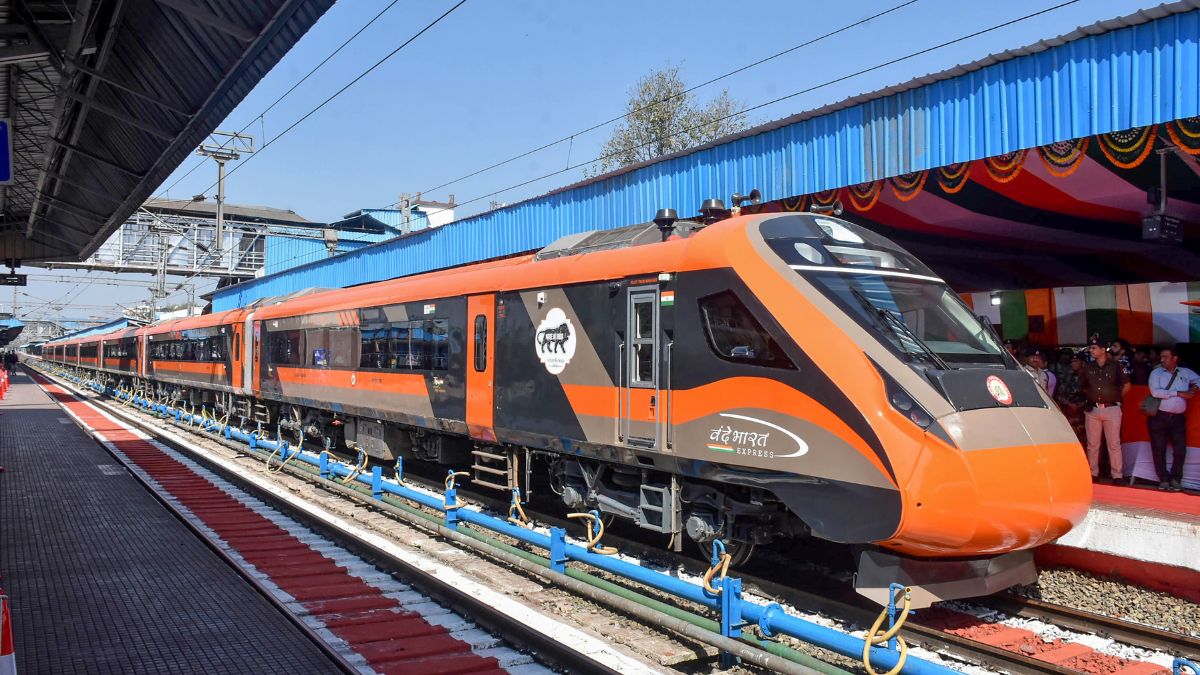
The Indian Railways is fine-tuning the Vande Bharat Express services to enhance daily connectivity between Patna and Dhanbad.
With new timings and a rationalised halt pattern, the high-speed, semi-bullet train is poised to make evening travel between the two cities faster, cleaner, and more comfortable without the addition of a new service. This shift marks a significant departure from the current timetable, where only morning options existed for passengers travelling from Patna towards Dhanbad. The Patna–Ranchi Jan Shatabdi Express, which arrives at Gomoh around 10:25 AM, was the go-to choice for early commuters. However, with the Patna–Tatanagar Vande Bharat now departing at 2:05 PM and reaching Gomoh by 5:54 PM, passengers can look forward to a dependable evening option. A parallel development sees the Gaya–Howrah Vande Bharat Express, which passes through Gomoh at 5:29 PM, adding another viable alternative for travellers.
This upgrade in service is not just about convenience it is a deliberate effort towards efficient utilisation of existing infrastructure while promoting sustainable and time-sensitive mobility. The reallocation of halts is expected to serve the transit needs of working professionals, students, and traders alike, offering a vital link between Bihar and Jharkhand’s key economic zones. By easing access to Dhanbad via Gomoh, the Railways is addressing a long-standing commuter demand for evening travel flexibility. Railway authorities in the Dhanbad Division have already submitted proposals to formalise these changes, underscoring the growing focus on regional rail modernisation. The service rationalisation is expected to be implemented in the near future, with back-end scheduling, staffing, and infrastructure adjustments underway. With Vande Bharat services gradually weaving into the fabric of intercity travel across India, this development signifies how technology and existing assets can be harmonised to expand capacity without adding to the carbon burden.
In a broader context, these changes signal a paradigm shift towards climate-conscious travel planning. Vande Bharat trains, equipped with regenerative braking systems and energy-efficient engines, represent a forward-looking mode of transportation aligned with India’s sustainability goals. Improved punctuality, air-conditioned coaches, and ergonomic seating further make them a preferred option over road transport, reducing congestion and vehicular emissions. As rail authorities edge closer to approval and final rollout, expectations among passengers are high. The enhanced Vande Bhrat schedule is not merely a change in time it is a promise of smarter, cleaner, and more inclusive mobility. In a region that has long relied on legacy systems, this transformation may very well redefine how eastern India connects and commutes in the decade ahead.
Also Read :Mumbai Vande Bharat Express Set for Coach Expansion Amid Surging Demand

