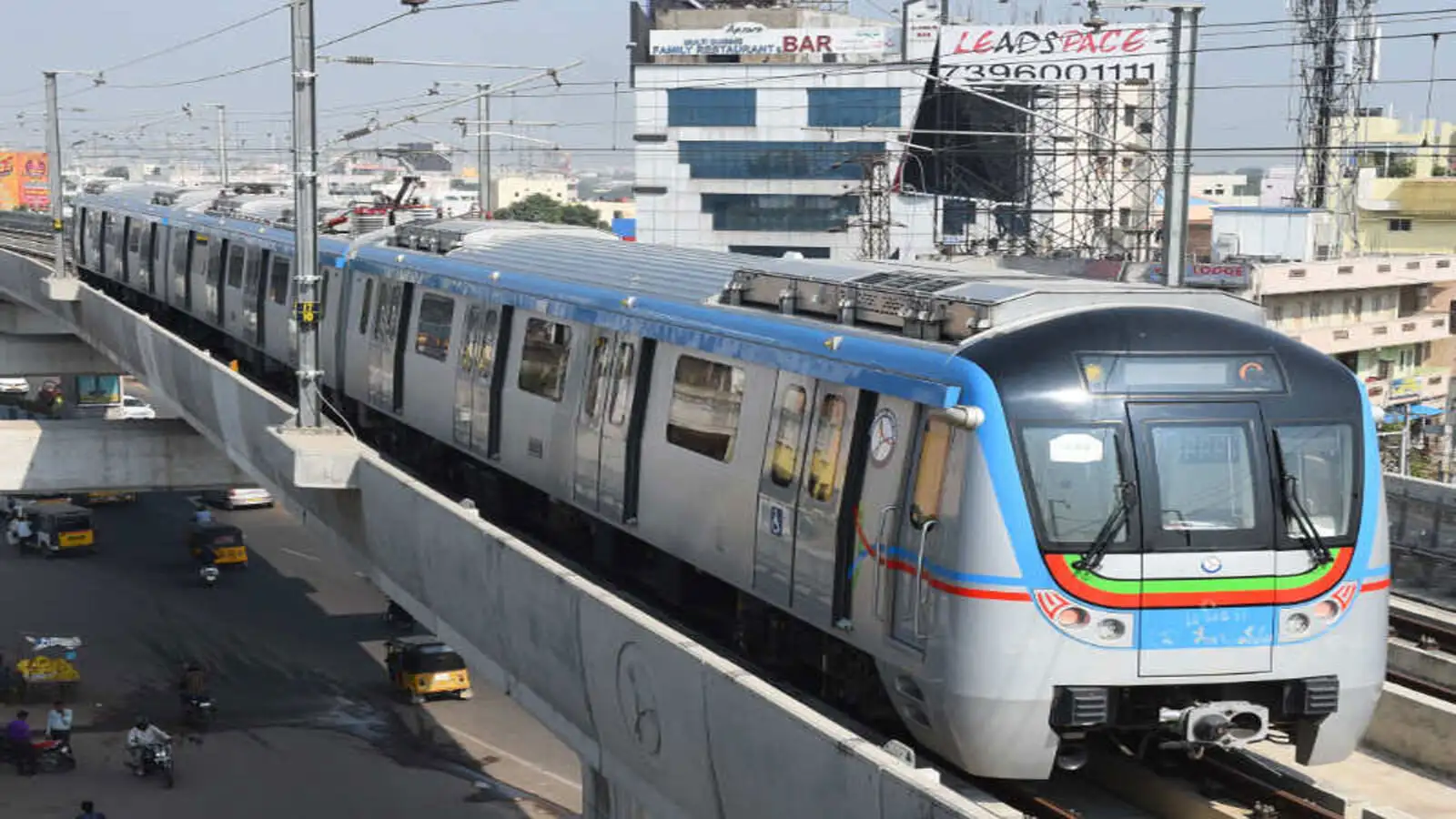
Hyderabad’s commuters faced yet another ordeal on May 1, 2025, when a technical glitch brought the Hyderabad Metro to a standstill on the Ameerpet-Miyapur stretch of the Red Line, stranding hundreds at Bharat Nagar station for 20-30 minutes.
The incident, reported by Siasat Daily, left passengers—including women, seniors, and children—trapped in stifling train carriages amid rising temperatures, with no clear communication from authorities. This latest disruption, the fifth major glitch in 14 months, has reignited demands for accountability from L&T Metro Rail Hyderabad (L&TMRHL) and Hyderabad Metro Rail Limited (HMRL). For Hyderabad’s 4.75 lakh daily metro riders, the recurring failures are a betrayal of the system’s promise of reliable, modern transport. The May 1 incident, attributed to a technical issue by L&TMRHL, caused chaos during peak hours, with videos showing frustrated commuters waiting on platforms. Similar disruptions hit Jubilee Hills in January 2025 (signalling glitch, 30-minute delays), Lakdi-ka-Pul in June 2024, Malakpet in November 2024, and Ameerpet in December 2024, per Times of India and The Hindu.
Hyderabad’s metro, vital for reducing the city’s 1.5 million vehicle-related emissions, is at a crossroads. The system’s Phase 2 expansion, including a 13.4-km Miyapur-Patancheru line, aims to serve 10 lakh passengers daily, but without addressing maintenance—such as upgrading signalling systems or increasing L&T’s 300 train sets—reliability remains elusive. The Telangana government, having sanctioned ₹24,269 crore for Phase 2, must enforce stricter audits, as urged by commuters on X. A 2024 HMRL report cited 98% uptime, yet frequent glitches suggest overstated metrics. For residents, the stakes are personal. A student in Moosapet missing an exam, a vendor in Ameerpet losing business, or a senior enduring heat at Bharat Nagar—these are the human costs of systemic neglect.
Authorities must prioritize root-cause analysis, invest in predictive maintenance, and enhance passenger communication to restore faith. Until then, Hyderabad’s metro risks becoming a symbol of unfulfilled potential rather than the sustainable lifeline its 10 million citizens deserve.