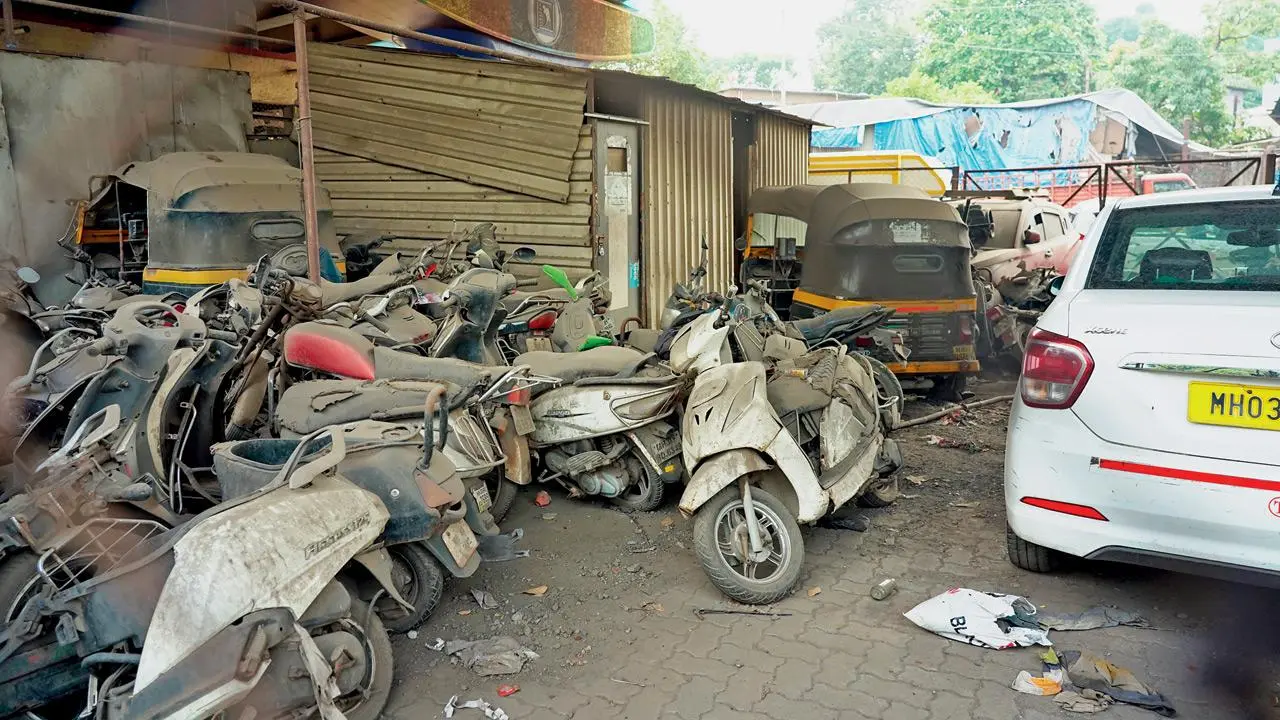
Over 20,000 abandoned vehicles on Mumbai streets: BMC to appoint agency to remove them to improve walkability
Mumbai’s streets, choked with over 20,000 abandoned vehicles, are on the cusp of a transformation as the Brihanmumbai Municipal Corporation (BMC) unveils a bold plan to reclaim public spaces.
Announced on May 2, 2025, the BMC will appoint a specialised agency to clear these “khataras”—rusted cars, scooters, and rickshaws—that clog roads and footpaths, obstructing the city’s 12 million daily pedestrians. This initiative, aimed at enhancing walkability and safety, promises to restore Mumbai’s urban vitality while aligning with its vision for sustainable, equitable cityscapes. Each abandoned vehicle occupies roughly 124 square feet, collectively squandering 2.5 million square feet—equivalent to 57 acres—of precious public space. For Mumbaikars like Ayesha, a schoolteacher navigating Kurla’s crowded lanes, these relics are more than eyesores; they’re hazards breeding mosquitoes and sheltering petty crime. The BMC’s strategy is methodical: the agency will tap Regional Transport Office (RTO) records to identify owners, issuing 48-hour notices. Unclaimed vehicles will be towed to scrapyards, held for 30 days, and then auctioned or recycled. In 2023, BMC earned ₹4.7 crore by auctioning 5,958 vehicles, a model it aims to scale up.
The stakes are high in a city where footpaths are lifelines for millions, from street vendors in Malabar Hill to office-goers in Lower Parel. Past efforts, like the 2022 “Khatara Hatao” campaign, towed 10,496 vehicles but faltered due to land shortages for scrapyards. The BMC still lacks a designated plot, with a 10,000-square-meter site proposed in 2022 yet to materialise. “We’re working with the Development Plan department to secure land,” said a BMC official, acknowledging the challenge in a space-starved metropolis. The initiative’s ripple effects are profound. Clearing 20,000 vehicles could free up space for 200,000 pedestrians daily, reduce traffic bottlenecks, and curb pollution from decaying metal. Contractors, tasked under a new policy since November 2024, will photograph and geotag vehicles, ensuring compliance with environmental regulations. The RTO’s 100-day deadline, set in March 2025, to scrap or auction vehicles adds urgency, with over 10,000 khataras already cluttering RTO premises statewide.
For residents, this is a chance to reclaim their city. A student in Bandra, dodging a rusted scooter to reach school, or a senior citizen in Matunga, yearning for safer footpaths, stands to benefit. By prioritising walkability, BMC is not just clearing roads but paving the way for a Mumbai where every step is safer, greener, and more inclusive.