


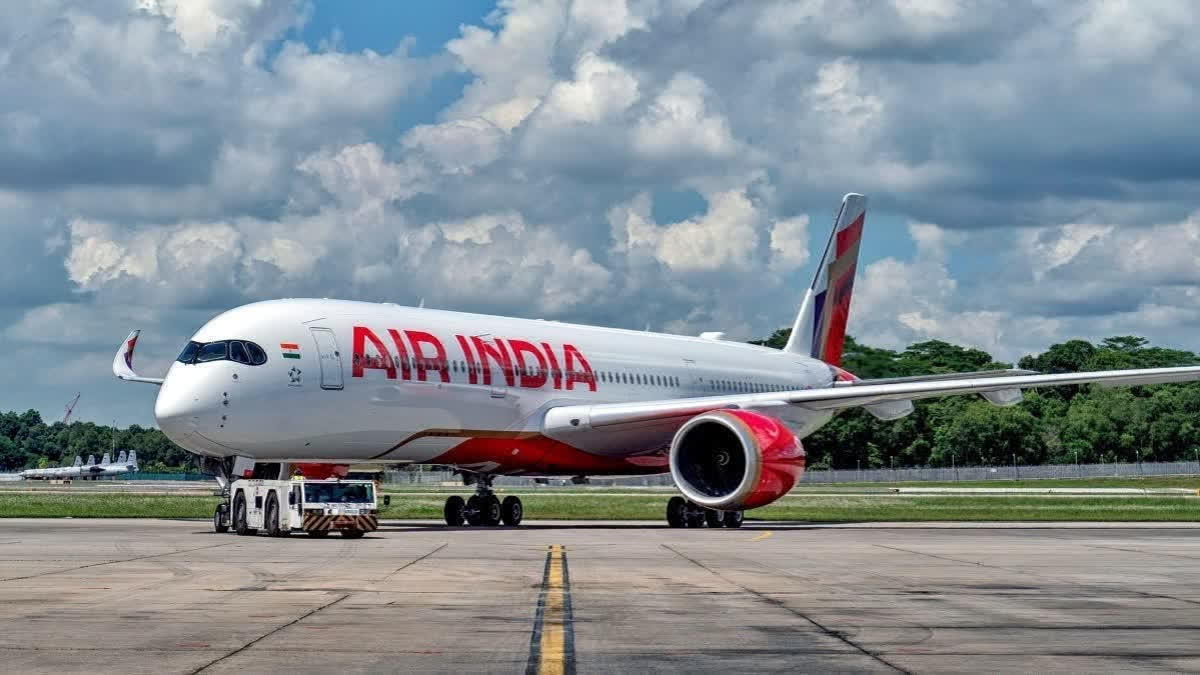
India’s air cargo industry is displaying remarkable resilience in the face of Pakistan’s recent airspace closure.
While the move has disrupted certain flight paths, experts assert that the overall impact on India’s export sector remains minimal. The closure of Pakistan’s airspace, a response to escalating tensions following a militant attack in Indian-administered Kashmir, has led to significant rerouting of flights. Carriers such as Air India and IndiGo have been compelled to extend flight durations and make additional fuel stops, particularly on routes to Europe and North America . These adjustments have resulted in increased operational costs and extended travel times.
Despite these challenges, the impact on India’s air cargo sector is considered limited. Industry insiders note that air freight constitutes a small fraction of India’s total exports. For instance, air cargo accounts for only 3-4% of India’s garment exports, with select shipments of gems, jewelry, electronics, and perishables also transported by air. The majority of goods are moved via sea, rendering the airspace restrictions unlikely to cause significant disruptions . Furthermore, India’s decision to ban the transshipment of cargo from Bangladesh is expected to stabilize domestic prices, offering some relief to local markets. However, trade analysts anticipate a surge in air shipments toward late May, as businesses rush to meet deadlines ahead of reciprocal tariffs set to take effect on July 9. The memory of April’s tariff announcement by former U.S. President Donald Trump looms large, prompting companies, including tech giant Apple, to expedite shipments .
The air cargo market has since experienced some reprieve. Trump’s decision to pause reciprocal tariffs for 90 days, coupled with a sharp decline in shipments from China, has eased pressure on freight rates. According to the Drewry World Container Index (WCI), the composite index dropped 2% to $2,157 per 40-foot container for the week ending April 24, with rates from China seeing the steepest decline. Year-on-year, rates for New York-Rotterdam routes have surged 32%, while Rotterdam-Shanghai and Shanghai-Rotterdam routes fell by 36% and 24%, respectively . As global trade navigates these turbulent waters, India’s exporters remain cautiously optimistic. While the airspace closure and looming tariffs present challenges, the resilience of sea-based logistics and strategic policy measures are expected to keep India’s trade on course. For now, the nation’s exporters are keeping a close eye on the horizon, ready to adapt to whatever lies ahead.
Also Read: Pakistan Faces Multi-Million Dollar Loss from Airspace Ban
