


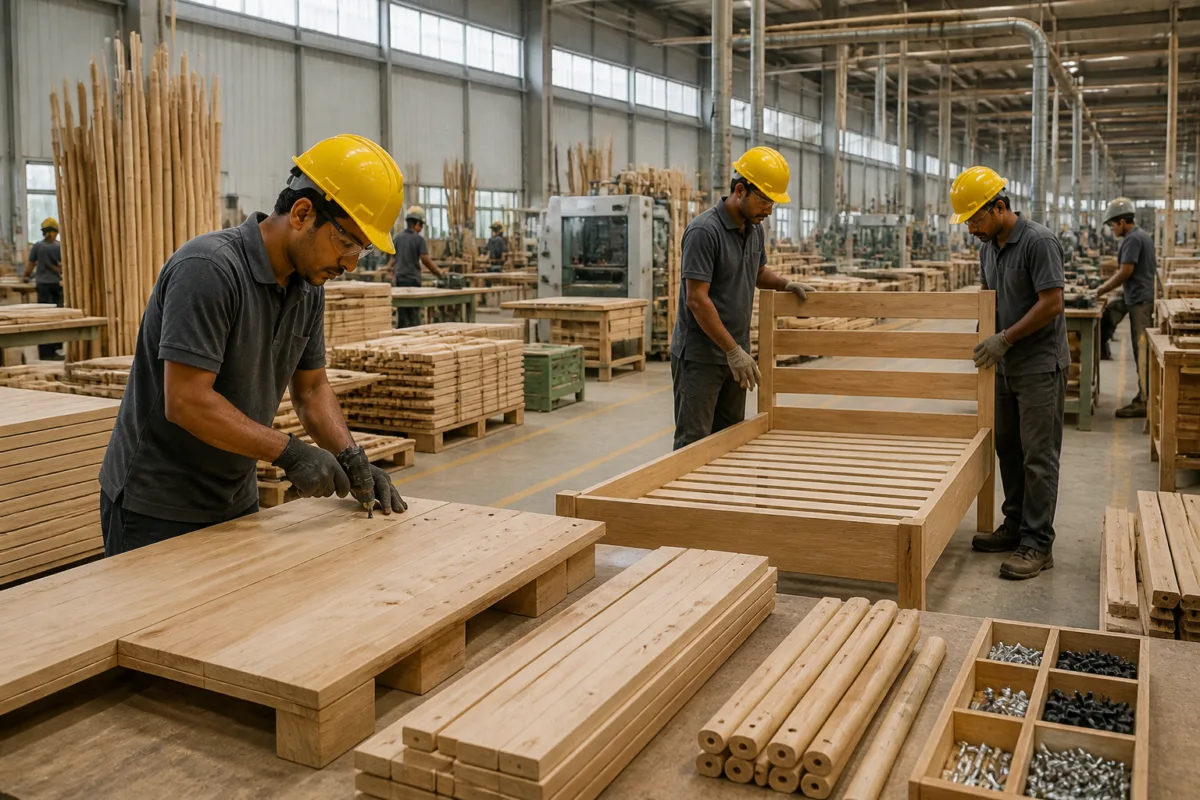
IKEA plans to double its production in India over the next five years as it expands from textiles, plastics and metal products into furniture manufacturing, particularly wooden furniture, the company’s Global Supply Manager Susanne Waidzunas told PTI.
India has been an important sourcing market for IKEA for 50 years. The company currently works with around 70 production partners in the country and sources products worth about 400 million euros annually. About 95 per cent of the products sourced and produced in India are exported to IKEA’s global markets, Waidzunas said.
The proposed expansion could widen India’s role in IKEA’s international manufacturing network while increasing the importance of local capabilities in furniture, components, materials and product development. Wooden furniture accounts for about 40 per cent of IKEA’s global sales, according to Waidzunas.
IKEA has started developing wooden-furniture capabilities in India, including bedroom collections with bed frames, wardrobes and chests of drawers. It has also introduced coffee tables made from solid mango wood, which the company described as a first for IKEA, with the possibility of eventually exporting such products to international markets.
The company is also considering bamboo-based furniture products. It currently uses bamboo for smaller items such as chopping boards and other articles, but sees scope to scale the material into furniture, Waidzunas said.
Work chairs are another potential area of expansion. IKEA is examining whether to shift work-chair production to India from China, where it has traditionally depended on manufacturing capabilities for that category. It is also exploring the possibility of sourcing height-adjustable tables for its office-furniture range and float-glass articles from India.
Waidzunas said IKEA wants to localise the complete supply chain for products rather than limiting local activity to assembly. Materials account for approximately 50 to 70 per cent of a product’s cost, she said, making competitively priced raw materials a central condition for building a globally competitive furniture industry.
Wood sourcing will therefore be a significant issue as the company expands. IKEA wants wood to come from Forest Stewardship Council-certified forests or responsibly managed forests and is in dialogue with the government on the matter, according to Waidzunas.
She pointed to IKEA’s European operations, where integration across forests, sawmills, board manufacturing and furniture production has supported what the company describes as resilient, sustainable and low-cost supply chains. In India, IKEA is seeking to build local capabilities while also requesting support to import certain components, such as hinges, during the transition to domestic manufacturing.
The company also aims to increase the share of locally sourced products used in its Indian operations to as much as 50 per cent. Waidzunas said this target would depend on the availability of competitive suppliers and production capabilities. IKEA has already started local manufacturing in categories including mattresses, upholstery and bulky furniture.
The company is working with Indian suppliers on product engineering, manufacturing efficiency, transport and packaging to address cost pressures. Waidzunas said inflationary pressures and rising costs were making it difficult for suppliers to reduce prices.
IKEA is also looking to increase sourcing from India for the North American market. Several Indian suppliers already serve that region, which is an important market for the company. IKEA has said that implementation of the proposed India-European Union free trade agreement could create further opportunities for trade and sourcing, while the company supports what Waidzunas called rule-based open trade.
The manufacturing expansion is being accompanied by a wider retail and design presence. IKEA currently operates seven stores in India, including four city stores and three large-format stores in Hyderabad, Navi Mumbai and Bengaluru. The company plans to open two more stores in Delhi-NCR.
It has also opened a product development centre in Bengaluru, its third globally. The centre brings designers, product developers and suppliers closer to factory operations, with the aim of speeding up product development and using Indian manufacturing capabilities for domestic and international markets.
IKEA sources from 55 markets and sells in 64 markets worldwide. Its stated production ambition in India will depend on how quickly local suppliers, material systems and manufacturing capabilities can meet the company’s cost, quality and sustainability requirements.

