


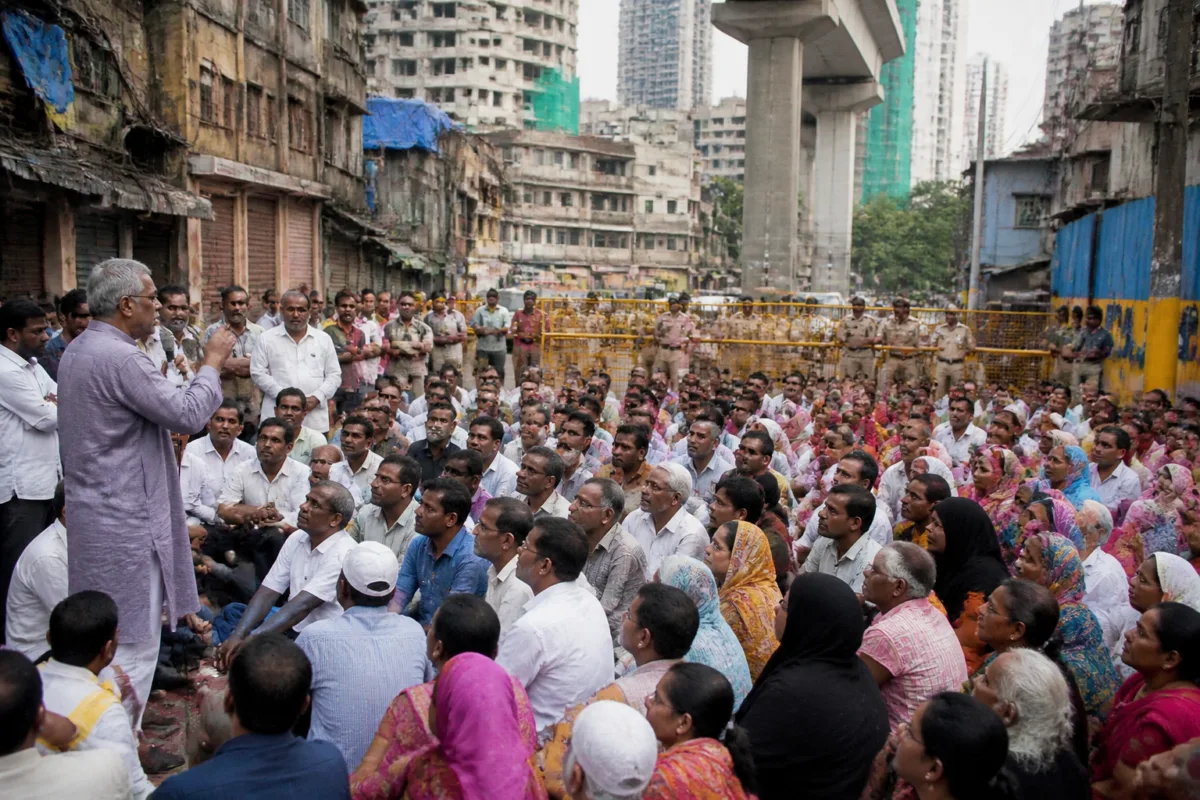
Dharavi residents opposing the redevelopment project took to the streets on Saturday, demanding that eligible and currently excluded residents be rehoused within Dharavi and that the proposed homes be larger than the units described in the project’s current rehabilitation framework, according to a report by Loksatta-Mumbai.
The protest was organised by the Dharavi Bachao Andolan. Residents demanded 500 sq ft homes for hutment dwellers and 750 sq ft homes for people living in buildings. They also opposed the provision of homes outside Dharavi for residents deemed ineligible under the eligibility-determination process.
The report said residents currently being offered 350 sq ft homes do not accept that area. Protesters argued that all Dharavi residents should be rehabilitated in the locality and warned that redevelopment would not be allowed to proceed unless their demands were addressed.
The march began at Kumbharwada at 11am and was intended to proceed towards the Dharavi Experience Centre. It was stopped at Constitution Chowk, where a public meeting was held. Police deployment was increased around the Experience Centre and nearby areas in anticipation of the protest.
The Dharavi Redevelopment Project is being implemented to transform the locality, with the Adani Group reported to have received the project contract. The report said work on the first phase has begun, while opposition to the redevelopment remains widespread among residents.
Several political leaders participated in the march, including MPs Varsha Gaikwad and Anil Desai, MLA Aaditya Thackeray and Maharashtra Navnirman Sena leader Bala Nandgaonkar. Their statements reflected the wider political opposition to the project, although the allegations made at the rally were not independently established in the report.
Thackeray alleged that 1,600 acres were being handed over to the Adani Group in the name of Dharavi redevelopment and warned against what he described as an attempt to take control of Mumbai. Gaikwad demanded that alleged pressure and intimidation of residents stop, that government agencies and the administration not pressure residents, and that the Dharavi redevelopment plan be made public.
The protest has brought the project’s central rehabilitation questions back into focus: how eligibility will be determined, where residents classified as ineligible will be housed, whether rehabilitation will take place within Dharavi, and what size of home residents will receive. Protesters said their agitation would continue until the demand for 500 sq ft homes and their other demands were accepted.

