


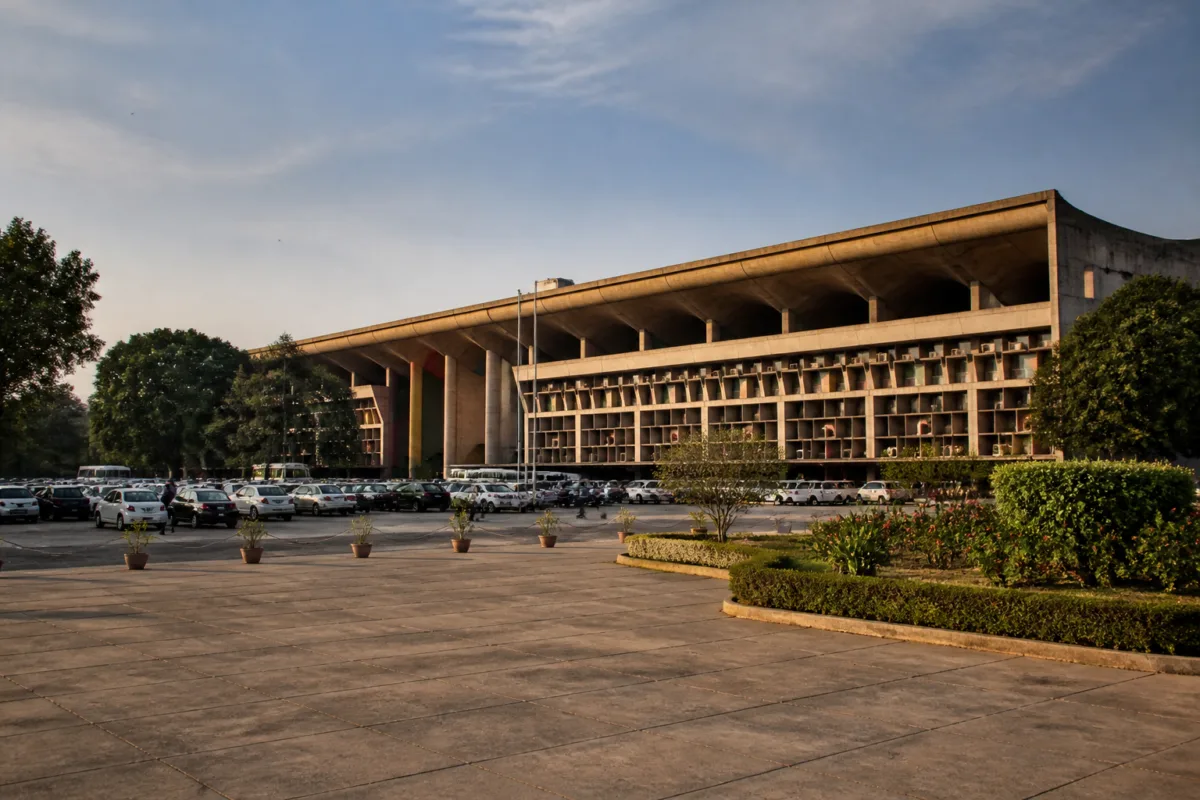
The proposed Punjab and Haryana High Court expansion has moved into an inter-governmental consultation phase, with the Centre directing the Chandigarh administration to share project details and the proposed funding mechanism with Punjab and Haryana before cost-sharing arrangements are worked out.
The ₹1,454-crore proposal was discussed at a November 20 meeting involving the Union home secretary and the chief secretaries of Punjab, Haryana and Chandigarh in New Delhi. The Chandigarh administration had earlier sent the proposal to the Centre, seeking approval to add at least 35 courtrooms to the common high court serving the two states and the Union Territory.
The administration has been asked to provide the project’s detailed scope, infrastructure requirements, preliminary cost estimates vetted by the Central Public Works Department and the proposed mechanism for sharing expenditure among the stakeholders. It must also seek the views of the Punjab and Haryana governments on the proposal.
The funding question is central because the project is intended to address infrastructure constraints affecting a court used by judges, lawyers, employees and litigants from both states and Chandigarh. The source report said it was not immediately clear what views were expressed at the November 20 meeting on the proposal or the funding pattern.
The expansion plan has followed several years of deliberation over how to respond to the high court’s space shortage. Proposals to shift the entire court to Sarangpur or the Information Technology Park area, both on the outskirts of Chandigarh, did not reach consensus, particularly with the Bar. A consultant was subsequently appointed and the current blueprint was prepared.
The need for additional facilities is linked to a mismatch between the court’s sanctioned judicial strength and its available courtrooms. Against a sanctioned strength of 85 judges, the high court currently has courtrooms for 69 judges, according to the report. The court also faces shortages of space for Bar offices and parking.
More than 10,000 cars and thousands of two-wheelers reportedly arrive at the high court daily. The complex serves about 10,000 lawyers and more than 3,300 court employees, in addition to litigants and other visitors. These figures help explain why the proposal combines court expansion with a large increase in parking capacity rather than treating the two requirements separately.
The blueprint envisages four new blocks behind the existing high court building, with a combined area of 11.42 lakh square feet. The project is planned to meet the court’s infrastructure needs for the next 50 to 60 years. It also proposes additional parking over 11.17 lakh square feet at the Capitol Complex.
The proposed construction would involve the demolition and integration of buildings covering 2.07 lakh square feet, including the offices of the Punjab and Haryana advocates general, the judicial record room and old lawyers’ chambers. The parking component would have three floors below the new complex. Once completed, total parking capacity would rise to 22 lakh square feet, according to the plan prepared by the high court administration and the Chandigarh administration.
The site presents a significant heritage constraint. The existing high court is part of Le Corbusier’s Capitol Complex, which was declared a UNESCO World Heritage Site in 2016. The expansion plan limits the new construction to three floors, including the ground floor, so that the skyline of the heritage buildings is protected.
Approval from the Centre would therefore not be the project’s final clearance. The ministry of culture and the Union Territory administration are expected to consult the World Heritage Centre, UNESCO’s advisory framework for heritage-related matters, before the proposal can progress. The source report said the UNESCO arm was likely to take up the Chandigarh administration’s proposal later in the month.
This creates two linked implementation tests. The first is institutional: Punjab, Haryana and Chandigarh must agree on the scope of work and how the expenditure will be divided. The second is heritage-related: the proposed blocks, demolition, parking structure and altered movement patterns within the Capitol Complex must satisfy the applicable consultation and approval requirements.
The high court’s own response indicates the urgency it attaches to the infrastructure issue. During a hearing on a public interest litigation concerning shortcomings on the premises, Chief Justice Ashwani Kumar Mishra said the court’s functioning had been affected by the lack of space. The bench said that court halls, Bar offices and parking facilities were inadequate and urged the Centre and other stakeholders to take immediate steps.
The court also said that, since the proposal had originated with the high court and the Chandigarh administration, there was no need to seek the stakeholders’ views again. That position differs from the outcome recorded at the November 20 meeting, which called for the Chandigarh administration to share the proposal with Punjab and Haryana and obtain their views on the scope and cost-sharing mechanism.
The high court deferred the public interest litigation hearing to December 11 and asked Additional Solicitor General Satya Pal Jain to meet the Union home secretary on the matter. The next stages will depend on how the stakeholders reconcile the court’s request for speedy infrastructure provision with the Centre’s requirement for a detailed inter-governmental funding and implementation framework.
For Chandigarh, the proposal is therefore more than a building expansion. It involves adding long-term judicial capacity within one of the city’s most important heritage precincts while managing daily access, parking demand, public expenditure and the interests of three governments. Until the cost-sharing arrangement and heritage consultation are resolved, the project remains a detailed proposal rather than an approved construction programme.

