


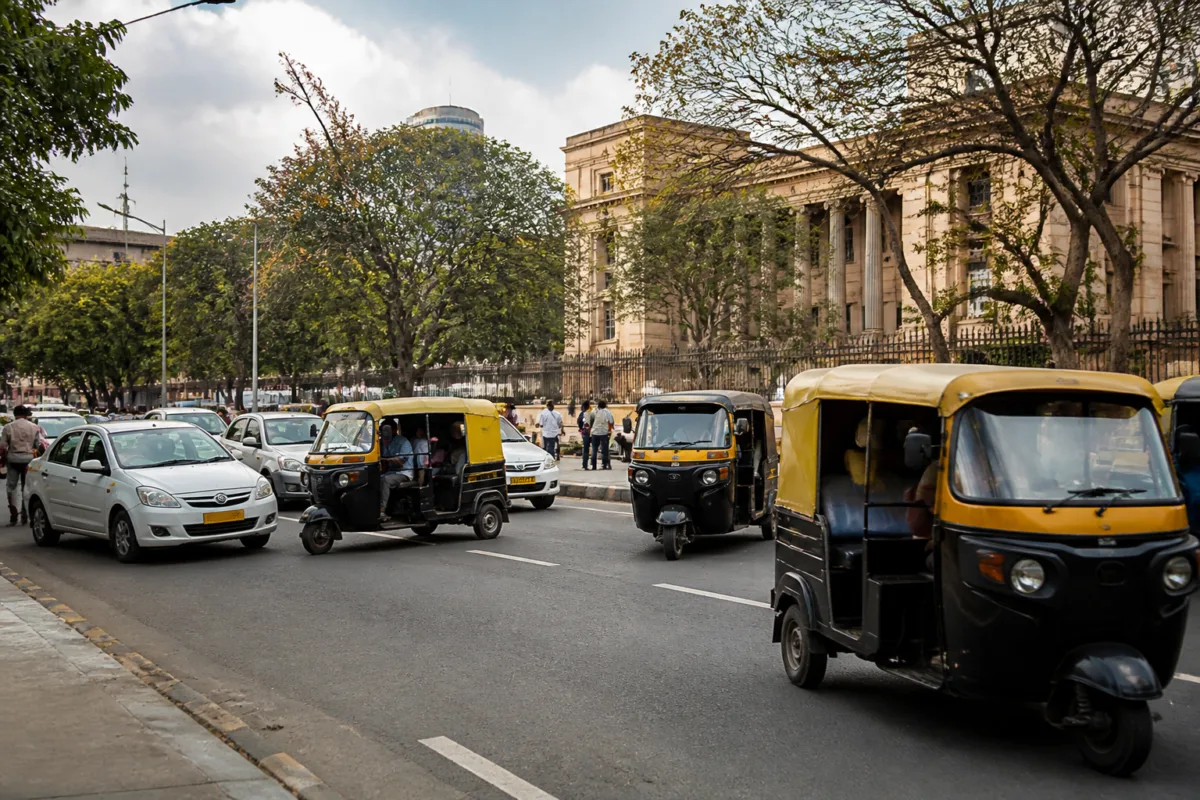
Twenty auto and taxi drivers’ unions across Karnataka have announced a protest at the Transport Department’s head offices in Bengaluru’s Shanthinagar on December 8, opposing the state government’s proposed move to legalise bike taxis.
The mobilisation has been called by the Karnataka App-Based Workers’ Union, the Swabhimani Chalakara Trade Union and the Auto Taxi Sanghatanegala Horata Samiti. The unions have threatened an indefinite statewide protest from December 29 if their demands are not addressed.
Their central objection is to allowing private white-board two-wheelers to operate as commercial bike taxis. The unions argue that licensed auto and cab operators bear the costs of permits, insurance, fitness certificates and taxes, while private vehicles would be allowed to compete without equivalent obligations.
The unions have also accused Vietnam-based electric cab company Green SM of undercutting prescribed fares by charging between Rs 8 and Rs 10 per km. They said such pricing could threaten the livelihoods of independent drivers. The unions said that temporarily halting new vehicle registrations would not be sufficient and called for strict enforcement of a uniform fare structure.
Other demands include an end to what the unions described as arbitrary commissions charged by ride-aggregator platforms such as Ola, Uber and Rapido. They have also sought relief from alleged harassment and excessive fines by enforcement agencies, along with effective delivery of social security, health insurance and Karnataka Transport Workers’ Welfare Board benefits.
The unions have set December 21 as their deadline for the government to respond. If their demands are not met, they have sought the resignation of Transport Minister Byrathi Suresh.
The dispute places competing urban mobility priorities at the centre of the state’s transport policy: expanding app-based travel options while ensuring that commercial operators face consistent regulatory and financial obligations. For Bengaluru commuters, the outcome could affect the availability, pricing and regulatory status of two-wheeler taxi services. For drivers, the unresolved questions include fare enforcement, platform commissions, compliance costs and access to welfare benefits.

