


Keonjhar district has identified 1,31,217 plots as suspicious during a satellite-based review of land linked to farmer registrations for government paddy procurement, according to a report by Sambad. The review was conducted to detect possible ineligible registrations and ensure that benefits reach genuine cultivators.
The findings have emerged as 94,137 farmers registered to sell paddy through the government procurement system in the district. The number of suspicious plots is not, by itself, a confirmed count of fraudulent registrations. The administration has begun field-level inspections to establish which plots were cultivated and whether irregularities occurred in individual registrations.
Sambad reported that suspected irregularities had surfaced in the Haldia Tangiri mouza under Keonjhar Sadar tehsil, including areas around Naranpur, Haldia Tangiri and Tangarpalsa. Railway land, ponds and cremation-ground land were allegedly shown as agricultural plots in some registrations, the report said. These claims remain subject to the ongoing verification process.
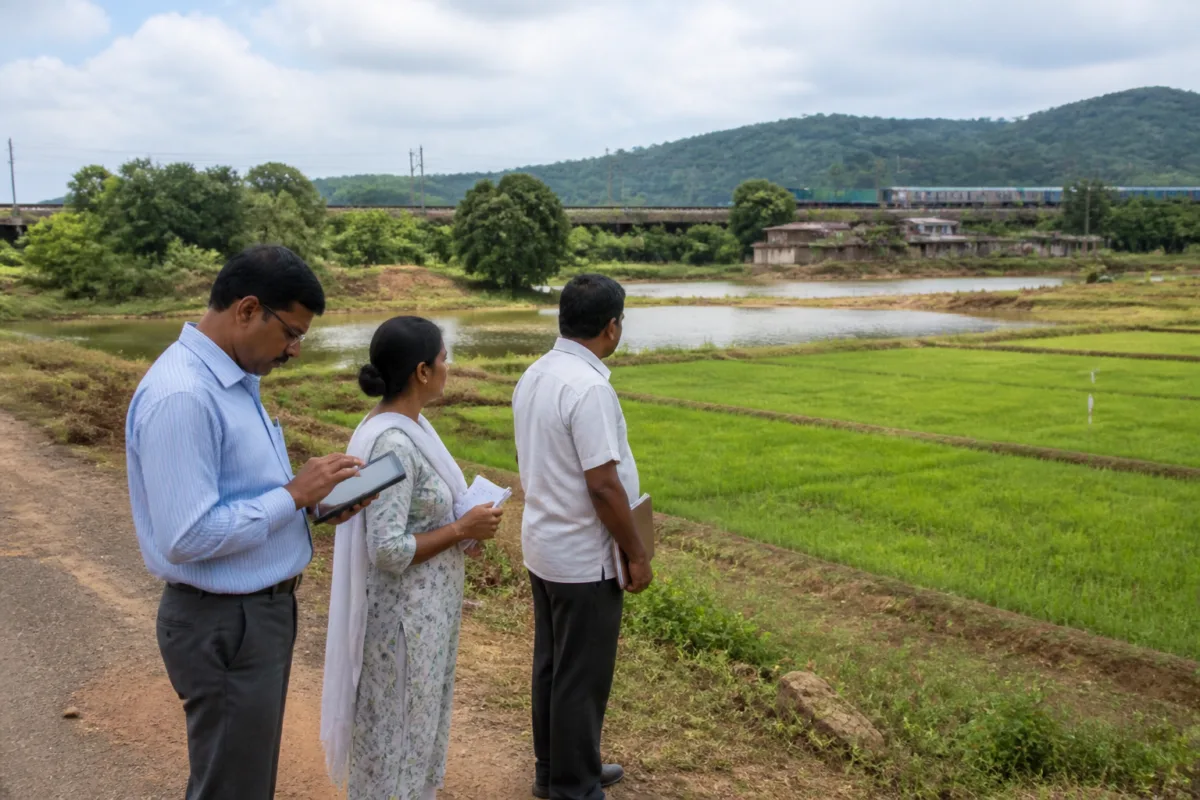
The DRCS official quoted in the report said that ineligible or “fake” farmers would be excluded from the paddy procurement process. The official also said that the suspicious plots would be checked again and that the field inspection would clarify which plots were under cultivation and which registrations contained irregularities.
The issue comes against a sharp rise in registrations over the past three years. Sambad reported that 60,941 farmers registered for paddy sales in 2023, when the government procured about 15 lakh quintals through mandis. In 2024, registrations fell to 59,673, but procurement increased to 21,88,080 quintals. Registrations rose to 79,108 in 2025 and reached 94,137 in 2026.
The report linked the growing interest in government procurement to the minimum support price and an increase of Rs 800 per quintal in input assistance. That incentive makes accurate land and farmer verification important for both public spending and access for legitimate cultivators.
The satellite survey represents an initial screening stage rather than a final determination. Its results must be matched with field conditions and registration records before individual cases can be confirmed. The next decisive step is therefore the administration’s physical inspection of the flagged plots and the action taken after those checks.
The Keonjhar case also highlights the limits of relying on registration data without ground verification. A plot may be flagged by remote sensing because its visible condition does not match the submitted record, but the report does not provide a final breakdown of confirmed fraudulent registrations, rejected applications or recoveries. Those figures will become available only after the field-level process is completed.

