


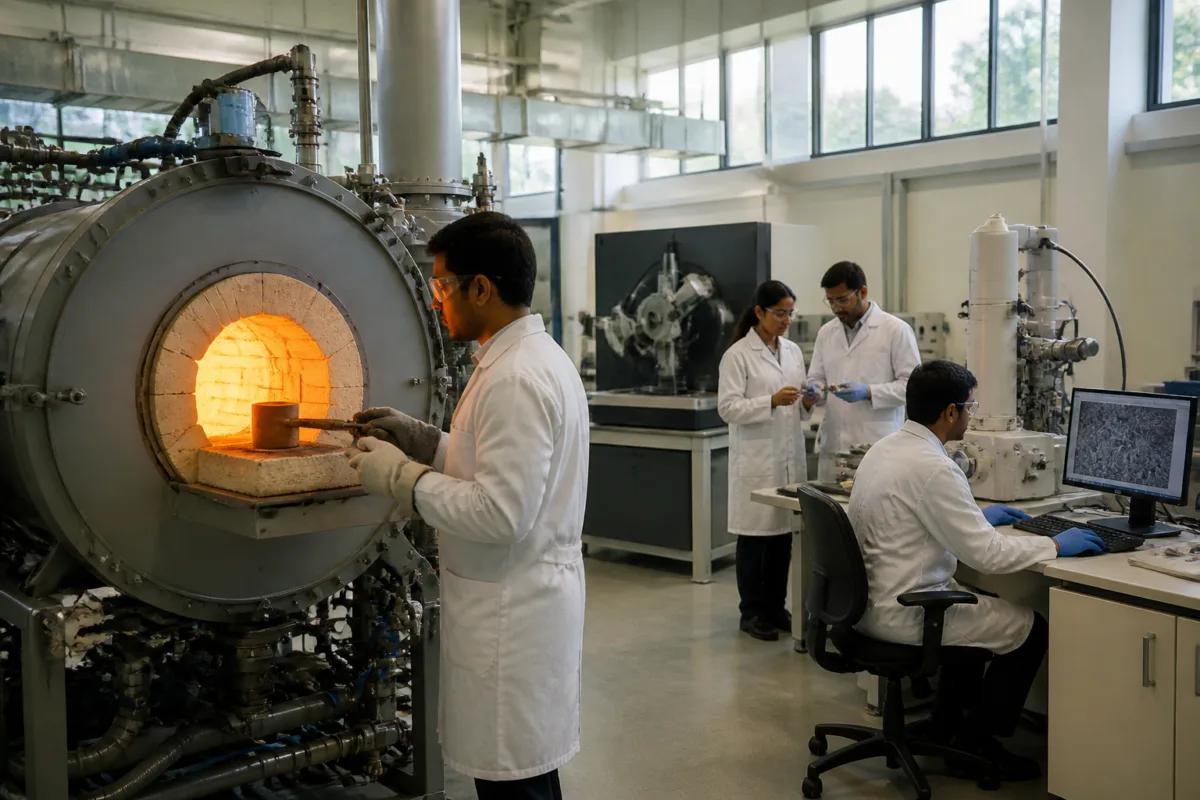
IIT Delhi is establishing an advanced materials research and testing facility at its Sonipat campus that will evaluate materials at temperatures exceeding 2,500 degrees Celsius and under difficult environmental conditions, according to a report by Jagran.
The proposed Extreme Temperature and Environmental Evaluation of Materials facility is being developed with the Defence Research and Development Organisation (DRDO). IIT Delhi said it is intended to become a national centre for advanced materials testing, supporting research linked to aerospace, defence, energy and manufacturing.
The facility will assess the strength and performance of materials exposed to extreme heat and other demanding conditions. Such testing is relevant to components and materials required to operate in high-temperature environments, although the report does not identify specific products or technologies that will emerge from the project.
According to IIT Delhi, the centre will provide researchers, industry and startups with access to testing infrastructure that is currently limited for advanced materials. The institute said the facility could help move research from laboratory development towards practical applications.
The planned infrastructure will include equipment for evaluating material strength at high temperatures, along with X-ray diffraction, scanning electron microscopy, friction and erosion testing systems, and computational materials design facilities. These capabilities would allow materials to be examined through both physical testing and computational analysis.
The project’s approval letter was handed to the institute by Dr Anupam Sharma, DRDO director general for technology management. Sharma described indigenous testing facilities as important to technological self-reliance, according to the report.
The project is being led by Professor Jayant Jain of IIT Delhi’s Department of Materials Science and Engineering, with eight other faculty members involved. IIT Delhi said the centre is intended to be available to researchers and industries across the country.
The Sonipat facility is part of a broader effort to address gaps in domestic testing infrastructure for materials used in strategically important sectors. However, the report does not provide a construction schedule, project cost, commissioning date or details of the facility’s capacity. Its eventual contribution to industrial and public-sector applications will therefore depend on the completion of the facility and the availability of its testing services.

