


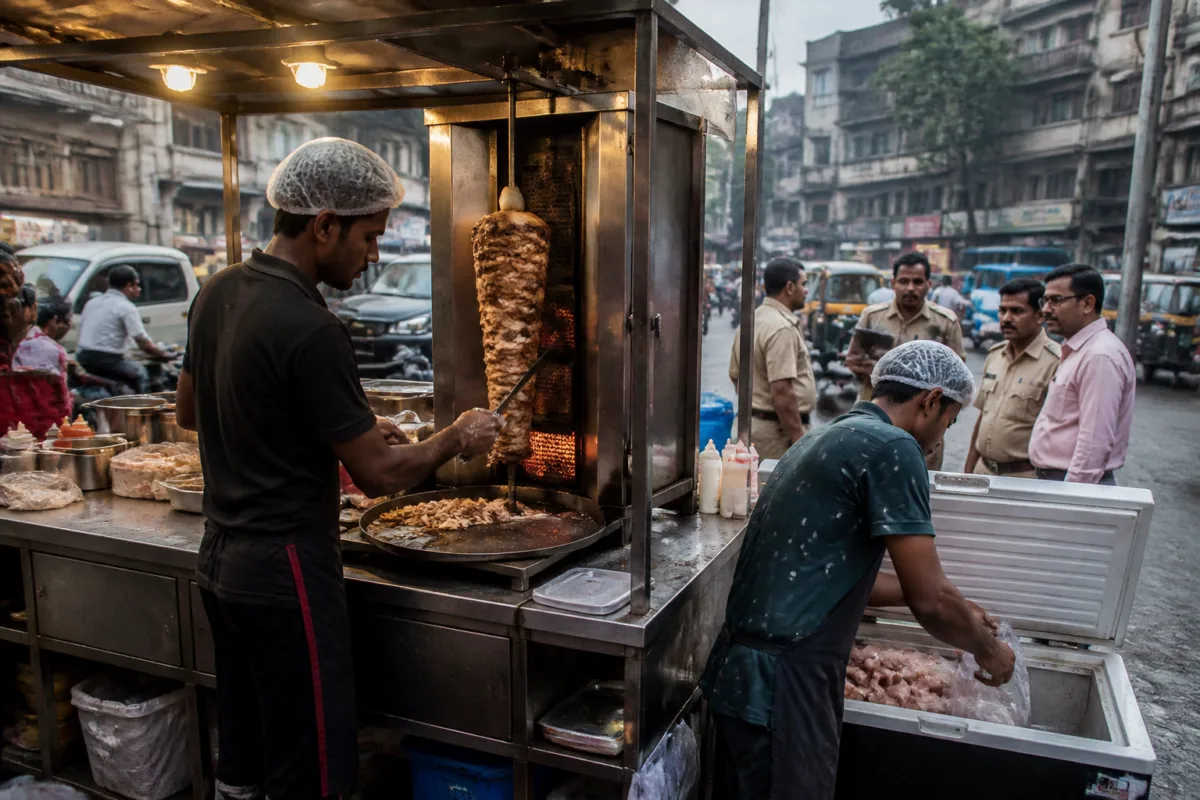
At least 43 people, including 10 children and a pregnant woman, were reportedly hospitalised after eating chicken shawarma from a roadside cart near Vanjarpatti Naka in Bhiwandi, raising fresh concerns about food safety in Mumbai’s wider urban region.
The affected people developed symptoms including vomiting, diarrhoea and fever, according to a report by Loksatta. The Bhiwandi civic body subsequently took action against the unauthorised food cart.
The incident is reportedly the second major shawarma-linked food-poisoning case in Bhiwandi within five months. In June, more than 120 people fell ill after consuming shawarma, pizza and other food items from the Famous Shawarma outlet in Khandu Pada. The Maharashtra Food and Drug Administration (FDA) sealed the establishment and sent food samples for laboratory testing, according to the report.
The latest case has renewed attention on the risks associated with preparing and storing chicken on vertical rotating spits. The meat is cooked from the outside in, with the browned outer layer sliced and served while the inner portion continues cooking. If meat is cut before it is fully cooked, or if cuts reach too deeply into the spit, raw meat and juices can come into contact with cooked portions.
Food handling practices before cooking can also increase the risk of bacterial contamination. Chicken needs to be refrigerated before preparation, while raw and cooked meat should be kept separate and handled with different knives and preparation surfaces. The report cited the possible presence of bacteria such as salmonella, E. coli and campylobacter in improperly handled chicken.
The Food Safety and Standards Authority of India’s guidelines require meat to be cooked at an appropriate temperature, stored under refrigeration and kept separate from cooked food. The report said the Maharashtra FDA is conducting inspections of food establishments under the guidance of commissioner Tukaram Mundhe and taking action against violations.
Authorities can suspend the licences of establishments that pose a risk to public health. However, the precise cause of the Bhiwandi incident is expected to depend on inspection and laboratory findings. The report did not cite a confirmed laboratory result for the latest case.
The recent developments follow earlier shawarma-related incidents in Mumbai. In April 2024, 12 people were reportedly admitted to hospital after eating chicken shawarma from a roadside cart in Santosh Nagar, Goregaon East. A week later, 19-year-old Prathamesh Bhokse died while undergoing treatment at KEM Hospital after reportedly falling ill after eating shawarma from a cart near Hanuman Chawl in Trombay. Trombay police registered a case against two vendors and arrested them, according to the report.
There has been no official announcement of a blanket ban on shawarma sales in Maharashtra. The immediate public-health response therefore remains focused on inspections, licensing, food sampling and compliance with safe preparation and storage requirements.

