


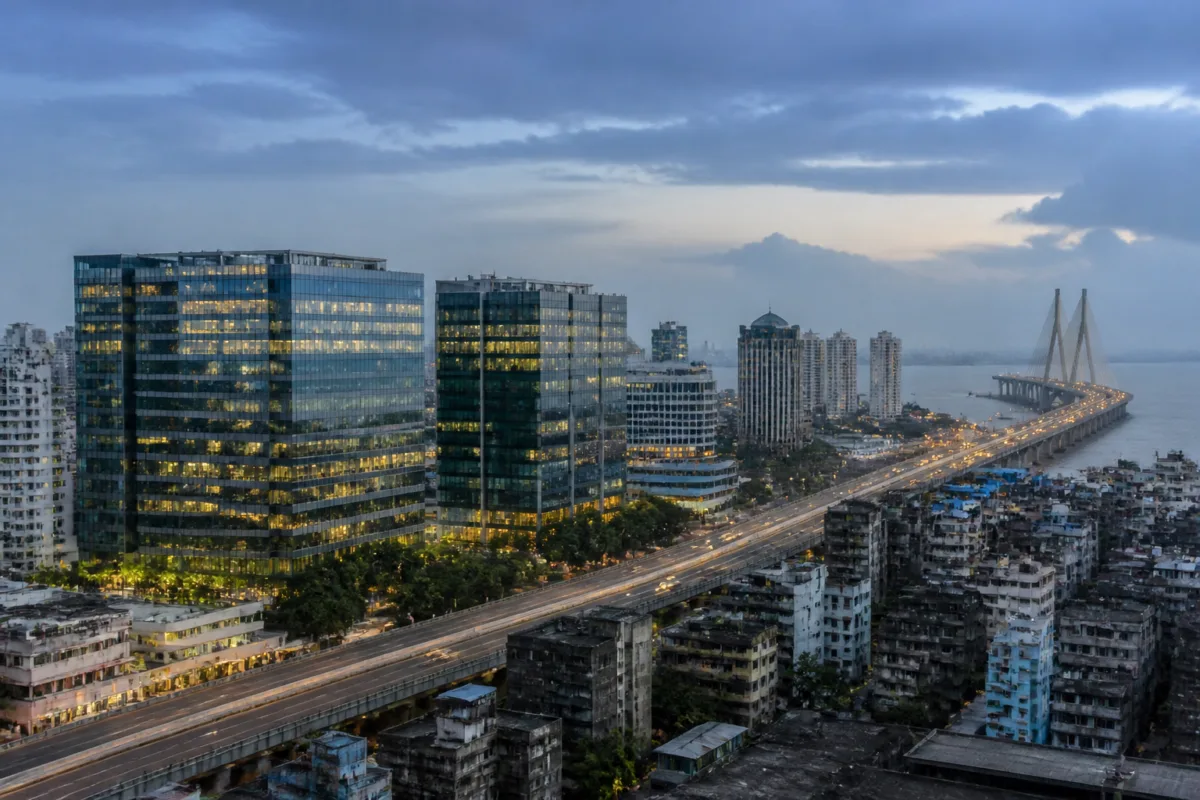
Mumbai has entered Colliers’ top 10 preferred Asia-Pacific destinations for cross-border real estate investment in 2027, according to the consultancy’s 2027 Global Investor Outlook. The report points to a more selective investment environment in which investors are prioritising income growth, asset quality, infrastructure-linked opportunities and the potential to improve or reposition existing properties.
Colliers said 60% of Asia-Pacific investors’ intended capital deployment is directed towards value-add and opportunistic strategies, including development. Core-plus strategies account for 19%, core investments for 15% and debt for 6%, according to the report. The figures indicate a preference for assets where investors can create additional value through refurbishment, operational improvements, redevelopment or changes in use, rather than relying only on stable income from existing properties.
Tokyo ranks first among the preferred destinations for cross-border investment activity in the region, followed by Osaka and Sydney. Mumbai is included among the other preferred markets, alongside cities such as Melbourne, Singapore, Brisbane, Sapporo, Seoul, Hong Kong, Auckland and Ho Chi Minh City.
For Mumbai, Colliers attributed the investment appeal to its role as India’s financial and commercial capital, its diversified occupier base and the city’s long-term growth potential. The report also highlighted ongoing infrastructure developments, including the Mumbai Trans Harbour Link and Navi Mumbai International Airport, as projects that are improving regional connectivity and opening new growth corridors across the metropolitan region.
The report’s assessment has implications beyond the flow of institutional capital. Greater investor interest in infrastructure-connected locations can increase attention on land around new transport links, airport-linked development and emerging commercial districts. However, the report does not quantify the amount of capital expected to enter Mumbai or identify specific projects and locations that will receive investment.
Office assets remain the principal driver of Indian real estate investment, accounting for 37% of investment during the first nine months of 2026, according to Colliers. At the same time, investment in alternatives and hospitality assets increased six- to seven-fold each compared with the corresponding period of 2025.
Colliers expects Grade A office assets in Mumbai, Bengaluru, Delhi-NCR, Hyderabad and Pune to remain preferred investments, supported by demand from several occupier segments, including global capability centres. Across the Asia-Pacific region, investors are particularly focused on higher-quality offices with strong income fundamentals, as well as industrial and logistics properties and multifamily assets.
The consultancy expects the next office investment cycle to produce a wider divide between prime and secondary buildings. Prime Grade A offices in major markets are expected to benefit from occupiers’ preference for higher-quality workplaces and the potential for rental growth. Investment in lower-quality buildings, by contrast, is expected to depend more heavily on whether they can be refurbished, repositioned or converted to another use.
Mumbai is also attracting renewed interest in data centres, Colliers said, citing hyperscale requirements, rising enterprise data use and supportive digital infrastructure policies. At the Asia-Pacific level, 40% of investors surveyed preferred powered land as an acquisition strategy for data-centre investment.
The report identified resilient income, value-add opportunities, flexible capital structures, technology-led capital rotation and regional economic growth as five forces shaping investment decisions in 2027. Sixty-six per cent of respondents expect rental growth to have a positive impact on the market, while 53% expect regional economic growth to support occupier fundamentals and investor confidence.
Badal Yagnik, chief executive officer and managing director of Colliers India, said investment activity in India was likely to be driven by occupier demand, high-quality assets and a greater focus on value creation. He identified asset repositioning, sustainability initiatives, operational improvements and artificial intelligence-led transformation as emerging investment themes.
The findings suggest that Mumbai’s position in the regional investment landscape will increasingly depend on the quality and adaptability of its built assets, rather than on market size alone. For property owners and developers, this could increase the importance of upgrading ageing buildings, improving operational performance and aligning projects with changing occupier requirements. For the city, the key unresolved question is whether new investment will translate into broadly distributed improvements in housing, workplaces and infrastructure, or remain concentrated in selected high-value corridors.

