


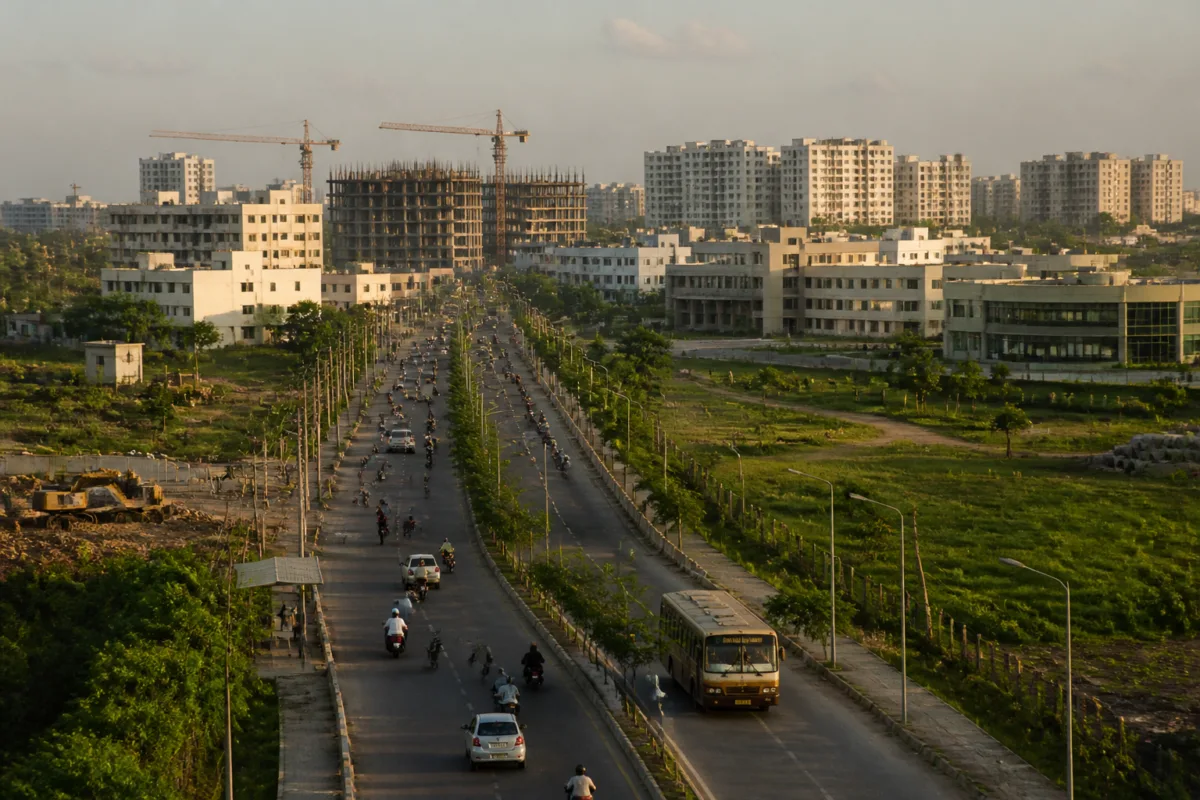
Chennai’s proposed satellite towns could reshape the metropolitan region’s growth, but their success will depend on whether they develop jobs and public amenities alongside housing, according to the Chennai Metropolitan Development Authority (CMDA) and an urban activist cited in a report by Deccan Chronicle.
The six proposed locations are Thirumazhisai, Tiruvallur, Chengalpet, Minjur, Kanchipuram and Mamallapuram. CMDA is considering the satellite-town strategy as part of the third master plan for the Chennai metropolitan area, with the stated aim of shifting some population and economic activity away from the congested core.
CMDA officials said the plan would make greater use of land outside the existing urban centre and create locations where housing, offices and other amenities could be developed in a planned manner. The third master plan would also include a comprehensive economic growth strategy for the metropolitan region, according to a senior CMDA official quoted in the report.
The proposal is being framed partly as a response to Chennai’s housing shortfall. The official said the city currently provides about 22,000 to 23,000 dwelling units annually, compared with around 80,000 units in Hyderabad and Bengaluru and approximately 1.25 lakh units in Mumbai.
Those figures underline the pressure behind the satellite-town idea, but adding housing away from the core would not by itself create a balanced metropolitan region. The proposed centres would need employment, public amenities and infrastructure if they are to function as independent urban locations rather than distant residential extensions of Chennai.
Satish Galley, an activist, raised the risk that residents could remain dependent on the core city for work. In that situation, satellite towns could increase long-distance commuting and add pressure to highways, suburban rail and Metro-linked transport systems instead of reducing congestion, he said.
The master plan therefore seeks to distribute offices, housing and public amenities more evenly across the metropolitan area. Its stated objective is to create multiple centres of economic activity rather than allow Chennai’s core areas to remain the dominant employment hub.
The strategy is also linked to CMDA’s compact-city model. Under that approach, higher densities would be encouraged in suitable locations through the use of floor space index, while new urban centres would accommodate population growth outside the congested core.
CMDA officials said the planning challenge would include identifying the potential of land, using FSI effectively and providing processed land at cheaper rates to encourage development and improve access to affordable housing. One official said optimal land use and well-planned infrastructure would be necessary for the city’s economic growth.
The proposal also raises questions about how affordability will be protected as new areas open for development. Experts cited in the report said the satellite-town model would need mechanisms to preserve affordable housing and prevent speculative development.
For Chennai, the central issue is therefore not simply whether new towns can be designated. It is whether the proposed centres can combine housing with jobs, public amenities, transport connections and affordability. The third master plan’s broader economic strategy will determine whether the satellite towns become multiple urban centres or remain dependent extensions of the existing city.

