


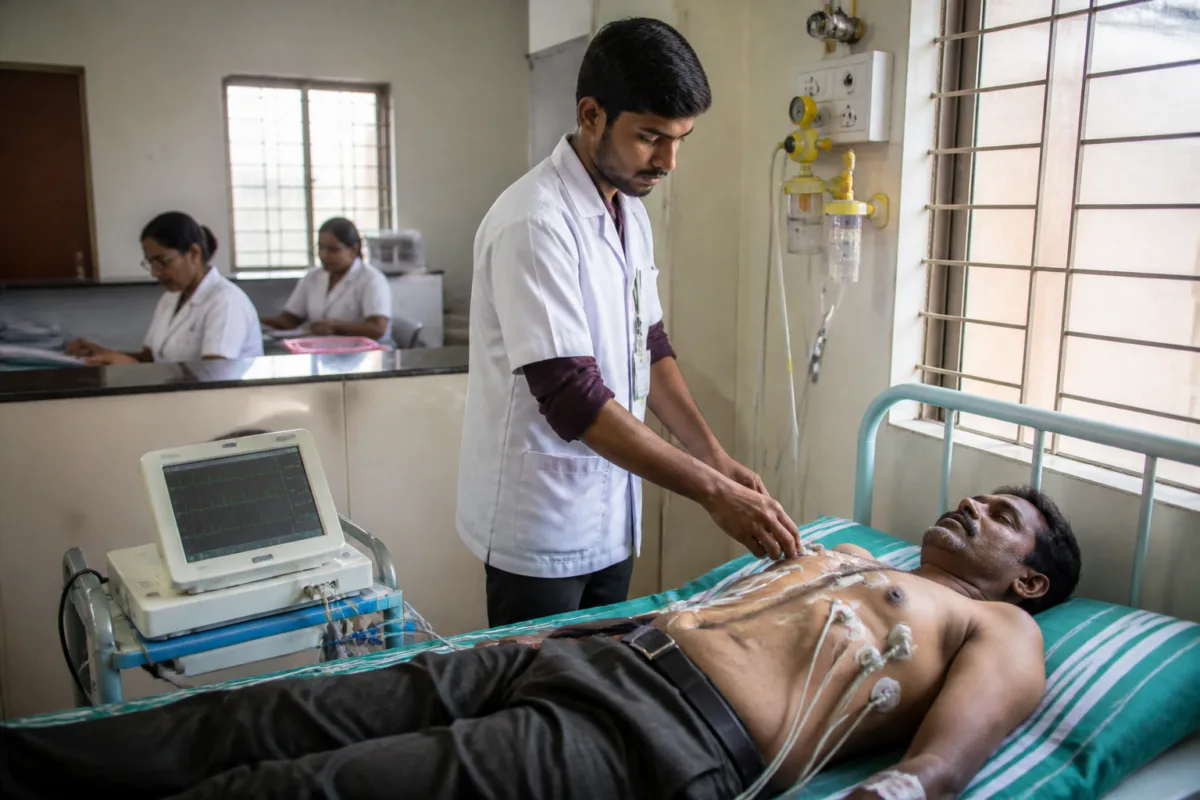
Karnataka plans to extend the Puneeth Rajkumar Hrudaya Jyothi Scheme to all district and taluk hospitals, widening access to emergency cardiac screening and treatment for patients outside major urban centres, Health and Family Welfare Minister U T Khader said in Mangaluru.
The scheme provides emergency care during the critical period after heart attack symptoms begin. It has so far been implemented in 80 district and taluk hospitals, according to the minister. With the proposed expansion, people experiencing chest pain or other cardiac symptoms will be able to visit their nearest taluk hospital for an immediate electrocardiogram (ECG) examination.
Patients with abnormalities will be given an injection free of cost and referred to district hospitals for further treatment, including angiograms or angioplasty where necessary, Khader said. The arrangement is intended to improve access for patients in rural areas, who may otherwise have to travel to larger towns or cities before receiving an initial cardiac assessment.
Health Department figures cited in the report show that 14,94,578 ECG tests have been conducted under the programme since its launch in March 2023. These tests identified 22,579 cases of ST-Elevation Myocardial Infarction (STEMI), a serious form of heart attack that requires immediate medical intervention.
The minister did not provide a date or detailed rollout plan for extending the programme to every district and taluk hospital. The effectiveness of the expansion will therefore depend on the availability of ECG equipment, trained staff, referral coordination and timely transport between taluk and district hospitals.
Khader also announced changes to other state healthcare services. Karnataka will introduce single-use dialysers in all government-run dialysis centres to reduce the risk of cross-infections associated with reusing dialysers and tubing. The existing practice involved cleaning and reusing the equipment after each dialysis session.
The Health Department has submitted a proposal to the Cabinet to procure artificial intelligence-based equipment for breast-cancer screening in rural areas. One compact unit is proposed for each district, with an expected cost of around Rs 30 lakh per machine. Before screening begins, ASHA workers and Auxiliary Nurse Midwives will conduct awareness campaigns and encourage women in villages to undergo examinations.
Patients identified as requiring further investigation will be referred for additional tests, with free treatment available to eligible patients, the minister said. The department also plans to establish chemotherapy day-care centres in all district hospitals within the next three months.
Under the Kusuma Sanjeevini scheme, people with haemophilia will receive a preventive injection once a month to reduce the recurrence of bleeding, Khader said. Together, the announcements point to a wider effort to shift selected diagnostic and treatment services closer to district and rural populations, although the delivery of the plans will depend on procurement, staffing and referral capacity.

