


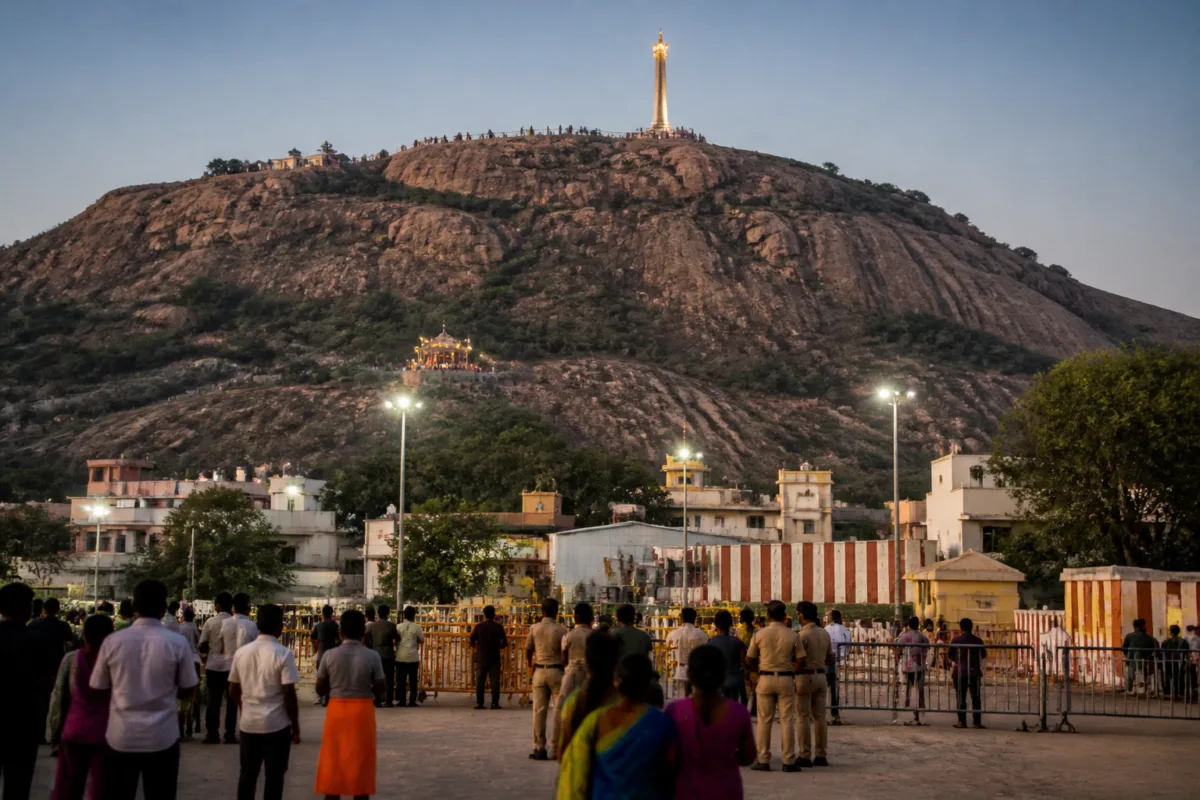
The Madras High Court’s Madurai Bench has directed the Tamil Nadu authorities to properly implement the Supreme Court’s order on lighting the lamp at the Deepathoonam pillar on Tirupparankundram hill, while cautioning that restrictions should not affect fundamental rights, according to Dinamalar.
The direction came during an urgent hearing on petitions challenging an order under Section 144 of the Code of Criminal Procedure issued by the Madurai district administration. The petitioners sought cancellation of the restriction and requested that devotees be allowed to watch the lighting from ground level.
Justices Swaminathan and Sumathi heard the matter. The Madurai district collector and the police commissioner appeared before the court, the report said.
During the hearing, the Tamil Nadu government counsel said the restriction had not been issued to defy the Supreme Court’s order. The counsel said there was apprehension among the public and that 258 people had been arrested. The state also argued that the Supreme Court order did not compel the High Court to direct its implementation, and maintained that the structure on the hill was a stone pillar rather than a lamp pillar.
The government counsel further said that officials would enforce the restriction against movement of devotees only in accordance with the order, and that access would be permitted without affecting their religious rights.
The judges responded that they were directing the lighting of the lamp at the top of Tirupparankundram hill. They said the Supreme Court order should be implemented properly and that, based on the situation at the time of hearing, arrangements appeared to have been made. The bench also said a pending review petition could not by itself be cited as a reason for not implementing a court order.
The court added that a restriction order should not operate in a manner that affects fundamental rights. The report did not specify the full text of the directions or the subsequent administrative arrangements beyond the statements made during the hearing.

