


Karnataka is expanding an artificial intelligence-based smart enforcement system, accident-zone improvements and emergency medical support to reduce road crashes and fatalities, Chief Secretary Shalini Rajneesh said at the 24th meeting of the Karnataka State Road Safety Authority.
Rajneesh said road safety could not be treated as the responsibility of a single department. Police, transport, health, public works, urban development departments and local bodies would have to coordinate their work, according to a report by Prajavani.
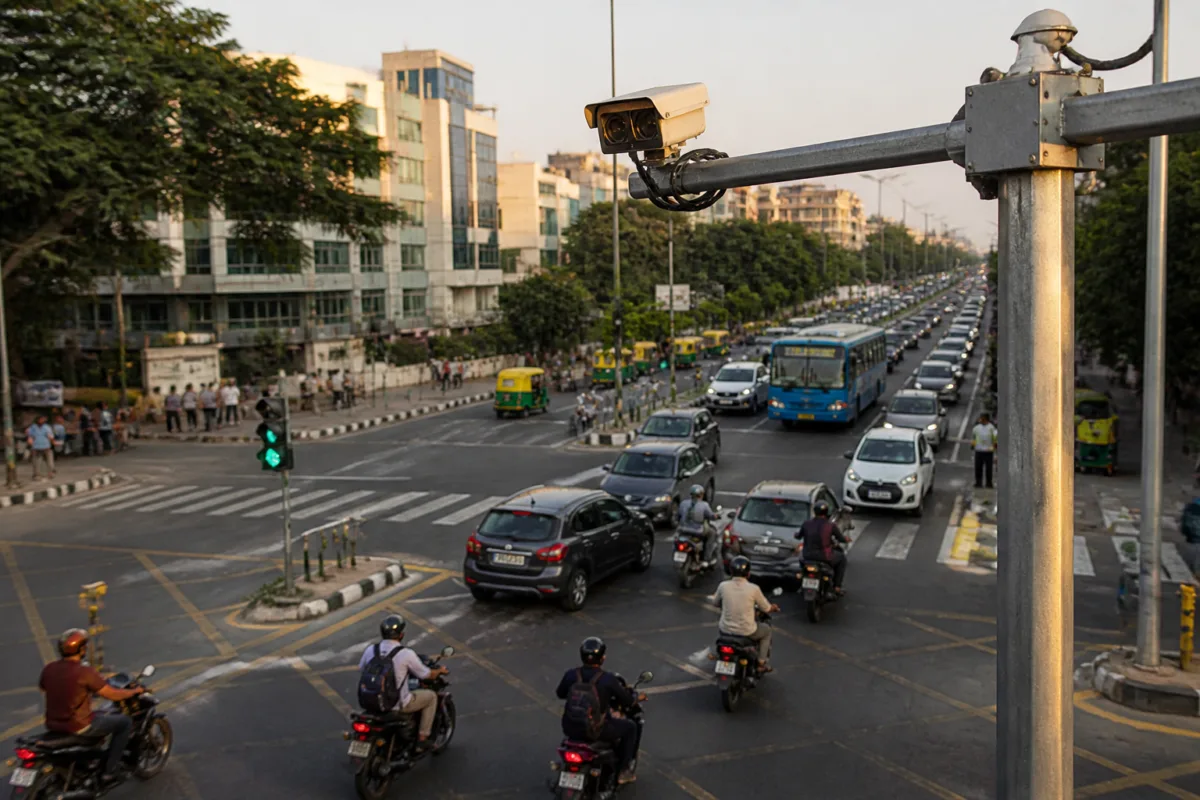
The state has identified 87 locations for action against traffic violations and hit-and-run vehicles. AI-based smart cameras have been installed at 27 locations, while e-challan systems are operating at 20 locations, Rajneesh said. Work is under way at the remaining 60 locations, according to the report.
The enforcement programme is intended to improve the identification of traffic violations and vehicles involved in crashes. The report said 6,500 challans had already been recorded through the system. It did not provide a breakdown of the violations, the locations of the cameras or the status of action after the challans were issued.
Rajneesh also directed the Transport Department to maintain continuous oversight of driving-training institutions. She said candidates appearing for driving-licence tests should be required to watch awareness videos covering helmets, seat belts, speed control, the prohibition on drunk driving and the restriction on mobile-phone use while driving.
The road-safety plan also includes financial support for crash victims. Under the PM-Rahat scheme, which came into effect on April 15 this year, victims are being provided cashless treatment for up to seven days, with assistance capped at ₹1.50 lakh, Rajneesh said. The Chief Minister’s Arogya Karnataka scheme provides an additional ₹1 lakh, according to the report.
A total of 3,445 government and private hospitals are registered under the schemes, she said. The report did not specify how many crash victims had used the cashless treatment provision or how quickly hospitals would process such cases.
For emergency response, the 108 and 102 services have been integrated with the 112 helpline. The purchase of 100 new basic life support ambulances has been completed and the vehicles are expected to become available for service shortly, Rajneesh said.
The measures place enforcement, driver education, trauma care and emergency transport within a single road-safety framework. Their effectiveness will depend on whether camera coverage, challan processing, hospital access and ambulance deployment work together across the departments and local bodies responsible for roads and public services.

