


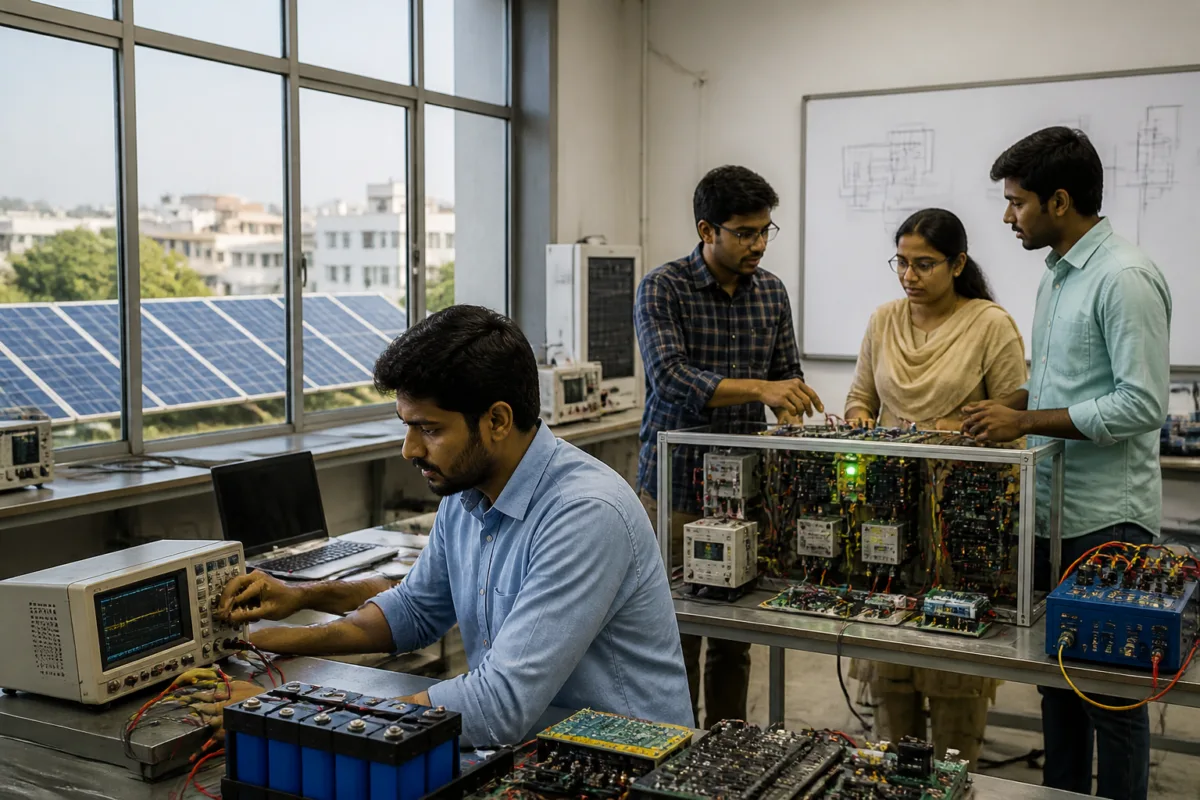
Coimbatore city’s proposed sustainable microgrid is among five research projects selected for funding at the Government College of Technology in Coimbatore, with a combined allocation of ₹1.45 crore under the Tamil Nadu government’s Chief Minister’s Research Grant Scheme.
The microgrid project, led by Rajeswari of the electrical and electronics engineering department, has received ₹31 lakh. According to Dinamalar, it aims to develop a model that can meet the city’s electricity needs through renewable sources such as solar and wind power during outages or major disruptions to the power network.
The grant scheme is intended to support innovative research in higher education institutions and develop technologies with practical applications. The selected projects are to be implemented within specified timeframes, although the report does not provide completion dates or indicate that any of the proposed systems has yet been deployed.
Other funded projects cover technologies with potential links to urban services and resource efficiency. Professor Arun Bhaskar of the industrial biotechnology department is researching a lower-cost method to produce tagatose, a rare sugar that can be used as an alternative to sugar. The proposed process uses easily available fructose and enzymes, with the stated aim of reducing production costs and chemical waste.
The mechanical engineering department’s Professor Ramesh is researching whether magnesium can replace expensive platinum in batteries while delivering similar performance. Professor Devi of the information technology department is working on an Internet of Things-based system to convert waste into organic fertiliser.
Professor Anbu of the electronics and instrumentation department is developing sensors for water-vending machines. The system is intended to monitor water quality, quantity and machine operation, and automatically send information.
The five faculty members were selected under the state grant programme and were congratulated by GCT principal Purushothaman, the report said. The research portfolio links energy resilience, waste processing, water-service monitoring and lower-cost materials, but its eventual urban value will depend on whether the projects produce working prototypes and move beyond institutional research into tested public applications.

